
KLOW Peptide Blend in Canada
KLOW is a blend of four research peptides in one 80 mg vial: GHK-Cu, BPC-157, TB-500 and KPV. Peptides are short chains of amino acids, the building blocks of protein. Each of the four has its own research file: skin wounds, tendons, moving cells and gut inflammation. Nobody has tested all four together yet.
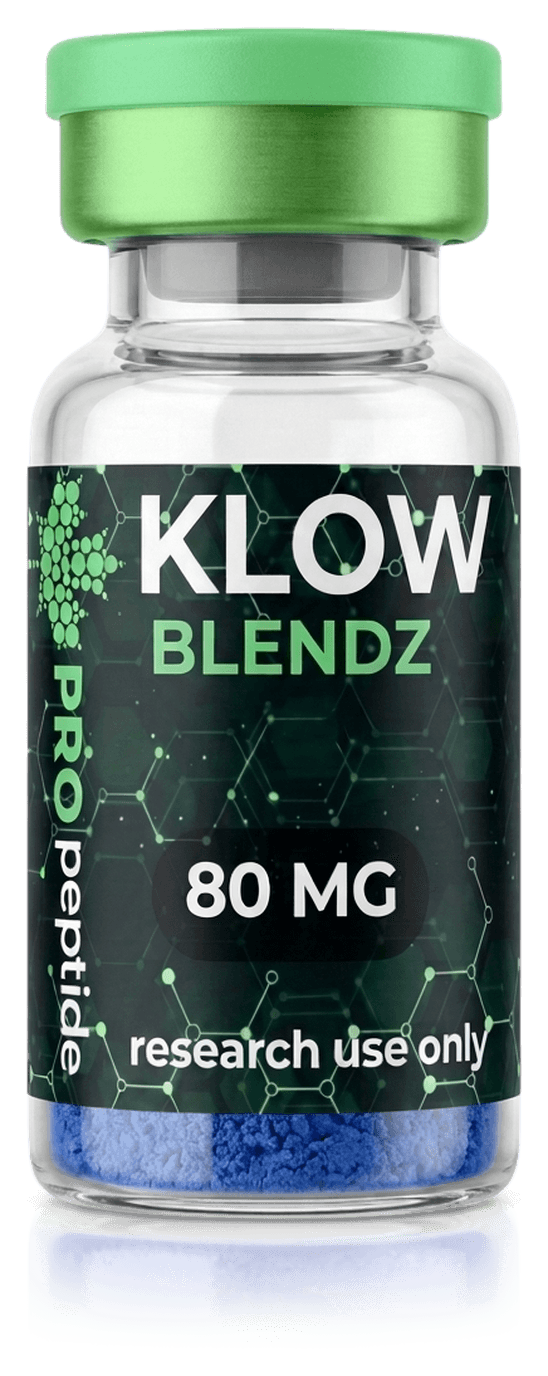
Pack prices and discount codes don't combine. You always get the bigger saving.
In stock · ships same-day with ice pack
Sold for laboratory research use only. Not for human or veterinary use. 19+.
What has it been researched for?
What published research has looked at, one compound at a time. Nobody has tested all four together.
- Skin wounds (GHK-Cu)
Foot ulcers in people, in a 1994 randomized trial.
- Tendon injuries (BPC-157)
Cut Achilles tendons, in a 2003 lab study.
- Wound closure (TB-500)
Slow-closing skin wounds, in 2003 lab research on the fragment itself.
- Gut inflammation (KPV)
Colitis, in 2008 lab research, through a gut transporter called PepT1.
- Peptides sharing one vial
- 4
- Per vial: 50 + 10 + 10 + 10
- 80mg
- Of the vial is GHK-Cu
- 62.5%
- Amino acids in KPV, the newest member
- 3
- Tests of all four together
- 0
- Free over $250 Shipping $20 to $25 under that
- Interac e-Transfer Confirms in ~30 min
- 14-day returns Free return shipping
- 80mg Sealed freeze-dried vial
- Ships cold Paid by noon, ships same day
- Mixing calculator Get your volumes
What is KLOW Peptide Blend?
The plain-language version, first.
Four peptides, one vial, and a lineup that has never played together.
Picture a garage band. Four members, one van, and every one of them already has a solo career. That's KLOW: four research peptides (short chains of amino acids, the building blocks of protein) sharing one 80 mg vial.
Three of the members are the GLOW trio. The fourth is KPV, which is why people call this vial GLOW plus KPV.
So who's actually in the band?
GHK-Cu sings lead. It gets 50 of the 80 mg, more mic time than the other three put together. Three amino acids hanging onto a copper atom, first found in human blood in 1973. GHK-Cu has its own page if you want the copper story.
BPC-157 and TB-500 are the rhythm section, 10 mg each. BPC-157 is fifteen amino acids copied from a protein in stomach juice, with thirty years of research behind it. TB-500 is seven amino acids clipped from thymosin beta-4, the exact seven that grab actin, a protein cells pull on to move. TB-500 has a solo page too.
KPV is the new guy. Lysine, proline and valine, the very tail end of alpha-MSH, a hormone behind skin colour. Three amino acids long, so in band terms he knows exactly three chords, and they're all about the gut. He gets the last 10 mg. KPV plays solo here.
Four members, 50, 10, 10 and 10 mg, and the set list is fixed. You can't turn one of them up without opening a different vial.
The band has never played a full show. Every song on this page is one member's solo tape.
What does the KLOW peptide blend do?
What researchers watch it do.
Here's what each member actually plays.
Listen, a band only works when nobody plays the same part. Same deal in this vial: four peptides, four jobs, and none of them overlap.
GHK-Cu brings the copper. Your body runs an enzyme called lysyl oxidase that cross-links collagen and elastin, the proteins that give skin and tissue their strength. It can't run without copper, and GHK-Cu is one way copper gets delivered. Our copper peptide guide tells the long version.
BPC-157 works on blood supply. In 2017 lab research it switched on VEGFR2, the receptor that green-lights new blood vessels, and blood found its way back faster into a limb whose main artery had been blocked.
TB-500 works with actin. Cells grab actin to crawl and to hold their shape, and TB-500 is the stretch of thymosin beta-4 that does the grabbing. That's why researchers point it at cells moving into damaged tissue. Our BPC-157 vs TB-500 guide puts those two side by side.
So what's the new guy doing here?
KPV comes in through a side door. Your gut lining has a transporter called PepT1 that pulls in protein pieces two or three amino acids long. KPV is exactly three, so it fits.
In human gut cells grown in a dish, KPV blocked NF-kappaB, the switch cells flip to start inflammation. None of the other three members has that job.
Here's the honest part. Nobody has watched all four work inside the same vial, so every job above belongs to the member it's listed under.
Four parts, one stage, and the full-band recording still hasn't been made.
What does the research say about KLOW Peptide Blend?
What the studies found, and where they stand.
The strongest result in this vial comes from a 1994 trial in people.
Every member cut a solo tape, and every tape has a track worth playing.
GHK-Cu, the foot ulcer trial. In 1994, Mulder and colleagues put a GHK-Cu gel on diabetic foot ulcers (open sores that won't close) at several hospitals, with patients picked at random and judges who didn't know who got what. Ulcers on the GHK-Cu gel closed by a median 98.5 percent. The same gel without it reached 60.8.
BPC-157, the Achilles tendons. In a 2003 lab study, Staresinic and colleagues looked at Achilles tendons cut clean through, and the tendons on BPC-157 came back stronger and working better. A 2025 review in HSS Journal later lined up 12 preclinical studies of BPC-157 (lab research done before any human trial), and all 12 reported a positive result.
TB-500, the slow wounds. Also in 2003, Philp and colleagues put the seven-amino-acid fragment on slow-closing skin wounds, and it closed them about as well as the whole thymosin beta-4 protein did.
KPV, the inflamed gut. In 2008 lab research, Dalmasso and colleagues set off colitis (an inflamed bowel) two different ways, and both times KPV meant less colitis and lower inflammation signals. As the team wrote in Gastroenterology in 2008: "We found that KPV acts via PepT1 expressed in immune and intestinal epithelial cells."
So does the band sound better together?
Here's the honest part. Nobody has recorded the full band. The only duet anybody tried, BPC-157 with TB-500 on repaired Achilles tendons in a 2026 lab study, did no better than either one alone.
One human trial and three lab files, all solo. The four-piece record is still waiting on a lab to cut it.
KLOW 80 mg: GHK-Cu 50, BPC-157 10, TB-500 10 and KPV 10, in one vial. Paid by noon PT, ships same day, cold-packed.
What's in a vial of KLOW Peptide Blend?
The chemistry, exactly as released.
Who studies KLOW Peptide Blend?
Who tends to order this one, and why.
Each member brings their own crowd.
- 1
Labs already running all four
One vial, one fixed ratio and one lot to track, instead of four vials and four sets of math.
- 2
Wound and skin researchers
GHK-Cu's 1994 foot ulcer trial and TB-500's wound work point at the same tissue.
- 3
Tendon and injury researchers
BPC-157's tendon file is the deepest one in the vial, much of it from one group in Zagreb.
- 4
Gut inflammation researchers
KPV is the member GLOW doesn't have: the colitis research, and the PepT1 door into gut cells.
Sold for laboratory research only. This is not guidance for personal use, and nothing here is a recommendation.
Where did KLOW Peptide Blend come from?
How it got here.
1973 is where this band starts, in a sample of human blood plasma. Researchers pulled out a three-amino-acid peptide that wouldn't let go of copper. That was GHK, the lead singer, decades before anybody pictured a band.
In 1981, thymosin beta-4 was sequenced from calf thymus, 43 amino acids long. Later, the seven that grip actin were made on their own, and that fragment became TB-500. By 2003 it was closing skin wounds in lab research on its own.
The early 1990s brought BPC-157, out of a pharmacology group in Zagreb studying a protective protein in stomach juice. Thirty years of research followed, much of it from that same group.
KPV took the long way in. It's the tail end of alpha-MSH, a hormone behind skin colour, and in 2008 a Gastroenterology paper showed it rides PepT1 into gut cells.
Put the first three in one vial and you get GLOW. Add the new guy and you get KLOW.
- 1
1973, a copper peptide in human plasma
GHK turns up in human blood, holding on to copper. That grip is why anybody cares about it.
- 2
1981 to 2003, thymus protein to TB-500
Thymosin beta-4 is sequenced in 1981. By 2003 its seven-amino-acid actin stretch is closing skin wounds in lab research by itself.
- 3
2008, KPV finds its door
A Gastroenterology paper shows KPV rides PepT1 into gut and immune cells, with less colitis in two lab models.
How do I buy KLOW Peptide Blend in Canada?
What ships, how fast, and the paperwork.
One vial, four compounds, and a label that should spell out all four.
Same day out of British Columbia. Pay before noon Pacific on a business day and it's out the door that day, in a cold pack, from our own building. Canada only. Sealed vials come back within 14 days, and the return shipping's on us.
Only what's real. Lab results show on this page only when a report exists for the lot on the shelf, with its lot number. No report, no number. A blend should list every amount on the label, and ours is 50 mg GHK-Cu, 10 mg BPC-157, 10 mg TB-500 and 10 mg KPV.
TB-500 is on the WADA list. WADA bans thymosin beta-4 and its derivatives at all times, with TB-500 named as the example, and every KLOW vial has TB-500 in it. If you compete under WADA rules, that's the whole answer.
What else do people ask?
10 answers, none of them dodges.
What is in a KLOW vial?
Four peptides, 80 mg in all: 50 mg GHK-Cu, 10 mg BPC-157, 10 mg TB-500 and 10 mg KPV. That's 5 to 1 to 1 to 1, so GHK-Cu is 62.5 percent of the powder and each of the others is 12.5.
What is the difference between KLOW and GLOW?
10 mg of KPV. GLOW is the three-compound trio at 70 mg, and KLOW is the same trio plus KPV at 80 mg. If the gut side of the research matters, KLOW is the one carrying it.
What does KPV add that the other three do not?
Gut research. GHK-Cu and TB-500 are the wound and cell-movement members, and BPC-157 is about tendons and blood supply. KPV's file is colitis, and it gets into gut cells through PepT1, a transporter the other three are too long to use.
Has anyone tested all four together?
Not yet. The only pairing anybody has tested is BPC-157 with TB-500, on repaired Achilles tendons in a 2026 lab study, and the pair did no better than either alone (Bicer and colleagues, 2026). Every result on this page belongs to one compound.
Is a KLOW blend the same as buying the four separately?
Same four compounds, one fixed ratio. That's the trade: one vial and one lot to track, but you can't change the split. If your work needs a different ratio, the single vials are the way to go.
Is KLOW banned in sport?
The TB-500 in it is. WADA bans thymosin beta-4 and its derivatives at all times, in and out of competition, with TB-500 named as the example.
How do I pay for KLOW?
By Interac e-Transfer, the only way we take payment. After you order we email the send-to details, it usually confirms within about 30 minutes, and your order ships once it clears.
When does KLOW ship?
Paid before noon Pacific on a business day, it goes out that same day, cold-packed, from our own facility in BC. Canada only.
How should KLOW be stored?
The sealed vial is a freeze-dried powder. Keep it cold and out of the light. Our peptide storage guide covers what changes once it's mixed.
What does research use only mean here?
Exactly what it says. We sell KLOW to people doing laboratory research, buyers 19 and over in Canada, and nothing on this page tells anyone how to use it on a person or an animal.
What pairs well with KLOW Peptide Blend?
What researchers stack alongside it.
The solo acts, plus the water that mixes them.
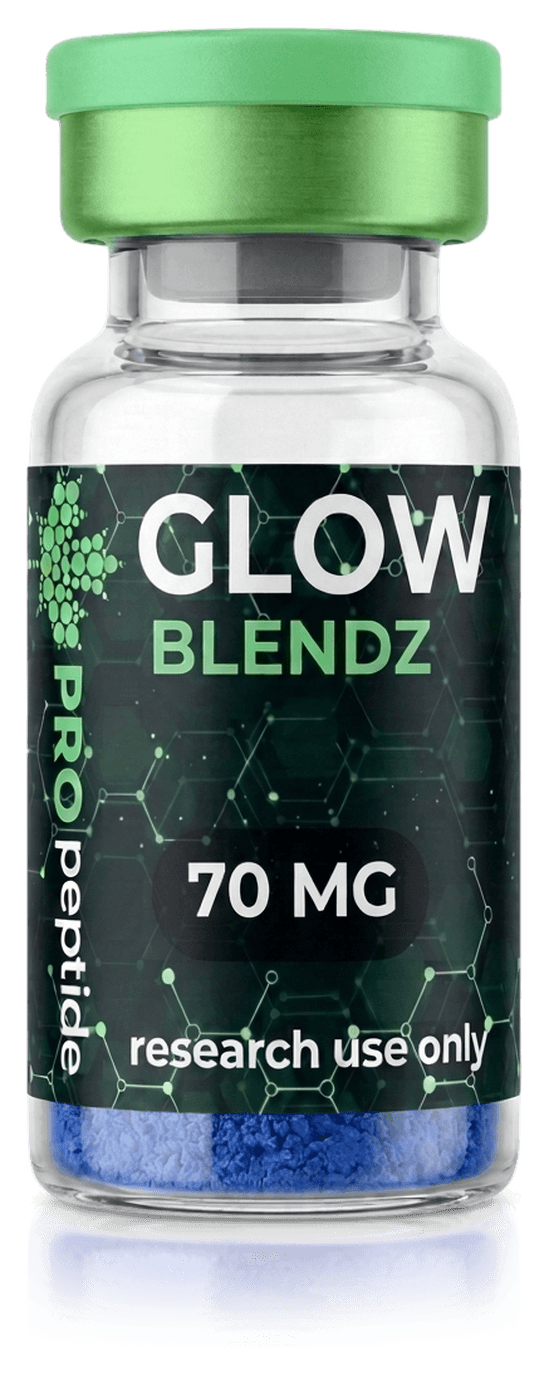
Three research peptides in one vial: BPC-157 from stomach juice, TB-500 from a protein cells use to move, and GHK-Cu with its copper atom. It's a combo meal nobody has tried yet, because no study has looked at all three together.
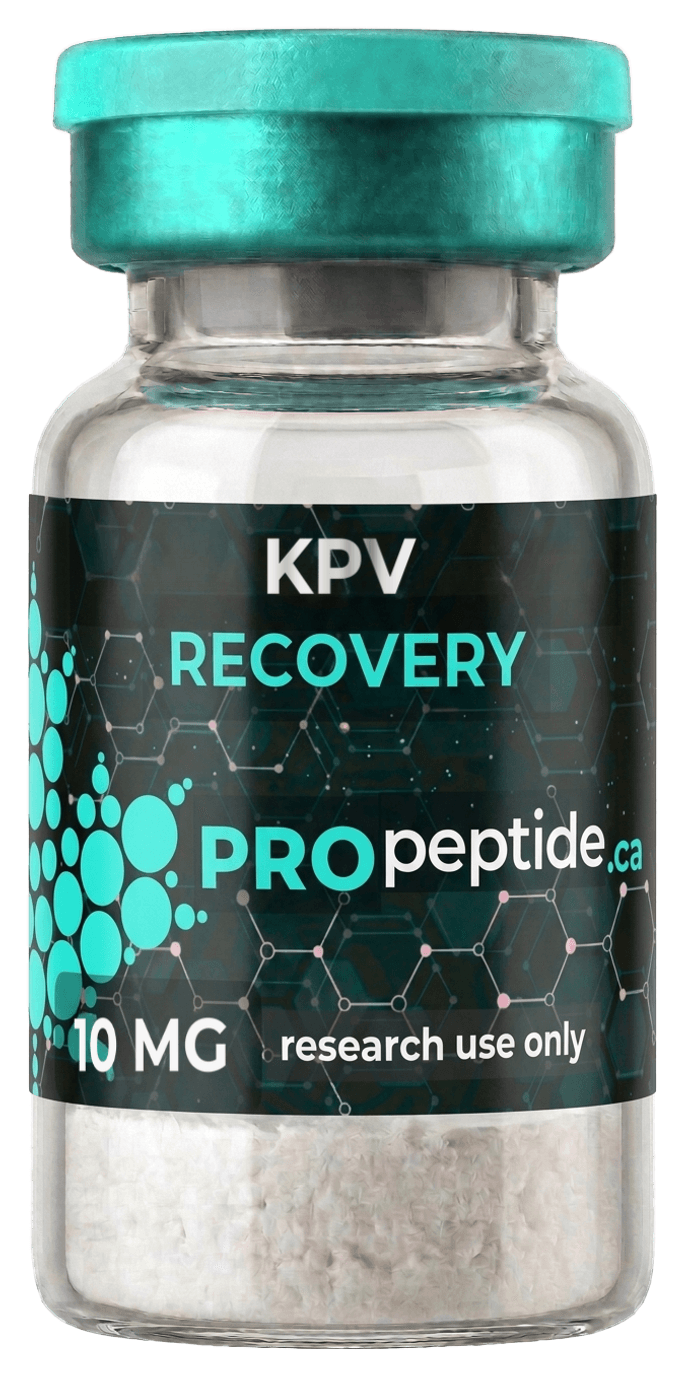
Three amino acids with a fan club. KPV is the P.S. at the bottom of a hormone's letter, the only part the gut forums care about, and lab research watched it slip into gut cells through the mail slot.
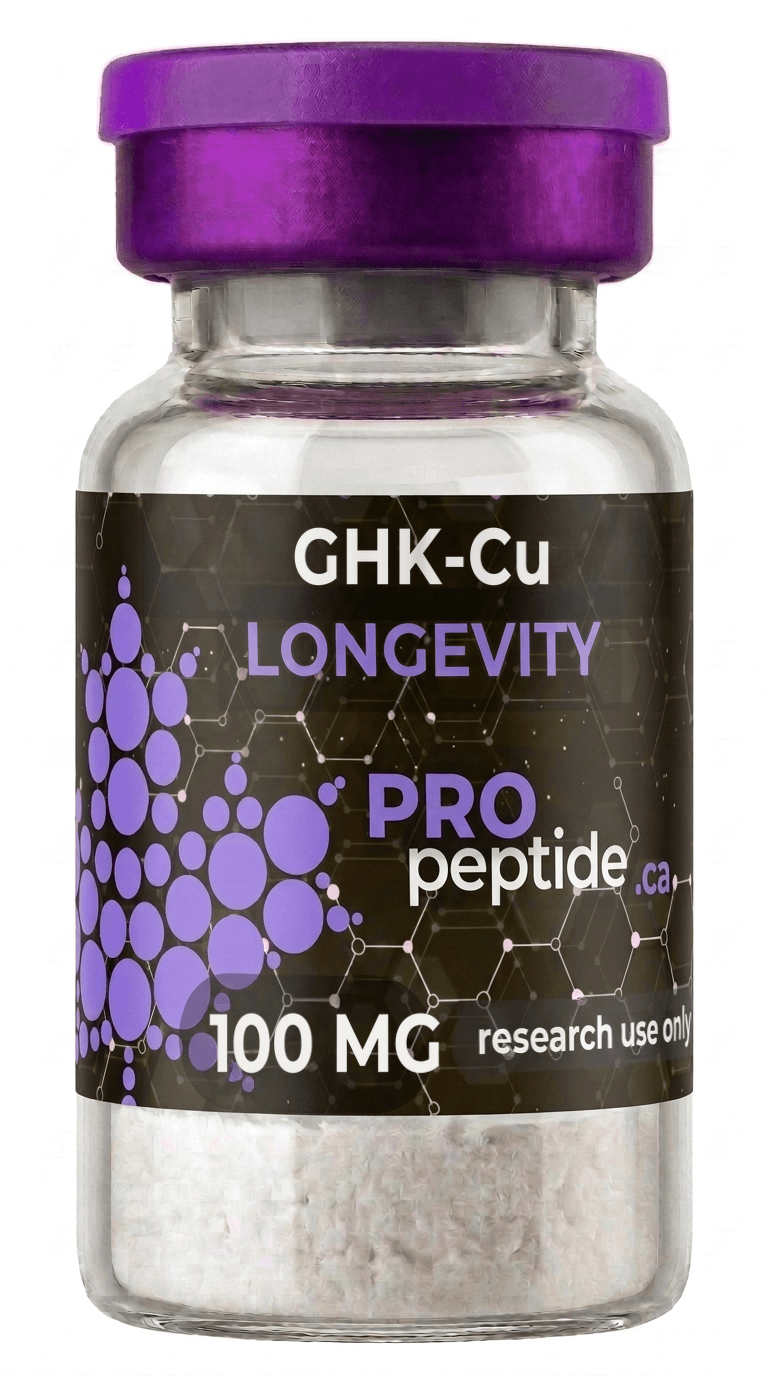
Three protein building blocks hanging onto a copper atom like a kid who won't let go of a quarter. That copper is something skin uses to build collagen, which is why it shows up in skincare creams.
Supplies for the lab
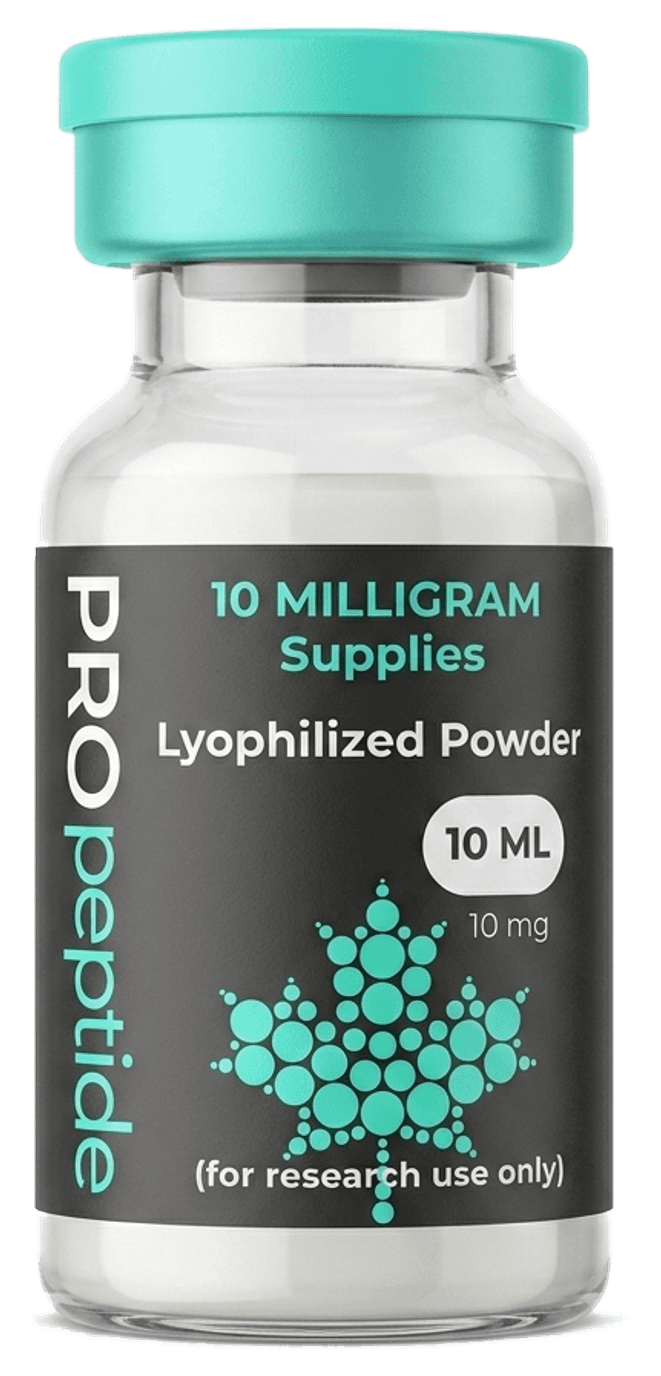
The water every freeze-dried vial needs, and the one item everybody forgets. Sterile water with a preservative, so one vial lasts more than one draw.
Ready to order KLOW Peptide Blend?
One last look before you decide.
Freeze-dried, ships cold from Canada
You've got the whole file now, the thin parts included. Nothing above pretended otherwise. If that's the kind of source you were after, KLOW Peptide Blend is right here.
Sold for laboratory research use only. Not for human or veterinary use, and not for human consumption. 19+. Not approved by Health Canada or any other regulatory body.
Page last updated November 7, 2026. Reviewed by the Pro Peptide team.
What do people search for with KLOW Peptide Blend?
Related searches.