
What is GHK copper peptide? GHK-Cu, explained
GHK copper peptide is three amino acids holding one copper ion, found in human blood in 1973. What it is, what two human trials found, and the copper uglies.
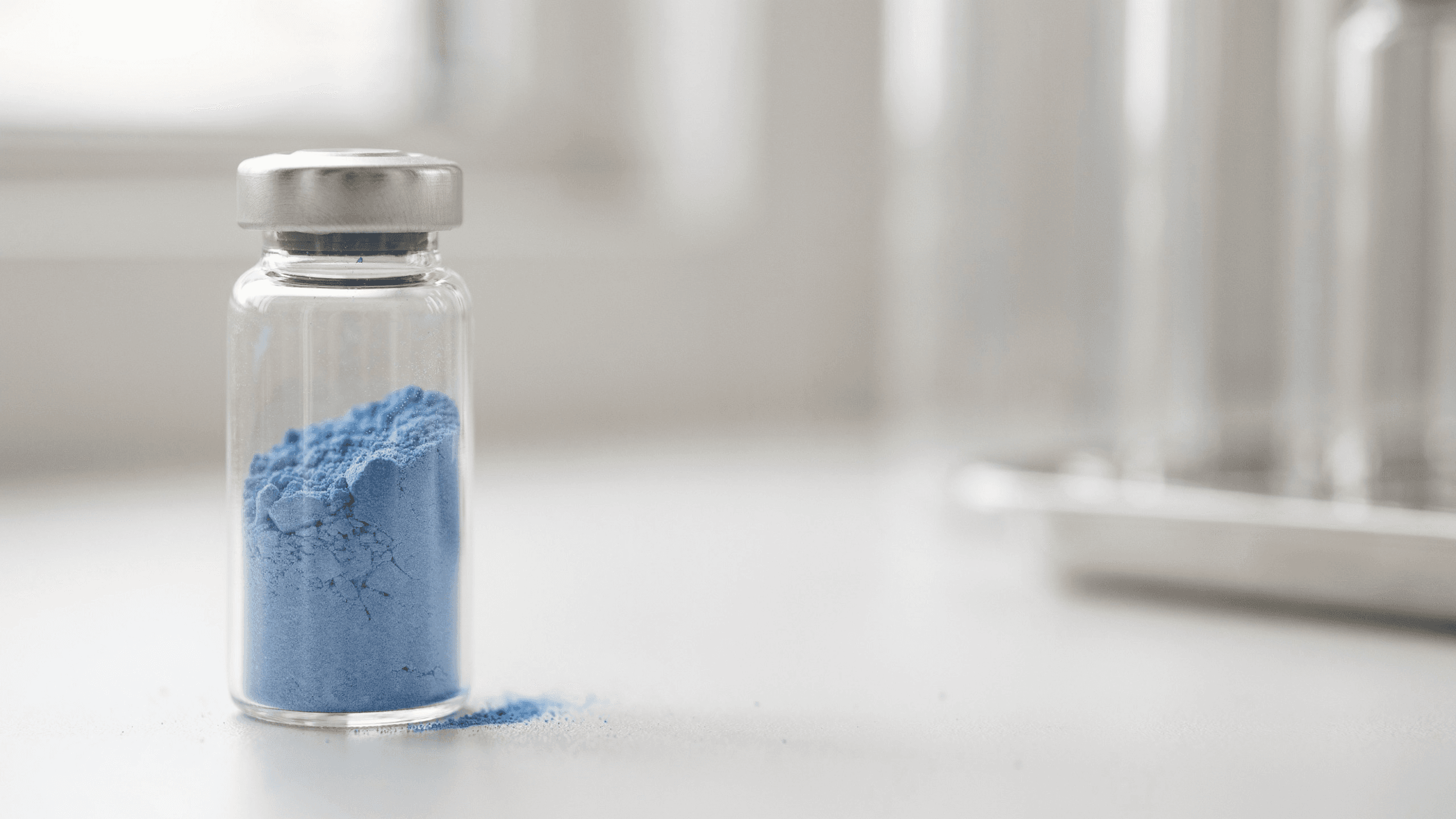
GHK copper peptide (GHK-Cu) is a chain of just three amino acids, glycine, histidine and lysine, holding one copper ion so tightly that the copper made it into the name. It was first pulled out of human blood in 1973. Skincare labels call it copper tripeptide-1, and Pro Peptide ships it cold across Canada as a lab reagent.
That's the whole molecule in one breath. The story around it is better: an old liver experiment, a wound trial it won, a skin trial it lost, and a forum phrase, the copper uglies, that nobody has ever measured. Grab a coffee.
One old win in wounds, one miss in skin, and a whole industry that only quotes the win.
What is GHK copper peptide, in plain words?
GHK copper peptide is a tripeptide, meaning three amino acids clipped together, with a copper ion locked into the middle of it. The letters are just the amino acids' one-letter codes: G for glycine, H for histidine, K for lysine.
Picture a tow truck that only ever tows one car. The peptide is the truck, the copper is the car, and they never leave the lot apart. Chemists describe GHK as having a strong affinity for copper, which is a fancy way of saying the histidine and the front end of the chain grab the ion and don't let go.
Copper peptides is the family name. Any short chain built to hold copper fits under it, and there are a few on the market. When a serum box or a forum thread says copper peptide without saying which one, it almost always means GHK-Cu.
On a cosmetics label it goes by copper tripeptide-1. Same molecule, different name tag. Remember that move, because you'll see it again before we're done.
Where did GHK-Cu come from?
Nobody sat down and invented GHK-Cu in a lab. Loren Pickart isolated it in 1973, according to his own 2015 review in BioMed Research International, while chasing an activity in human albumin that made old human liver tissue build proteins the way younger tissue does.
Albumin is the most common protein in your blood plasma, so yes, this is a molecule from your own blood. The original paper ran in Nature New Biology that same year.
Then comes the number everybody quotes. The same 2015 review puts GHK in human plasma at about 200 ng/mL at age 20, falling to about 80 ng/mL by age 60. That's nanograms per millilitre, a tiny amount, and it drops by more than half across forty years. Small number. Big marketing.
Here's where people get carried away. A level that falls with age is a measurement. Whether topping it back up does anything is a completely separate question, and the skincare aisle has been parked in the gap between those two sentences for decades.
Only here for the vial math? Fair enough. The free Peptide Planner tool works out reconstitution volumes for any vial size, GHK-Cu included.
Why does the copper matter so much?
The copper is the working part, and the reason starts with an enzyme called lysyl oxidase. NCBI's gene summary for it describes a copper-dependent enzyme that cross-links collagen and elastin, the protein fibres that give skin and other tissue their structure.
Think of collagen as rebar and lysyl oxidase as the welder. No copper, no welding torch, and the rebar is just a pile of loose sticks. The NIH Office of Dietary Supplements lists connective tissue building among the jobs of copper-dependent enzymes in its copper fact sheet.
So the pitch for GHK-Cu writes itself. A peptide that grabs copper, a welder that needs copper, and a blood level that drops with age. The proposed job is courier work: the peptide carries the ion, and the enzymes get their copper.
There's a heap of cell-culture work sitting on top of that, including gene-expression data that Pickart and Anna Margolina summarized in a 2018 review in the International Journal of Molecular Sciences. Forums quote it like scripture. It's real work. It's also cells in a dish.
What a courier does in a dish and what it does in a person are two different questions. Only the second one counts, and the controlled human trials we could find in journals come to exactly two.
What did the human trials find?
Two controlled trials carry almost all the weight in GHK-Cu's file, and they point in opposite directions. Both put the compound on the skin, not under it.
The 1994 wound trial: a win
Mulder and colleagues ran it across several centres and published it in Wound Repair and Regeneration in 1994. Patients with diabetes and ulcers on the soles of their feet got either a gel containing GHK-Cu or the same gel without it. Assignment was random, and the people judging the ulcers didn't know who got which.
Here's the scoreboard. Read it slowly:
- Median ulcer area closed on the GHK-Cu gel: 98.5 percent.
- Median ulcer area closed on the plain gel: 60.8 percent.
- Bigger ulcers, over 100 square millimetres at the start: 89.2 percent closed on the GHK-Cu gel, while the median plain-gel ulcer ended up 10.3 percent bigger.
That's a real result, and it's the one you'll read on forty other sites. Notice what it's about, though. Foot ulcers. Not wrinkles, and not anything printed on a serum box.
The 2006 skin trial: a miss
Miller and colleagues tested the cosmetic idea head on, in Archives of Facial Plastic Surgery in 2006. Patients had carbon dioxide laser resurfacing around the mouth, then were randomized to aftercare skin products with or without GHK-Cu. Thirteen finished.
At 12 weeks, computer analysis and blinded evaluators found no statistically significant difference in redness, wrinkles or skin quality between the groups. The only thing that moved was a questionnaire, where the GHK-Cu patients rated their own skin as more improved.
That's the one time the cosmetic claim faced a blindfold, and it didn't show up. You won't find this trial on many copper peptide pages. It's here, with the link.
Creams vs the needle
Both trials put GHK-Cu on the skin. We couldn't find a published human trial of GHK-Cu given by needle, and that matters, because the needle version is what a lot of forum threads are about now.
No trial means no human data on that route, either way. We'd rather tell you that straight than fill the gap with somebody's anecdote. Nothing on this page is a plan for a person, either. GHK-Cu here is a research reagent, full stop.
What are the copper uglies?
The copper uglies is a forum term for the spots or redness people say show up in the first weeks of a copper peptide serum. You won't find the phrase in any medical dictionary.
On skincare boards the threads split into two camps, the people who say push through it because it's a purge and your skin is clearing out, and the people who say stop because it's a reaction.
What the controlled data says is narrower than either camp. The 2006 trial measured redness after laser resurfacing and found no significant difference between the GHK-Cu group and the control. Nobody has designed a trial to look for a copper peptide purge, so no study has shown one and no study has ruled one out.
A word that lives entirely in anecdote is a word with no file. Any product can irritate somebody's skin, and a forum can't tell one person's reaction from another person's coincidence.

So if you came here for a ruling, there isn't one to give. Arguing about it in a comment thread is not worth your evening.
GHK-Cu vs AHK-Cu: what's the difference?
AHK-Cu swaps one amino acid, putting alanine where GHK-Cu has glycine. In a three-letter peptide, one letter is a third of the molecule.
It keeps the copper grip and most of the marketing. What it doesn't keep is the bibliography. Its own independent file is one 2007 study by Pyo and colleagues in Archives of Pharmacal Research. That's it. The team found that AHK-Cu lengthened human hair follicles kept alive outside the body, and made dermal papilla cells (the cells at the base of a follicle) multiply in a dish.
Everything else you'll read about AHK-Cu is mostly GHK-Cu's work wearing a borrowed name tag. The AHK-Cu product page says exactly that, in plain words.
For a research question that needs a human trial behind it, GHK-Cu is the better pick, since it's the only one of the two that has ever had one. We stock both, and we don't pretend they're the same molecule.
Buying GHK-Cu in Canada
Pro Peptide sells GHK-Cu as a freeze-dried powder in 50 mg and 100 mg vials, for laboratory research only, to buyers 19 and over. The GHK-Cu research page has the full write-up, with both trials and their links.
Here's what buying it looks like, no sales pitch attached:
- Purity and lab results: a product with a live lot report shows that report's purity figures on its page, and a product without one shows nothing instead of a guess. Questions about a specific lot go through the contact page.
- Canadian shipping and the cut-off: every order ships cold to Canadian addresses only, and orders paid before noon Pacific on a business day go out the same day. The shipping policy with rates has the rest.
- Payment method: Interac e-Transfer is the one payment method we take. The FAQ on payment walks through the steps.
- Returns: sealed, unopened products can come back within 14 days of delivery under our returns and refunds policy.
- Legal status: everything is sold as laboratory research material, and the research use only page spells out what that means.
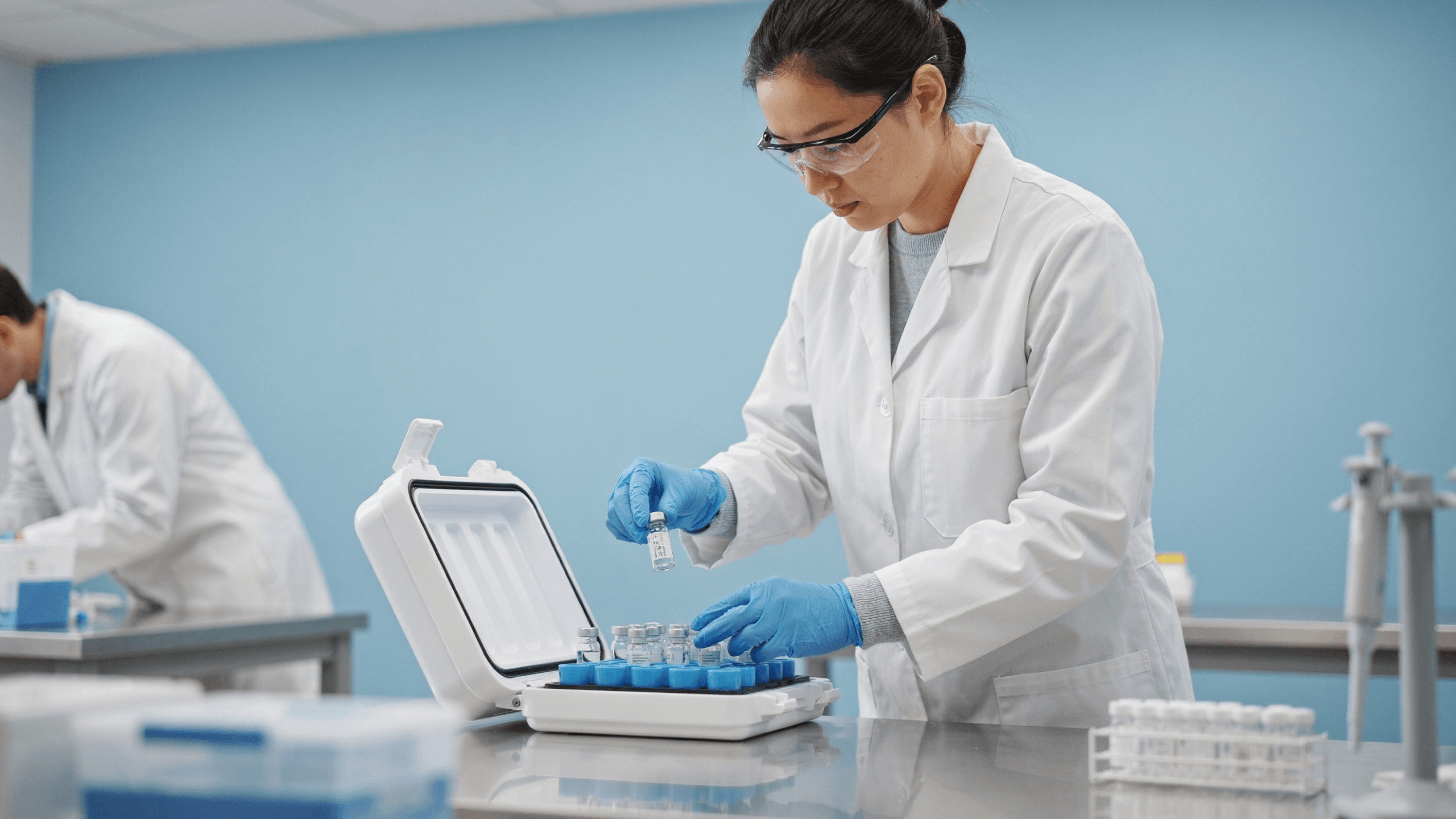
Sealed and freeze-dried, GHK-Cu travels well. Once it lands, it goes in the fridge, out of the light, and the guide to storing research peptides explains why the powder outlasts the mixed solution.
The short version
GHK copper peptide is three amino acids holding a copper ion, first found in human blood in 1973. It won one controlled trial on foot ulcers and missed the one controlled trial on skin. When you're ready, read the GHK-Cu research page or browse the rest of the Library.
Sources
- Pickart L, Vasquez-Soltero JM, Margolina A. GHK Peptide as a Natural Modulator of Multiple Cellular Pathways in Skin Regeneration. BioMed Research International, 2015
- Pickart L, Margolina A. Regenerative and Protective Actions of the GHK-Cu Peptide in the Light of the New Gene Data. International Journal of Molecular Sciences, 2018
- Mulder GD, et al. Topical glycyl-L-histidyl-L-lysine copper gel and diabetic foot ulcers, a multicentre randomized trial. Wound Repair and Regeneration, 1994
- Miller TR, Wagner JD, Baack BR, Eisbach KJ. Effects of topical copper tripeptide complex on CO2 laser-resurfaced skin. Archives of Facial Plastic Surgery, 2006
- Pyo HK, et al. The effect of tripeptide-copper complex on human hair growth in vitro. Archives of Pharmacal Research, 2007
- GeneCards: LOX gene (lysyl oxidase), quoting the NCBI Gene summary
- NIH Office of Dietary Supplements, Copper fact sheet for health professionals
Common questions
What is GHK copper peptide?
A tripeptide, three amino acids long, holding one copper ion. It was isolated from human blood in 1973 and appears on cosmetics labels as copper tripeptide-1.
Are copper peptides and GHK-Cu the same thing?
Copper peptides is the family name for short chains that hold copper. GHK-Cu is the best-known member, and when a label or a forum says copper peptide without naming one, it usually means GHK-Cu.
What are the copper uglies?
A forum term for spots or redness people report in the first weeks of a copper peptide serum. No controlled study has documented it, and the one blinded skin trial found no difference in redness against the control.
Has GHK-Cu been studied in people?
In two controlled trials that we could find, both on the skin. A 1994 wound trial found more ulcer closure on the GHK-Cu gel, and a 2006 trial after laser resurfacing found no measurable difference.
What's the difference between GHK-Cu and AHK-Cu?
One amino acid: alanine replaces glycine. GHK-Cu has two controlled human trials, while AHK-Cu's own evidence is one 2007 lab study of hair follicles and follicle cells.
Keep reading
Sold for laboratory research use only. Not for human or veterinary use. 19+.