
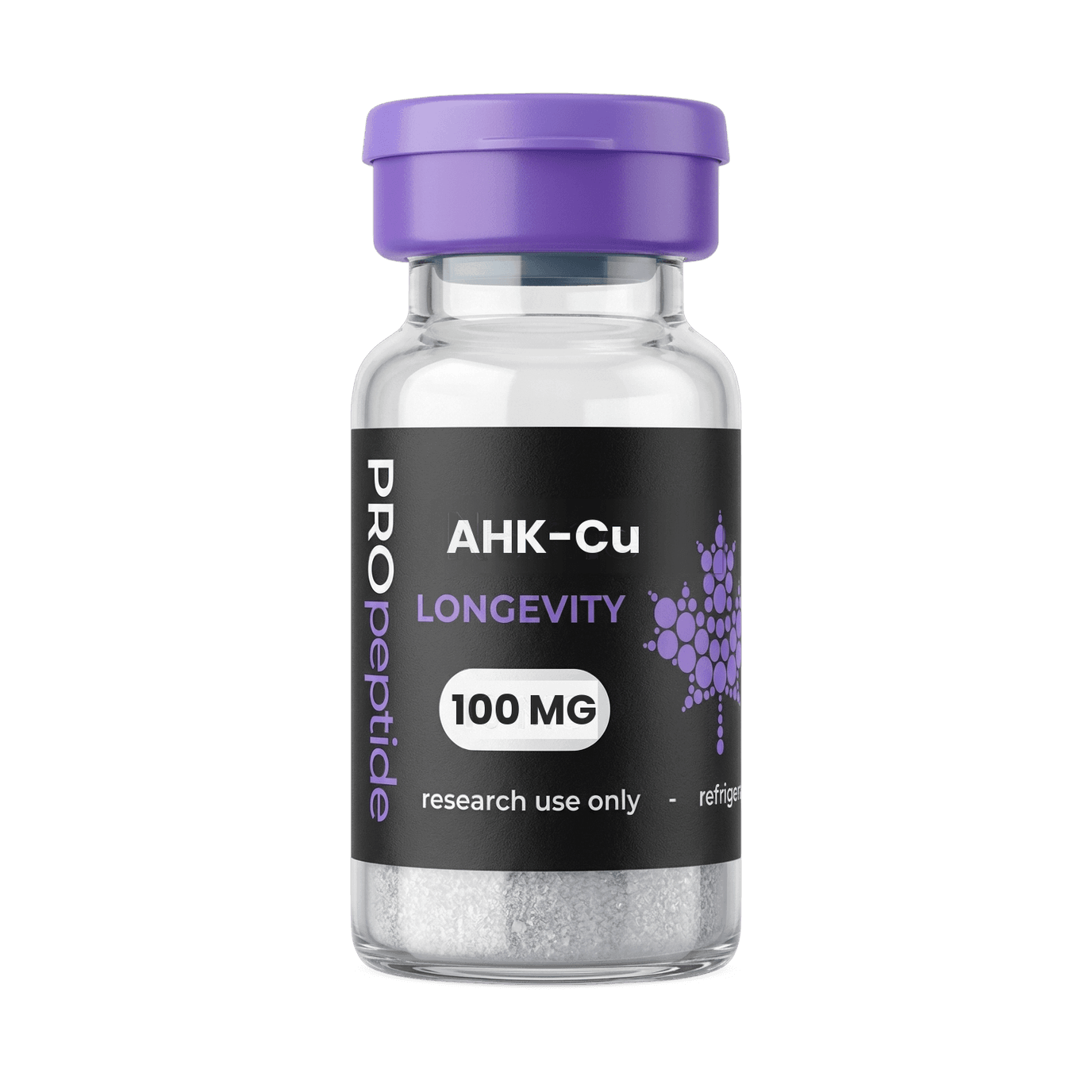
AHK-Cu
Ala-His-Lys copper complex. Research use only, not for human consumption.
Choose your pack
For research use only. Not for human or veterinary use.
What AHK-Cu is
The plain-language version, first.
One letter away from a famous molecule, and a whole reputation borrowed from it.
AHK-Cu is a peptide-copper coordination complex of the synthetic tripeptide Ala-His-Lys, structurally distinct from GHK-Cu by a single alanine-for-glycine substitution at position one. The free peptide is C15H26N6O4 with molecular weight 354.41 (CAS 126828-32-8) and the monohydrochloride copper complex is C15H24ClCuN6O4 with molecular weight 451.39 (CAS 682809-81-0). Its published evidence consists of a single study reporting human hair follicle elongation ex vivo and dermal papilla cell proliferation at picomolar to nanomolar concentrations, with no registered human trials.
Change one residue in a three-residue peptide and you have changed a third of the molecule. Worth remembering when something is marketed as a close cousin.
It is alanine-histidine-lysine holding a copper ion. Its famous relative GHK-Cu is glycine-histidine-lysine doing the same.
The histidine-lysine copper grip is shared, which is the part that matters for the chemistry: both are small peptides whose job description involves carrying copper.
GHK-Cu has decades of literature, a discovery story in human plasma, and a name in dermatology research.
AHK-Cu has the resemblance.
One-third different, marketed as basically the same, and the difference between their bibliographies is the entire story.
What is AHK-Cu?
Mechanism studied, not outcome promised.
Copper delivery, same as its cousin, with less proof it matters.
The proposed mechanism is copper logistics, same as the cousin.
Copper is a cofactor for enzymes involved in collagen cross-linking and vessel formation, and small copper-binding peptides are studied as delivery vehicles for it.
For GHK-Cu that proposal has decades of supporting work. For this one it has an assumption of family resemblance.
Does the swapped residue change binding, delivery, or activity? Genuinely unknown, because the comparative work does not exist.
Here's the honest part, and it applies to every cousin-molecule on the market.
Resemblance is a hypothesis. In chemistry, one changed letter has rewritten plenty of stories.
The research so far for AHK-Cu
Where the evidence is thin, we say so.
One study. 2007. Hair follicles in a dish. That is the file.
The independent file, in full: one study, 2007, examining hair follicle cells in vitro.
That is not an exaggeration for effect. One dedicated published study.
Everything else written about it is GHK-Cu work wearing a different name tag, and the swap is almost never disclosed.
No animal outcome studies of its own worth the name. No human trials. Nothing approved.
A single 2007 paper and a famous cousin. When a compound's bibliography fits in one sentence, the sentence should at least be accurate, and this one now is.
AHK-Cu, research grade, sold for laboratory use only.
AHK-Cu specs
The chemistry, exactly as released.
Who studies AHK-Cu
Who tends to order this one, and why.
- 1
Copper peptide chemists
A three residue chelation site built around a histidine imidazole is a compact and well behaved model complex, and both the free peptide and the monohydrochloride complex are characterised.
- 2
Hair follicle researchers
The Pyo ex vivo follicle elongation model is the only published context for this compound, and it remains unreplicated independently.
- 3
Structure-activity groups working on GHK
AHK is the cleanest available single-residue variant of GHK, which makes it useful for asking what position one actually contributes.
- 4
Anyone reading a topical concentration claim
The published active range is picomolar to nanomolar. Nothing published connects that to a percentage on a label, which is worth knowing before comparing products.
Sold for laboratory research only. This is not guidance for personal use, and nothing here is a recommendation.
AHK-Cu backstory
How it got here.
1973 is the year to start with, and it isn't AHK's year. A group looking at human albumin found an activity in it and eventually pinned it to three amino acids, glycine, histidine and lysine. GHK. It picked up copper, it picked up a reputation, and fifty years later it's in cosmetics, in wound literature and in regulatory documents.
AHK came later and came from a chemist's question rather than from a body. What happens if you change position one?
Alanine is glycine with a methyl group. It's the smallest change you can make to that position and still change something. The resulting molecule is synthetic, has no natural source, and carries a literature about the size of a single paper.
That's a strange place for a compound to sit. Famous by association, studied almost not at all.
- 1
GHK came first, in 1973
Gly-His-Lys was identified as an activity in human albumin and became one of the most studied copper-binding peptides in biology.
- 2
AHK is the synthetic answer to a question
Replace the position one glycine with alanine, which is glycine plus a methyl group, and see what changes. AHK has no natural source.
- 3
One paper, 2007
Pyo and colleagues reported ex vivo human hair follicle elongation and dermal papilla cell proliferation at picomolar to nanomolar concentrations. The literature has not grown much since.
Buying AHK-Cu in Canada
What ships, how fast, and the paperwork.
Research use only, and a regulatory contrast worth knowing. Sold for laboratory research use only, not for human or veterinary consumption. GHK-Cu appears on FDA 503A Category 1, under evaluation, except for injectable routes, and GHK-Cu is named in Health Canada's advisory of 9 April 2026, which states that peptides are generally regulated as prescription drugs in Canada and that "For Research Use Only" labelling does not make these products legal. AHK-Cu is on neither list, because it has not reached the stage of being evaluated. Absence is not approval.
Ask which molecular weight you are being quoted. The free peptide is 354.41 and the monohydrochloride copper complex is 451.39. A single number with no form named is not usable information. The figure near 417 that circulates on vendor listings could not be confirmed against a primary source.
Most AHK-Cu writing is really about GHK. The two differ at position one. GHK has five decades of literature and AHK has approximately one paper. Claims transferred from one to the other are assumptions, not findings.
Common questions
5 answers, none of them dodges.
How is AHK-Cu different from GHK-Cu?
One amino acid. GHK is Gly-His-Lys and AHK is Ala-His-Lys, so position one carries an alanine instead of a glycine, which is a single methyl group of difference. GHK is the natural peptide, identified in 1973 as an activity in human albumin. AHK is a synthetic analogue with no natural source and a far smaller literature behind it.
What is AHK-Cu's molecular weight?
It depends which form you mean, and that's not a dodge. The free tripeptide Ala-His-Lys is C15H26N6O4 at 354.41 daltons, CAS 126828-32-8. The monohydrochloride copper complex is C15H24ClCuN6O4 as an anion at 451.39 daltons, CAS 682809-81-0. A figure around 417 circulates on vendor listings and we could not confirm it in any primary source.
How much research exists on AHK-Cu specifically?
One study of substance. Pyo and colleagues in 2007 reported that AHK-Cu at ten to the minus twelve through ten to the minus nine molar stimulated elongation of human hair follicles ex vivo and proliferation of dermal papilla cells in vitro (Archives of Pharmacal Research, PMID 17703734). There are no registered human trials. Most other writing about AHK-Cu is inference from GHK.
Why does the copper matter?
Because AHK-Cu is a coordination complex rather than a peptide that happens to have copper nearby. The histidine imidazole ring makes a tripeptide with histidine in the middle an efficient copper handle, and the complex is the species that was studied. Treating the free peptide and the copper complex as the same material is the most common error made with this compound.
What do the picomolar concentrations mean?
That the effect observed was a signalling event rather than a bulk chemical one, since ten to the minus twelve molar is far too low for a structural mechanism. It also makes topical concentration claims difficult to interpret, because nothing published connects a percentage in a formulation to a molar concentration at a hair follicle. Precision in the study, ambiguity on the label.
AHK-Cu vs GHK-Cu
Stacked together constantly, compared almost never.
This is the comparison the whole page has been circling, so here it is straight.
AHK-Cu shares the copper grip and one-third of its sequence is different. Its independent evidence base is a single 2007 in-vitro study.
GHK-Cu was found in human plasma in 1973 and carries decades of literature, including the 1994 wound-setting trial and one blinded aesthetic null.
If the evidence is what you are buying, buy the molecule the evidence is about. They sit on the same shelf and only one of them wrote the file. GHK-Cu has its own page here
Good pairing options with AHK-Cu
What researchers stack alongside it.
Pairing is where research gets ahead of itself. These are the compounds researchers put in the same order as AHK-Cu, which is a statement about ordering habits, not about evidence. Two things in one cart have not been studied together unless somebody studied them together.
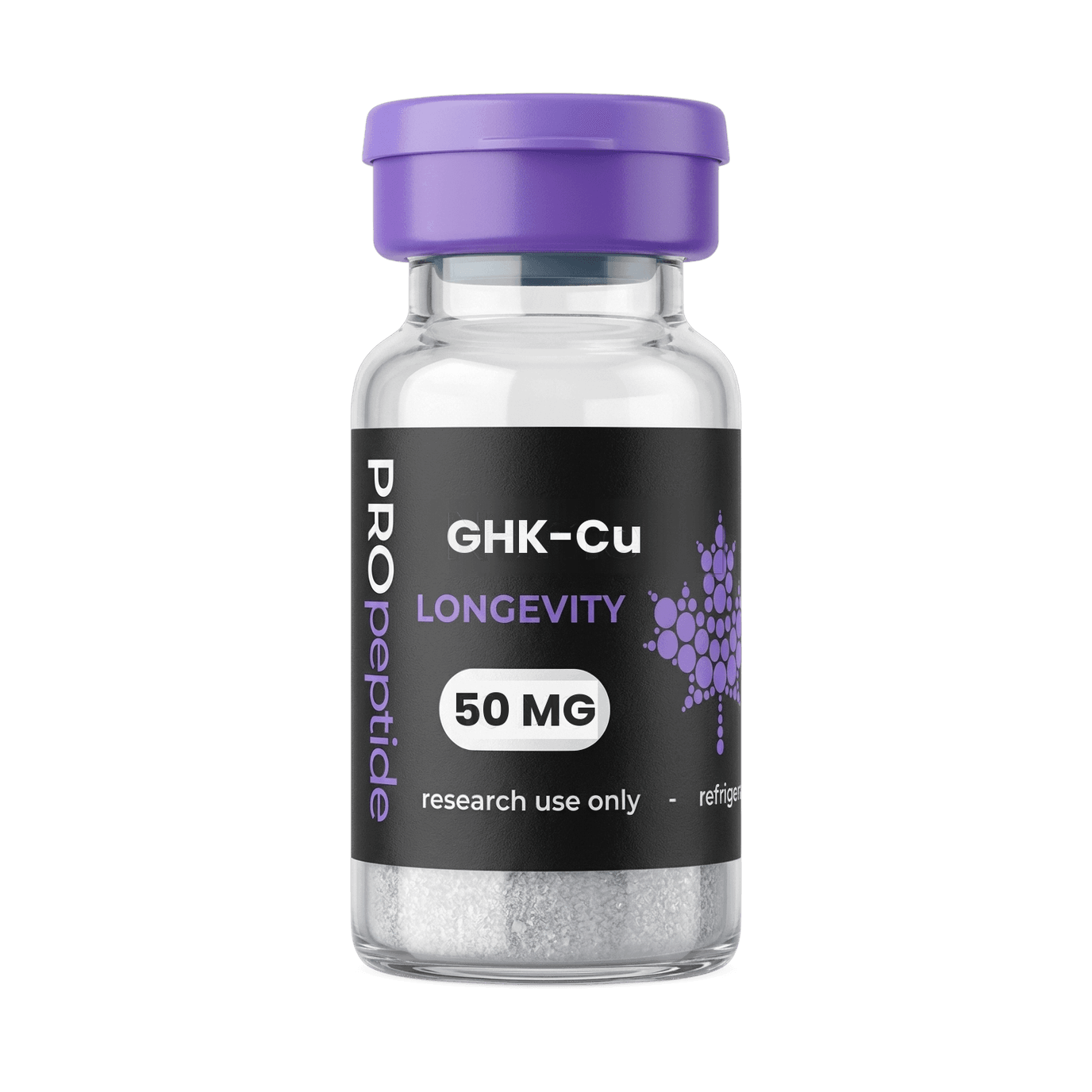
A tripeptide from your own plasma that refuses to travel without its copper atom. The strongest card in its file is a 1994 topical gel trial, and the one blinded aesthetic trial found no objective benefit.
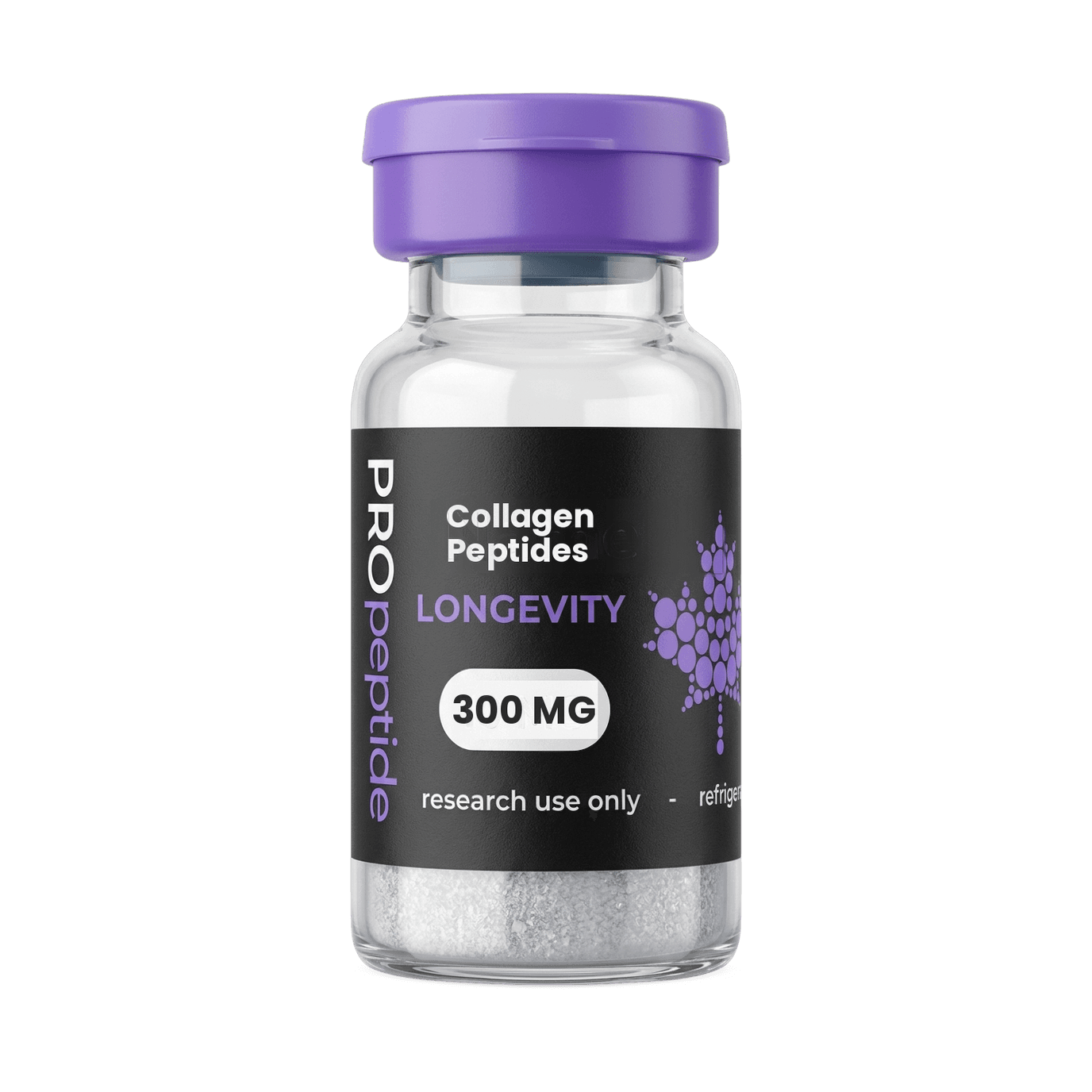
The least glamorous thing in the catalogue, and the one with a 35-trial human evidence base in osteoarthritis. A batch-variable hydrolysate, not a defined molecule, and honestly the best-evidenced item on this shelf.
It is water. We know. But it is the one bottle on this shelf where the boring ingredient is the entire product, and getting it wrong ruins everything else you bought.
Order AHK-Cu right now
One last look before you decide.
Freeze-dried, ships cold from Canada
You've got the whole file now, the thin parts included. Nothing above pretended otherwise. If that's the kind of source you were after, AHK-Cu is right here.
Not for human consumption. Not approved by Health Canada or any other regulatory body.
Page last updated October 4, 2026
People also search for AHK-Cu
Related searches.