
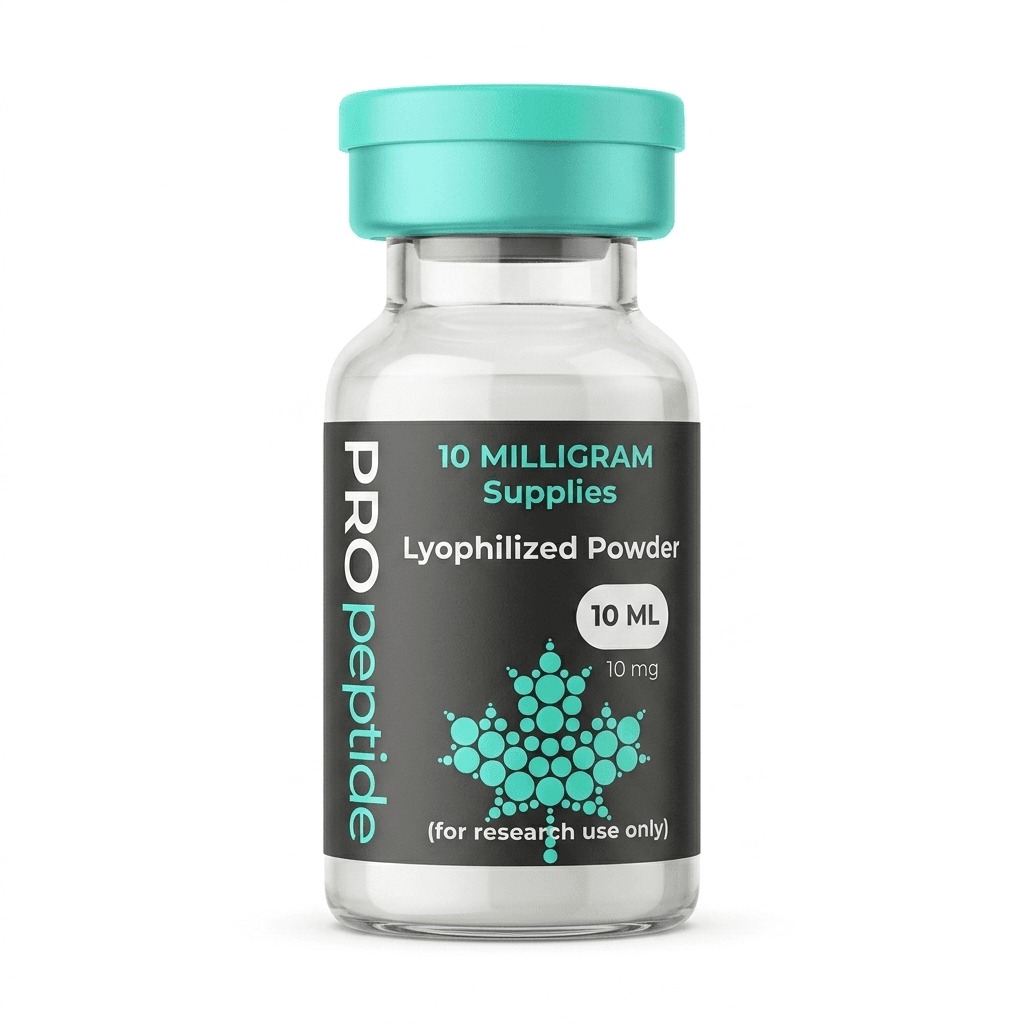
Bacteriostatic Water
Sterile water with 0.9% benzyl alcohol, so a multi-dose vial survives being entered more than once.
Choose your pack
For research use only. Not for human or veterinary use.
What Bacteriostatic Water is
The plain-language version, first.
The least exciting thing we sell, and the one most likely to wreck the rest of your order.
Bacteriostatic Water for Injection is sterile, nonpyrogenic Water for Injection USP with benzyl alcohol added as a bacteriostatic preservative, most commonly supplied as a 30 millilitre multiple-dose presentation containing 0.9 percent benzyl alcohol. It contains no peptide and no active ingredient, and its approved labelling covers diluting or dissolving drugs for intravenous, intramuscular or subcutaneous injection.
Alright, look. It's water. We're not going to build a mythology around it.
But here's the thing people miss, and it costs them the expensive vial rather than the cheap one.
Plain sterile water is a one-shot deal. You go in once, and whatever came in on that needle now lives there.
Bacteriostatic water has benzyl alcohol in it, at about 0.9 percent. That is the whole difference and it is the entire reason the product exists.
The alcohol doesn't sterilise anything. It stops what gets introduced from throwing a party afterward, which is a much more modest job and exactly the job that multi-draw work needs done.
Sterile water for injection USP, preserved. That is the full spec, and there is nothing clever hiding underneath it.
What is bacteriostatic water?
Mechanism studied, not outcome promised.
The water is not the feature. The 0.9 percent of it that isn't water is the feature.
Think about a bag of chips. Open it once, eat it, fine.
Open it, close it, leave it on the counter, come back Thursday. Different situation entirely, and the bag was never designed for Thursday.
That is a single-use diluent versus a preserved one. Same water. Completely different assumptions about what happens after the first puncture.
Benzyl alcohol is bacteriostatic, not bactericidal, and the distinction is the whole point. Static means it holds the line. Cidal means it kills.
This one holds the line. It buys the vial a working life across multiple draws instead of one.
Here's the honest part. It is not a sterility guarantee and it is not a substitute for handling the vial properly.
A preservative buys you margin on a mistake. It does not buy you permission to make one.
The research so far for Bacteriostatic Water
Where the evidence is thin, we say so.
Nobody runs trials on this. It is a USP monograph, which is better.
There is no research file here in the way there is for everything else on this shelf, and that is a good sign rather than a gap.
This is a compendial product. It has a USP monograph, which means the specification is published, fixed, and the same everywhere.
Nobody is running a phase 2 on water. There is nothing to find out.
What matters instead is whether what you receive matches the monograph, which is a manufacturing question rather than a scientific one.
That is genuinely the whole story. A defined preservative at a defined concentration in water that meets a published standard.
The only compound in this catalogue where we can tell you exactly what it does and be finished in one sentence.
Bottle sizes and current stock are listed below.
Bacteriostatic Water specs
The chemistry, exactly as released.
Who studies Bacteriostatic Water
Who tends to order this one, and why.
- 1
Anyone reconstituting a lyophilised product
This is the standard diluent for that job, and the multi-dose format is the reason it is chosen over preservative-free water.
- 2
Pharmacy and compounding
The multiple-dose versus single-dose distinction is a fundamental one, and the choice between the two waters is driven by whether a preservative is acceptable for the patient.
- 3
Neonatal medicine
The one population where this product is contraindicated outright, following the 1982 identification of benzyl alcohol toxicity in premature infants.
- 4
Quality checking
Approved products carry an application number. At least one bacteriostatic water listed on DailyMed carries the marketing category unapproved drug other, with no application number. A buyer can check any NDC in the FDA directory in under a minute.
Sold for laboratory research only. This is not guidance for personal use, and nothing here is a recommendation.
Bacteriostatic Water backstory
How it got here.
Water for Injection is one of the oldest compendial preparations there is, and the addition of a preservative to permit multi-dose containers is a practical solution to a practical problem: single-dose vials waste product when you only need a fraction of one.
The approved United States product is Hospira's, under NDA 018802, originally approved on 27 October 1982, and it serves as the reference listed drug. Most of what circulates under other labels in the US is repackaged Hospira product citing that same application number.
In Canada the product is authorised and marketed. Pfizer Canada holds DIN 00038202 for the 30 millilitre multidose vial, with an original market date of 31 December 1952, and DIN 02215721 for a prefilled syringe. Both are listed as Marketed and classed as Ethical, meaning supplied through healthcare professionals rather than sold over the counter.
That 1952 date is a reminder of how long this has been a standard item.
- 1
A practical problem
Single-dose vials waste product when you only need a fraction. Adding a preservative permits a container that can be entered more than once.
- 2
The US reference product
Hospira NDA 018802, originally approved 27 October 1982, serves as the reference listed drug. Most other US labels are repackaged product citing that application.
- 3
Authorised in Canada since 1952
Pfizer Canada holds DIN 00038202 for the 30 millilitre multidose vial, original market date 31 December 1952, listed as Marketed.
Buying Bacteriostatic Water in Canada
What ships, how fast, and the paperwork.
Not for neonates, and that is not boilerplate. Benzyl alcohol has been associated with toxicity in newborns. Where water is needed to prepare or dilute medications for a neonate, preservative-free Sterile Water for Injection is the correct product and the approved label says so directly.
Never inject it on its own. The approved labelling warns that intravenous administration without a solute may result in haemolysis. It is hypotonic. It must be made approximately isotonic by whatever is dissolved in it.
Same day out of British Columbia. Our building, our cold packs, our people, and nothing sitting in a customs queue while you refresh a tracking page.
Common questions
6 answers, none of them dodges.
What is the difference between bacteriostatic water and sterile water?
The preservative. Sterile Water for Injection USP contains nothing but water and is a single-use product, so you use it and discard the remainder. Bacteriostatic Water for Injection adds benzyl alcohol, which inhibits bacterial growth and allows a multi-use container to be entered repeatedly. The label for the bacteriostatic version states that repeated withdrawals may be made.
How much benzyl alcohol is in it?
0.9 percent, which is 9 milligrams per millilitre, in the standard 30 millilitre plastic multi-use vial. A 20 millilitre fill in a 30 millilitre glass vial carries 1.1 percent, or 11 milligrams per millilitre. pH is 5.7 within a range of 4.5 to 7.0.
Why is it not for use in neonates?
Benzyl alcohol has been associated with toxicity in newborns. In 1982 a fatal syndrome in premature and low birth weight infants in neonatal intensive care was traced to benzyl alcohol in flush solutions and drug diluents, caused by accumulation of benzoic acid in livers too immature to conjugate it. The FDA-approved label carries a header warning and a contraindication stating solutions containing benzyl alcohol must not be used in this population.
Does bacteriostatic water sterilise what I dissolve in it?
No. Bacteriostatic means it inhibits bacterial growth, not that it kills organisms or sterilises anything. Its function is to stop the contents of an opened multi-use vial supporting microbial proliferation between entries. It is not a substitute for aseptic technique and it does not make a non-sterile substance sterile.
Can it be injected on its own?
No. The approved labelling states that intravenous administration of Bacteriostatic Water for Injection without a solute may result in haemolysis, because water alone is hypotonic and lyses red blood cells. It must be made approximately isotonic by whatever is dissolved in it. It is also not to be used for epidural or spinal anaesthesia, or for fluid replacement.
How much bacteriostatic water do I add to a peptide vial?
The volume sets the concentration, so there is no single figure. One millilitre in a 5 mg vial gives 5 mg per mL; two millilitres gives 2.5 mg per mL. A volume that lands the draw between about 5 and 50 units on a 1 mL insulin syringe keeps the markings easy to read, and the peptide calculator on this site does the arithmetic for any vial.
Good pairing options with Bacteriostatic Water
What researchers stack alongside it.
Pairing is where research gets ahead of itself. These are the compounds researchers put in the same order as Bacteriostatic Water, which is a statement about ordering habits, not about evidence. Two things in one cart have not been studied together unless somebody studied them together.
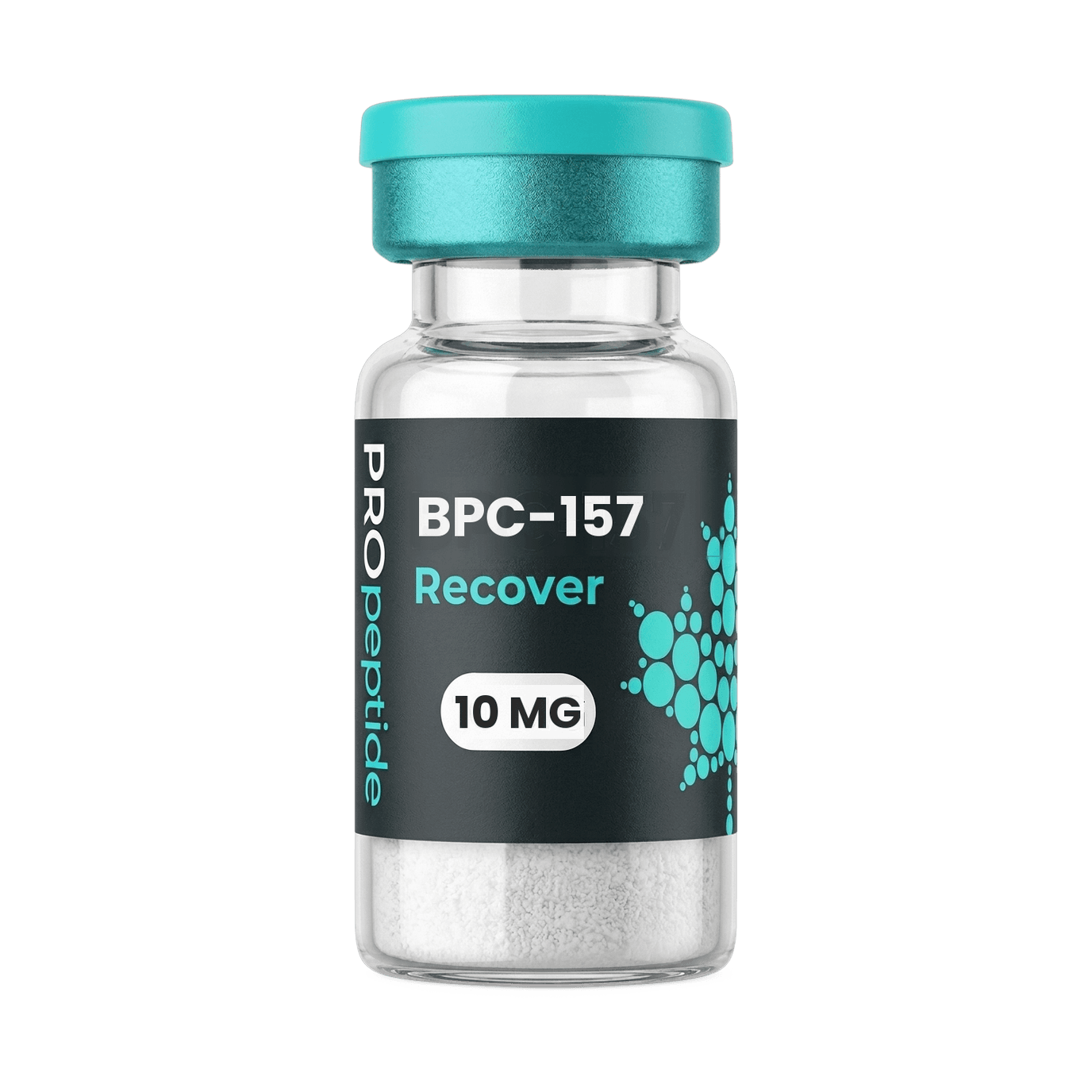
A fifteen-amino-acid fragment of a protective gastric protein, studied in animal models of tendon, gut and blood vessel repair.
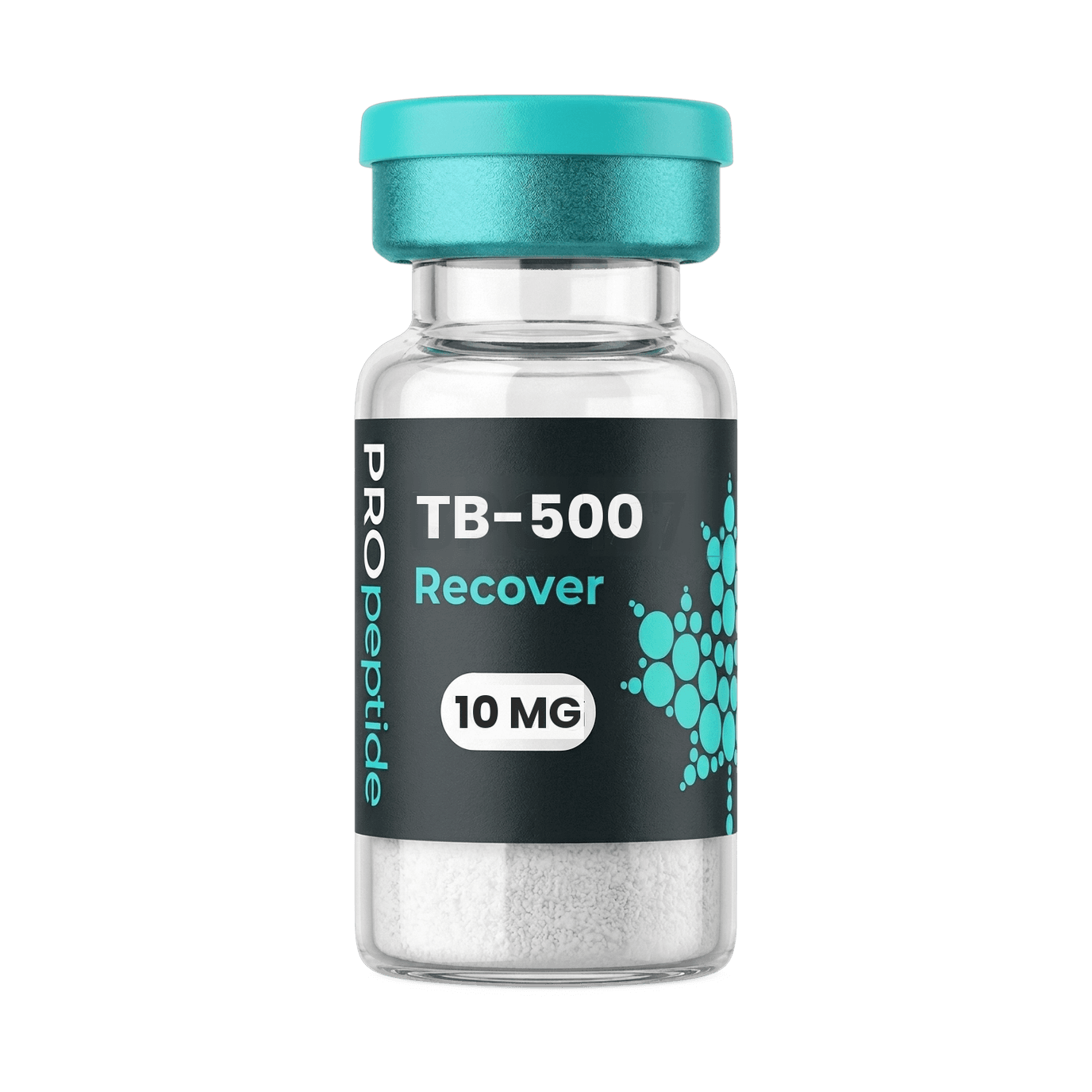
Seven residues clipped out of a 43-residue protein, and they happen to be the exact seven that grip actin. The rest of the protein turned out to be commentary.
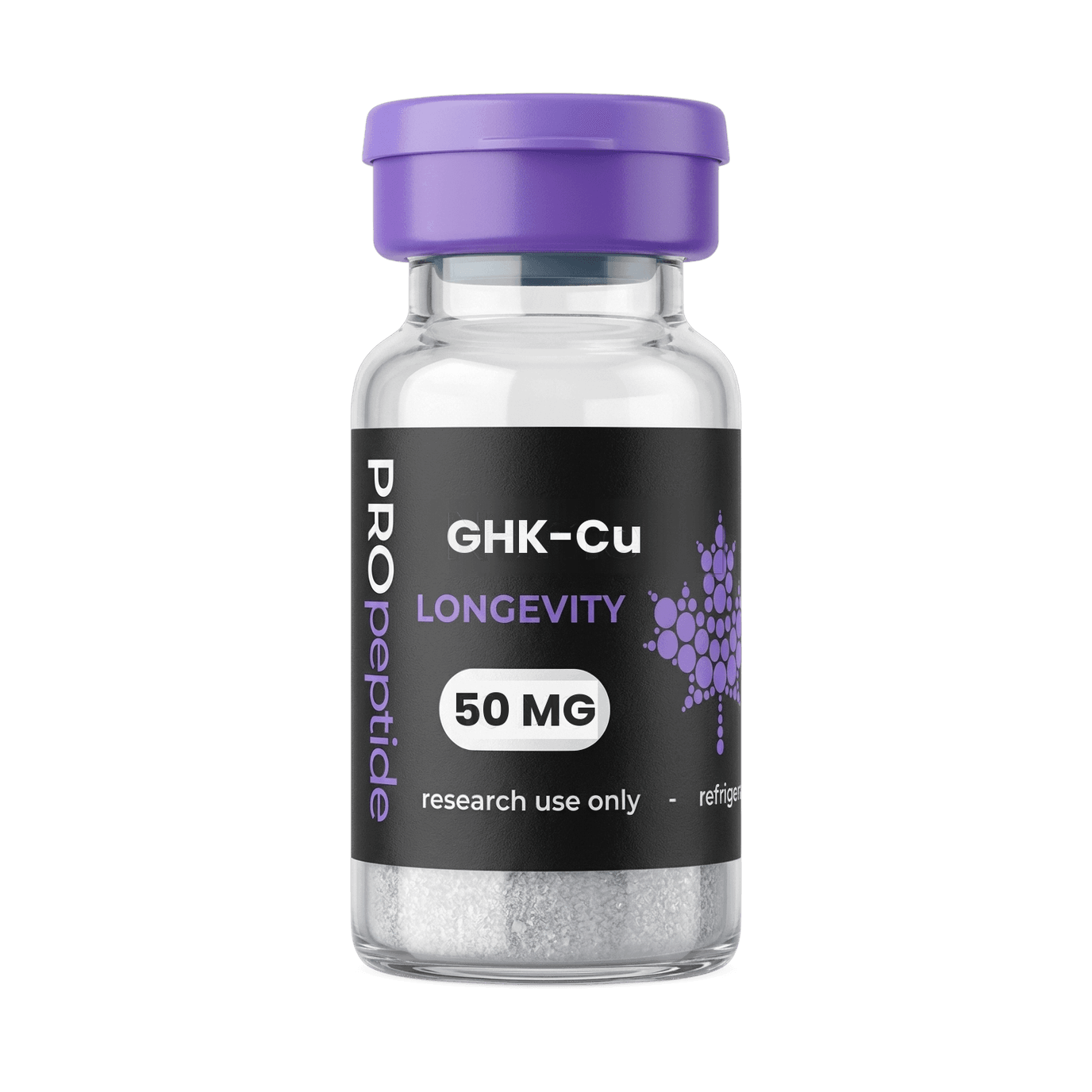
A tripeptide from your own plasma that refuses to travel without its copper atom. The strongest card in its file is a 1994 topical gel trial, and the one blinded aesthetic trial found no objective benefit.
Order Bacteriostatic Water right now
One last look before you decide.
Freeze-dried, ships cold from Canada
You've got the whole file now, the thin parts included. Nothing above pretended otherwise. If that's the kind of source you were after, Bacteriostatic Water is right here.
Not for human consumption. Not approved by Health Canada or any other regulatory body.
Page last updated October 4, 2026
People also search for Bacteriostatic Water
Related searches.