
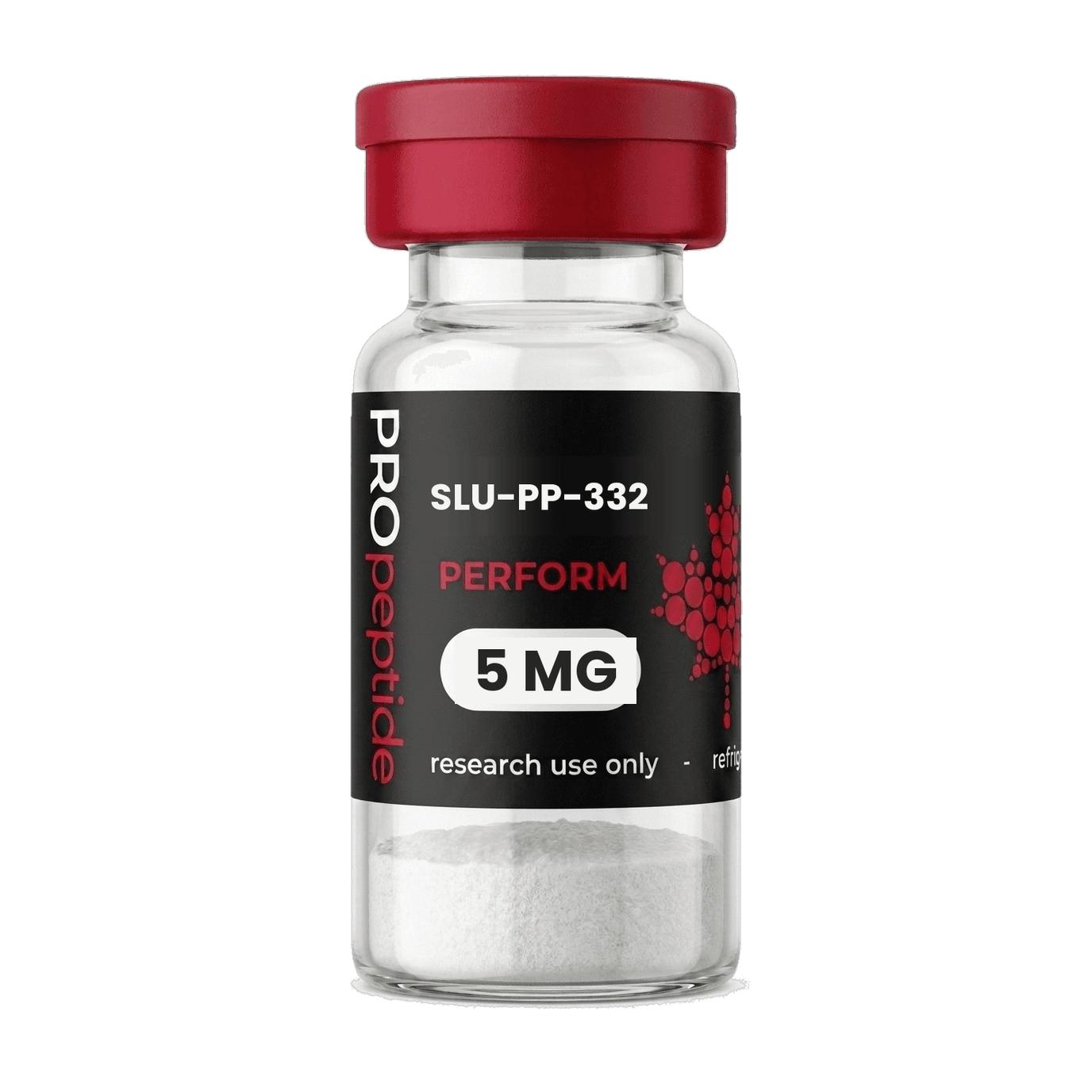
SLU-PP-332
Not a peptide. A small molecule from a Saint Louis University lab, and three strong mouse papers.
Choose your pack
For research use only. Not for human or veterinary use.
What SLU-PP-332 is
The plain-language version, first.
The newest chemistry on the shelf, aimed at receptors with no natural owner.
SLU-PP-332 is a synthetic small molecule, not a peptide, that acts as an agonist at the estrogen related receptors and increases the transcriptional programme skeletal muscle normally runs in response to endurance exercise. It was developed in an academic laboratory at Saint Louis University, its published evidence is limited to rodent studies, and it has never been tested in humans.
Housekeeping first, one final time: not a peptide. No amino acids, no bonds between them. A synthetic small molecule filed here by market habit.
Its targets are the strangest thing about it: the estrogen-related receptors, ERR alpha, beta and gamma, called orphan receptors because no natural hormone has ever been found that owns them.
Despite the name they do not bind estrogen. They run metabolic gene programmes, particularly in muscle, and they sit there switched by mechanisms biology has not fully explained.
SLU-PP-332, built at Saint Louis University in the 2020s, switches all three at once.
A master key for locks that never had an official key. That is genuinely novel, and novel cuts both ways.
What is SLU-PP-332?
Mechanism studied, not outcome promised.
Exercise-adjacent gene programmes, switched from a bench in St. Louis.
The ERRs regulate gene programmes associated with muscle energy metabolism, the same territory exercise adaptation works in.
Hence the inevitable nickname: exercise mimetic. In mice, activating these receptors shifted muscle toward endurance-associated fibre programmes.
The nickname deserves suspicion on principle. Exercise is a whole-body event involving hundreds of systems, and a molecule touching one receptor family mimics a slice of it at most.
Pan-agonism raises its own flag: all three ERRs, in every tissue that expresses them, with tissue-selectivity nobody has mapped.
Here's the honest part, and it is shorter than usual.
First mouse papers: 2023 and 2024. Human pharmacokinetics, safety, anything at all: zero. This is bench chemistry, present tense.
The research so far for SLU-PP-332
Where the evidence is thin, we say so.
Mouse papers from the 2020s and nothing else. Genuinely nothing.
The complete published record fits in a sentence: rodent studies from the mid-2020s showing endurance-associated changes, from the originating group and early collaborators.
No human has received this compound in any registered study. No safety data in people exists. The molecule is younger than some items in your fridge.
Independent replication: pending. Long-term animal data: pending. Everything: pending.
Nothing approved, obviously, and sport regulators have already flagged the exercise-mimetic class in principle.
The frontier, sold as a product. Whatever this molecule turns out to be, nobody knows it yet, including everyone currently selling it.
Have a look at current stock and vial sizes.
SLU-PP-332 specs
The chemistry, exactly as released.
Who studies SLU-PP-332
Who tends to order this one, and why.
- 1
Nuclear receptor pharmacology
Orphan receptors with no established natural ligand are among the harder targets to drug, and this scaffold is a notable success at it.
- 2
Muscle and mitochondrial biology
Fibre type composition, mitochondrial biogenesis and the PGC-1 alpha partnership that runs the endurance adaptation programme.
- 3
Cardiology
The 2024 Circulation paper attributed cardiac benefit in a mouse pressure-overload model to ERR gamma rather than alpha, suggesting tissue-specific roles.
- 4
Anti-doping laboratories
Two groups published in vitro metabolite maps and detection methods in 2026, both explicitly framing the compound as having doping potential.
Sold for laboratory research only. This is not guidance for personal use, and nothing here is a recommendation.
SLU-PP-332 backstory
How it got here.
The exercise mimetic idea has a long and mostly disappointing history. The appeal is obvious and the difficulty is that exercise does many things at once through many pathways, so single-target compounds capture a fraction of it.
The nuclear receptor route is one of the more rational attempts. If endurance adaptation is a transcriptional programme, and specific receptors run that programme, then agonising those receptors is a defined intervention with a measurable readout rather than a vague claim.
The estrogen-related receptors were a natural target once ERR alpha and PGC-1 alpha were understood as partners in mitochondrial biogenesis. The obstacle for years was chemistry: orphan receptors with no known natural ligand are hard to make agonists for.
Thomas Burris and colleagues at Saint Louis University solved that part. Burris is now at the University of Florida Genetics Institute, and the medicinal chemistry programme around this scaffold has continued.
- 1
A long-standing idea
Exercise mimetics have an appealing premise and a difficult history, because exercise acts through many pathways at once and single-target compounds capture a fraction.
- 2
The transcriptional route
Endurance adaptation is a gene expression programme. ERR alpha partnered with PGC-1 alpha is one of its central drivers, which makes it a defined target with a measurable readout.
- 3
Saint Louis University, 2023
The Burris laboratory solved the chemistry problem of building an agonist for an orphan receptor and published the first characterisation in ACS Chemical Biology.
Buying SLU-PP-332 in Canada
What ships, how fast, and the paperwork.
This is a small molecule, not a peptide. Molecular weight 290, no amino acids, no peptide bonds. It sits in a peptide catalogue for commercial reasons rather than chemical ones, and handling and reconstitution behave differently from a peptide.
Same day out of British Columbia. Our building, our cold packs, our people, and nothing sitting in a customs queue while you refresh a tracking page.
Prohibited under S0. It is not named on the WADA 2026 list, but section S0 captures any pharmacological substance with no current approval by any governmental regulatory health authority. SLU-PP-332 has no approval anywhere, so S0 applies and it is prohibited at all times. Two laboratories published detection methods for it in 2026.
Common questions
5 answers, none of them dodges.
Is SLU-PP-332 a peptide?
No. It is a small-molecule acylhydrazone with a molecular weight of 290.3 and no amino acids or peptide bonds in it. For comparison, the peptides in this catalogue generally run between 700 and 5,000 daltons. Anyone describing it as a peptide is describing the wrong class of molecule.
Has any human taken SLU-PP-332?
Not in any published or registered study. ClinicalTrials.gov returns zero studies for it. PubMed returns ten records, all preclinical, medicinal chemistry, review or doping-control analytical work. There is no human pharmacokinetic or safety data of any kind.
What about the study with 20 women in it?
That one is frequently misread. Bonanni and colleagues in Frontiers in Physiology in 2025 enrolled 20 women undergoing hip replacement and collected muscle biopsies. SLU-PP-332 was then applied to primary myoblast cultures grown from that tissue in the laboratory. No participant received the compound. It is human tissue in a dish, not human dosing.
What are estrogen-related receptors?
Orphan nuclear receptors named for their sequence similarity to the estrogen receptor. Despite the name they do not bind estrogen and are not part of estrogen signalling. ERR alpha partners with the coactivator PGC-1 alpha to drive mitochondrial biogenesis and oxidative metabolism, which is the transcriptional programme endurance training engages.
How strong is the mouse evidence?
Good, by preclinical standards. Three papers: increased oxidative muscle fibres and running endurance with the effect abolished in ERR alpha null animals, increased energy expenditure and reduced fat mass in obese models, and improved cardiac function and survival in a heart failure model. The knockout control in the first paper is the important part, because it demonstrates the compound works through the claimed target rather than something else.
Good pairing options with SLU-PP-332
What researchers stack alongside it.
Pairing is where research gets ahead of itself. These are the compounds researchers put in the same order as SLU-PP-332, which is a statement about ordering habits, not about evidence. Two things in one cart have not been studied together unless somebody studied them together.
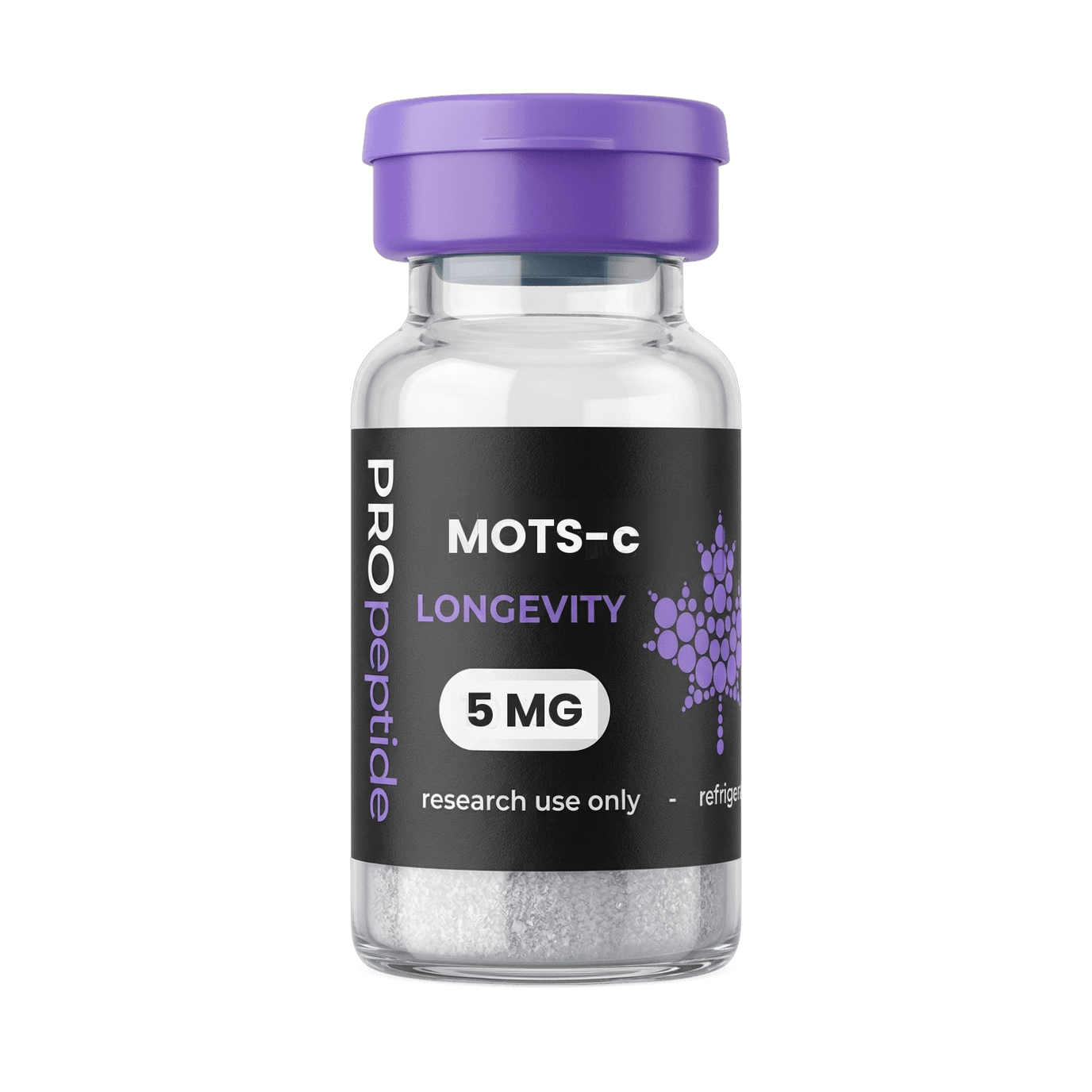
Your mitochondria carry their own tiny genome, and it turns out that genome writes peptides. This is the famous one. The FDA searched six databases in 2026 and found no human trial data at all.
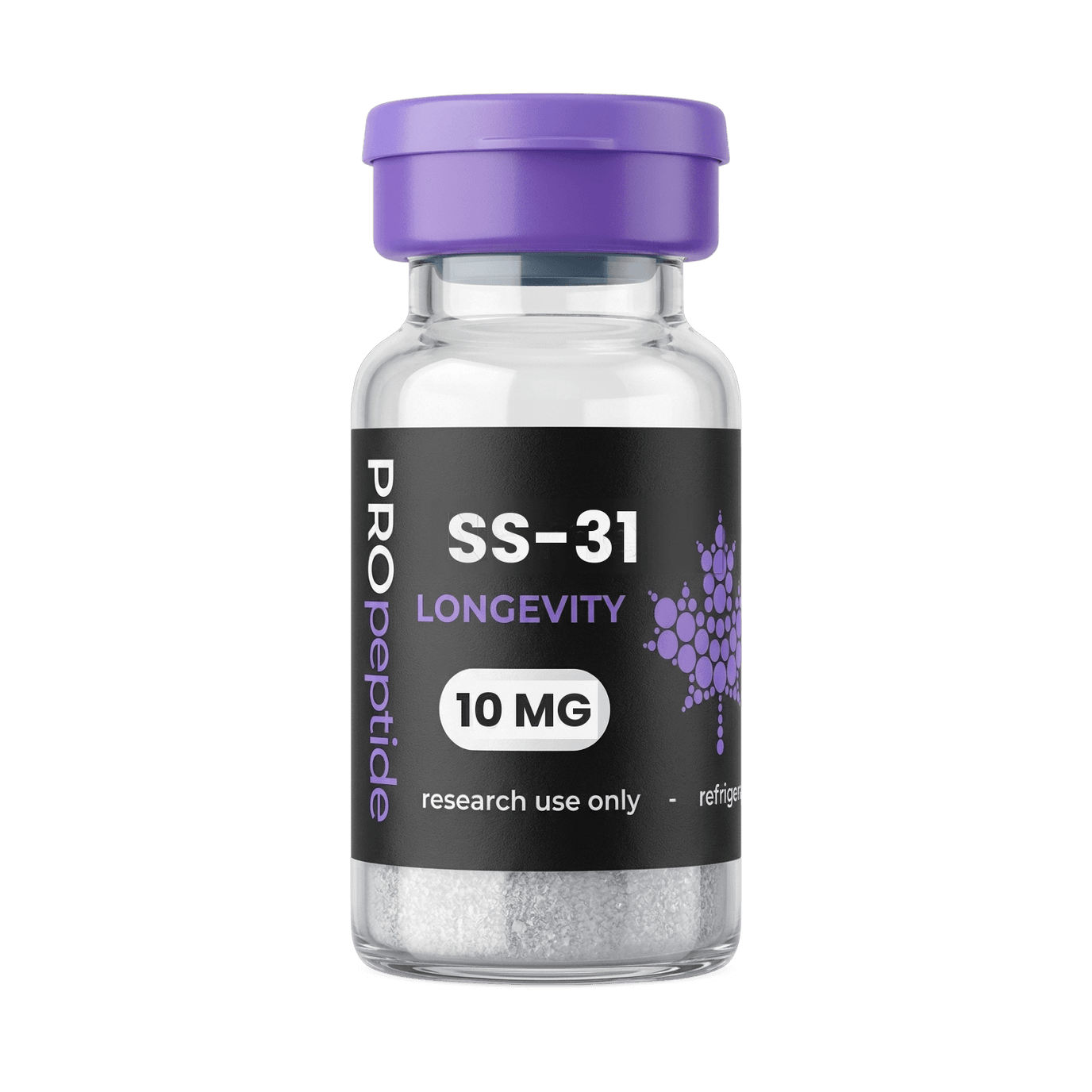
A tetrapeptide that parks itself on cardiolipin, the lipid mitochondria keep for themselves. FDA approved it in September 2025 for Barth syndrome, on data from 12 patients, which is a story about rare-disease medicine.
It is water. We know. But it is the one bottle on this shelf where the boring ingredient is the entire product, and getting it wrong ruins everything else you bought.
Order SLU-PP-332 right now
One last look before you decide.
Freeze-dried, ships cold from Canada
You've got the whole file now, the thin parts included. Nothing above pretended otherwise. If that's the kind of source you were after, SLU-PP-332 is right here.
Not for human consumption. Not approved by Health Canada or any other regulatory body.
Page last updated October 4, 2026
People also search for SLU-PP-332
Related searches.