
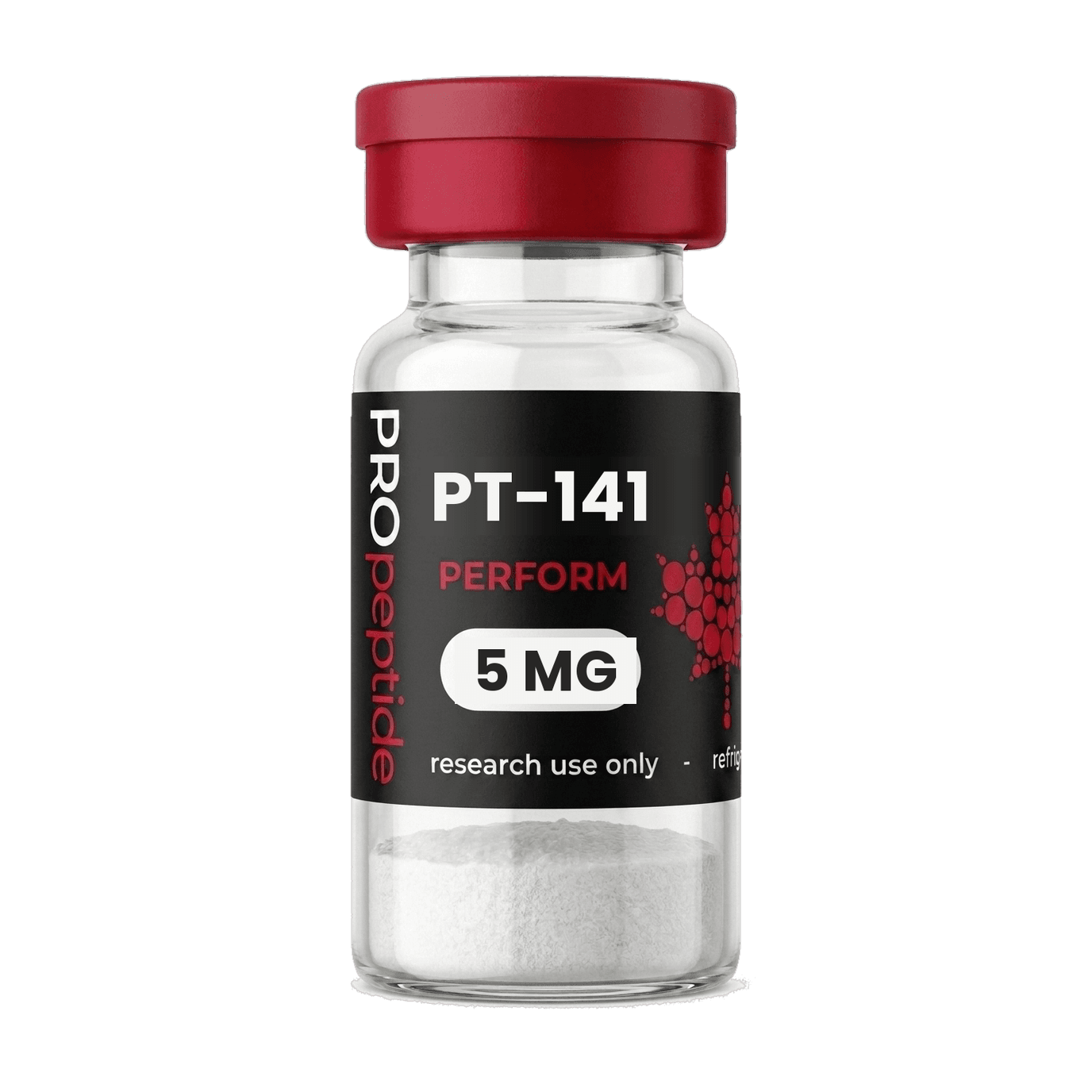
PT-141 Peptide (Bremelanotide)
An FDA-approved drug that started life as a metabolite of Melanotan 2.
Choose your pack
For research use only. Not for human or veterinary use.
What PT-141 Peptide (Bremelanotide) is
The plain-language version, first.
One of the shelf's few molecules with a genuine FDA approval, label and all.
PT-141 is bremelanotide, a cyclic seven amino acid melanocortin receptor agonist that arose as a metabolite of Melanotan 2 and acts on central melanocortin pathways rather than on peripheral blood flow. It is FDA approved and marketed as Vyleesi for hypoactive sexual desire disorder in premenopausal women.
This one made it all the way. Full development, FDA approval in 2019, a real product name on a real pharmacy shelf, prescription only.
Which makes the label public record, and the label's the most honest document anyone has ever written about this molecule.
PT-141, bremelanotide if you're being formal, is a cyclic melanocortin agonist. Its family tree matters. It descends from melanotan-II, the tanning peptide, and here's the wrinkle: melanocortin receptors are five cousins in one group chat. Pigmentation, appetite and arousal signalling all read the same thread.
So a tanning project took a left turn and came out the other side as this. That's not a rumour. That's the development history.
We carry the 5mg vial, and the box of ten takes a quarter off the price.
An approved drug with a research-vial twin. The approval belongs to the pharmacy product. The label's warnings travel with the molecule either way.
What is PT-141?
Mechanism studied, not outcome promised.
Descended from a tanning peptide, and the family resemblance never left.
Melanocortin receptors come as a five-member family, and picking one cousin out of the group chat is the entire game.
PT-141 talks to the family broadly enough that its effects were never going to be single-purpose.
Descended from a tanning molecule, and the pigmentation activity didn't get left behind: hyperpigmentation sits on the approved label as a documented risk.
So does a blood pressure signal, transient increases documented well enough that the label limits how often the approved product can be used and rules it out for some cardiovascular histories.
Here's the honest part, and for once a regulator wrote it for us.
The label is the mechanism section with consequences attached. It's public, it's specific, and it's the one document about this compound that nobody selling it links to.
The research so far for PT-141 Peptide (Bremelanotide)
Where the evidence is thin, we say so.
Approved, labelled, and the label is required reading.
A complete file, for once. Phase 1 through 3, an approval, and post-market surveillance running since 2019.
The trials put numbers on everything: modest efficacy against placebo, the blood pressure effect, the pigmentation risk, and nausea rates high enough to be a headline of their own. All quantified. All public.
This is what a finished evidence base looks like, and it's worth reading precisely because almost nothing else on this shelf has one.
The approval covers one specific indication, in one specific population, under prescription. A research vial inherits none of that. The molecule's documented risks come along regardless, because they're in the molecule, not the packaging.
We're not gonna dress it up. Approved isn't the same as benign. The label says both things at once, and it's three clicks away on the FDA's own site.
The rarest thing on this page isn't the compound. It's the paperwork.
Have a look at the vial sizes we currently have in stock.
PT-141 Peptide (Bremelanotide) specs
The chemistry, exactly as released.
Who studies PT-141 Peptide (Bremelanotide)
Who tends to order this one, and why.
- 1
Melanocortin pharmacology
MC4R signalling in the central nervous system, and how selectivity across the receptor family determines an effect profile.
- 2
Sexual medicine
The approved indication sits here, and the mechanism is central rather than vascular, which distinguishes it from the PDE5 inhibitor class.
- 3
Cardiovascular pharmacology
The transient pressor effect and heart rate decrease are documented in the approved label and drive its contraindications.
- 4
Dermatology
Focal hyperpigmentation from MC1R engagement, which the label flags as more likely with frequent dosing and in darker skin types.
Sold for laboratory research only. This is not guidance for personal use, and nothing here is a recommendation.
PT-141 Peptide (Bremelanotide) backstory
How it got here.
The University of Arizona melanocortin programme produced Melanotan 1 and Melanotan 2 as engineered alpha-MSH analogues. Melanotan 1 became an approved drug for a rare light sensitivity disorder. Melanotan 2 was never developed at all.
Bremelanotide came out of the middle of that work, as a metabolite of Melanotan 2 with activity worth pursuing separately. It was taken through clinical development by Palatin Technologies and licensed to AMAG Pharmaceuticals.
An earlier intranasal formulation was investigated and abandoned, with blood pressure effects part of the reason the programme moved to a subcutaneous autoinjector at a lower systemic exposure. The blood pressure signal that shaped that decision is still in the approved label.
- 1
Arizona melanocortin research
The 1980s programme that produced Melanotan 1 and Melanotan 2 as engineered alpha-MSH analogues.
- 2
A metabolite with a life of its own
Bremelanotide was identified as a breakdown product of Melanotan 2 with activity worth developing separately.
- 3
FDA approval, June 2019
Developed by Palatin Technologies and licensed to AMAG, approved as Vyleesi in a single-use autoinjector for as-needed use.
Buying PT-141 Peptide (Bremelanotide) in Canada
What ships, how fast, and the paperwork.
Same day out of British Columbia. Our building, our cold packs, our people, and nothing sitting in a customs queue while you refresh a tracking page.
Then into the fridge. Keep it cold and keep it dark. Sealed and freeze-dried it handles a rough trip without ice. Once it lands, fridge.
There is an approved label for this one. That is unusual here and it is worth using. It documents a transient blood pressure rise after each dose, contraindications in uncontrolled hypertension and known cardiovascular disease, and hyperpigmentation that may not resolve. Most compounds on this site have no such document to check.
Common questions
5 answers, none of them dodges.
Is PT-141 an approved drug?
Yes. Bremelanotide was approved by the FDA in June 2019 under the brand name Vyleesi, for acquired generalised hypoactive sexual desire disorder in premenopausal women, supplied as a single-use autoinjector for as-needed use. It is one of very few compounds on this site with a completed clinical programme behind it.
How is PT-141 related to Melanotan 2?
It is a metabolite of it. Bremelanotide was identified as a breakdown product of Melanotan 2 with activity worth developing on its own. Melanotan 2 was never developed by any sponsor and has no approval anywhere. Its metabolite went through full clinical development and was approved. Same receptor family, opposite outcomes.
What are the cardiovascular warnings?
The approved label documents a transient increase in blood pressure and a decrease in heart rate after each dose. Because of that it is contraindicated in people with uncontrolled hypertension and in those with known cardiovascular disease. These are label contraindications based on measured effects, not theoretical cautions.
Can PT-141 cause skin darkening?
Yes, and the label says so. Repeated dosing can produce focal hyperpigmentation including on the face, gums and breasts. It is more likely with more frequent dosing and in people with darker skin, and the label notes it may not resolve after discontinuation. The cause is MC1R engagement, the same receptor the Melanotan compounds act on.
How does it differ from PDE5 inhibitors?
Mechanism and site of action. PDE5 inhibitors work peripherally on smooth muscle and blood flow. Bremelanotide acts centrally on melanocortin receptors in the brain, principally MC4R, in pathways related to arousal and motivation rather than vascular tone. That is why its approved indication is a desire disorder rather than a performance one.
Good pairing options with PT-141 Peptide (Bremelanotide)
What researchers stack alongside it.
Pairing is where research gets ahead of itself. These are the compounds researchers put in the same order as PT-141 Peptide (Bremelanotide), which is a statement about ordering habits, not about evidence. Two things in one cart have not been studied together unless somebody studied them together.
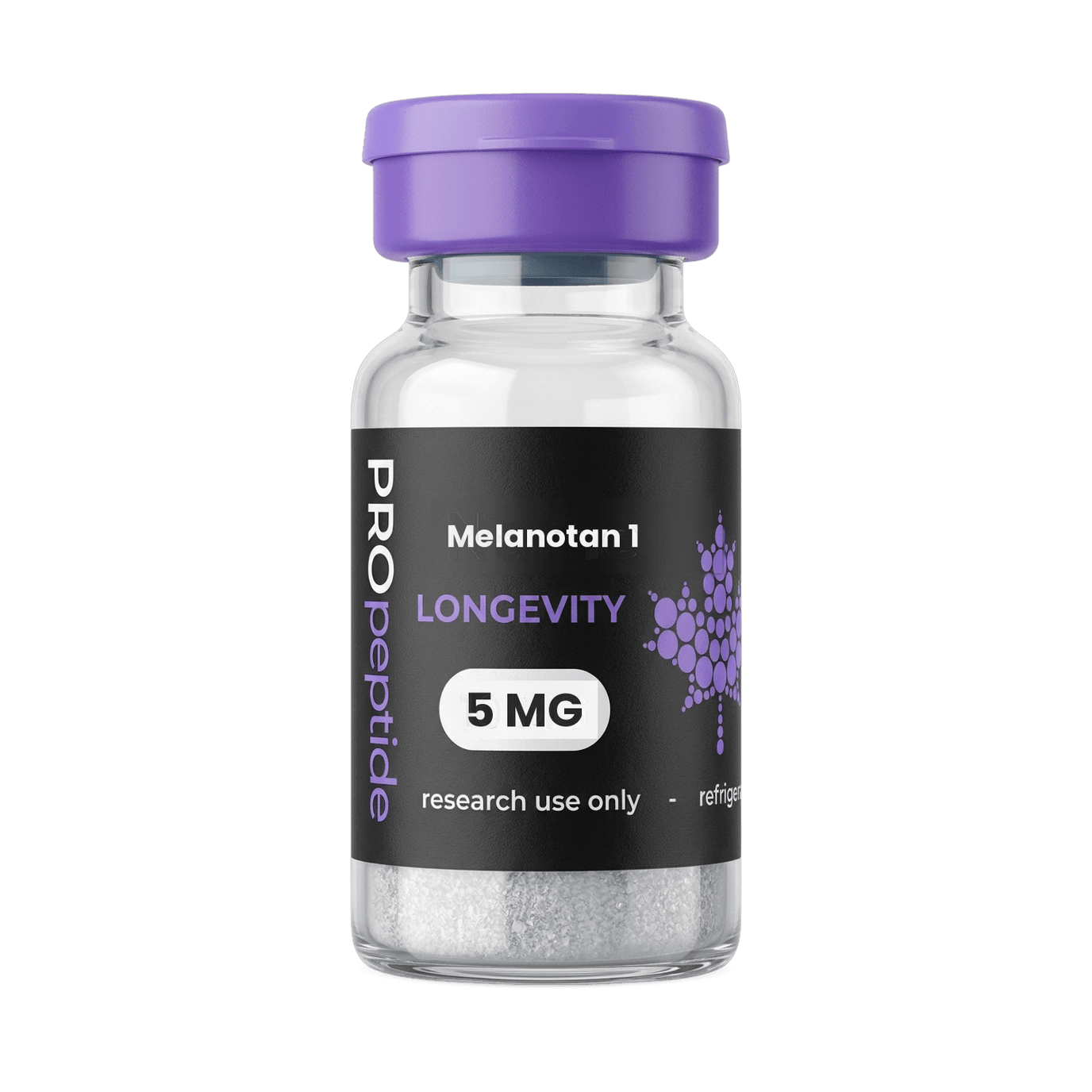
The alpha-MSH analogue that grew up and got approved as SCENESSE for a rare light-sensitivity disorder. The approved product is a subdermal implant in a clinic. This is not that, and the difference is the page.
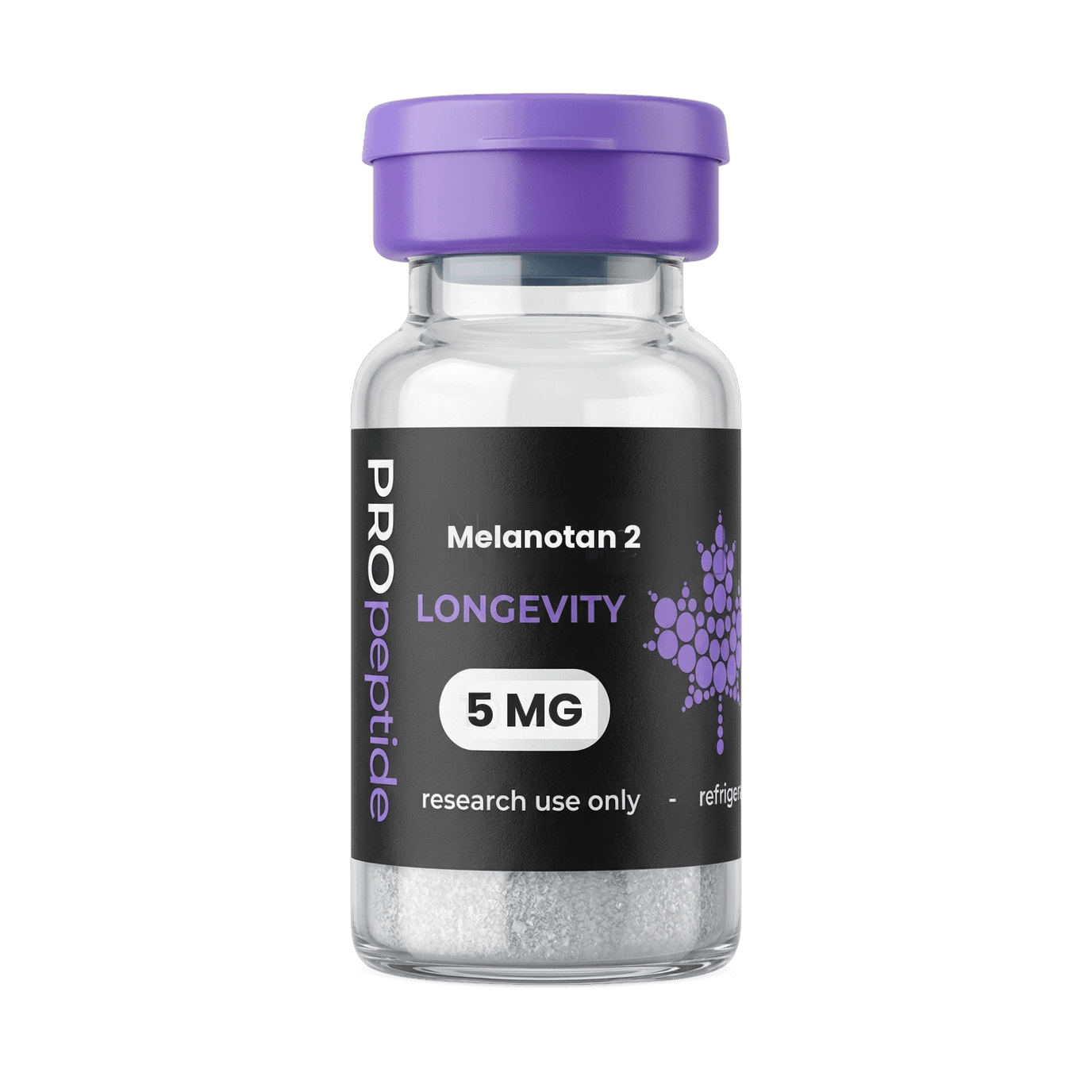
The sibling no sponsor ever developed and no regulator ever approved. Its published human record is substantially adverse-event case reports, which is a sentence worth reading twice.
It is water. We know. But it is the one bottle on this shelf where the boring ingredient is the entire product, and getting it wrong ruins everything else you bought.
Order PT-141 Peptide (Bremelanotide) right now
One last look before you decide.
Freeze-dried, ships cold from Canada
You've got the whole file now, the thin parts included. Nothing above pretended otherwise. If that's the kind of source you were after, PT-141 Peptide (Bremelanotide) is right here.
Not for human consumption. Not approved by Health Canada or any other regulatory body.
Page last updated October 4, 2026
People also search for PT-141 Peptide (Bremelanotide)
Related searches.