
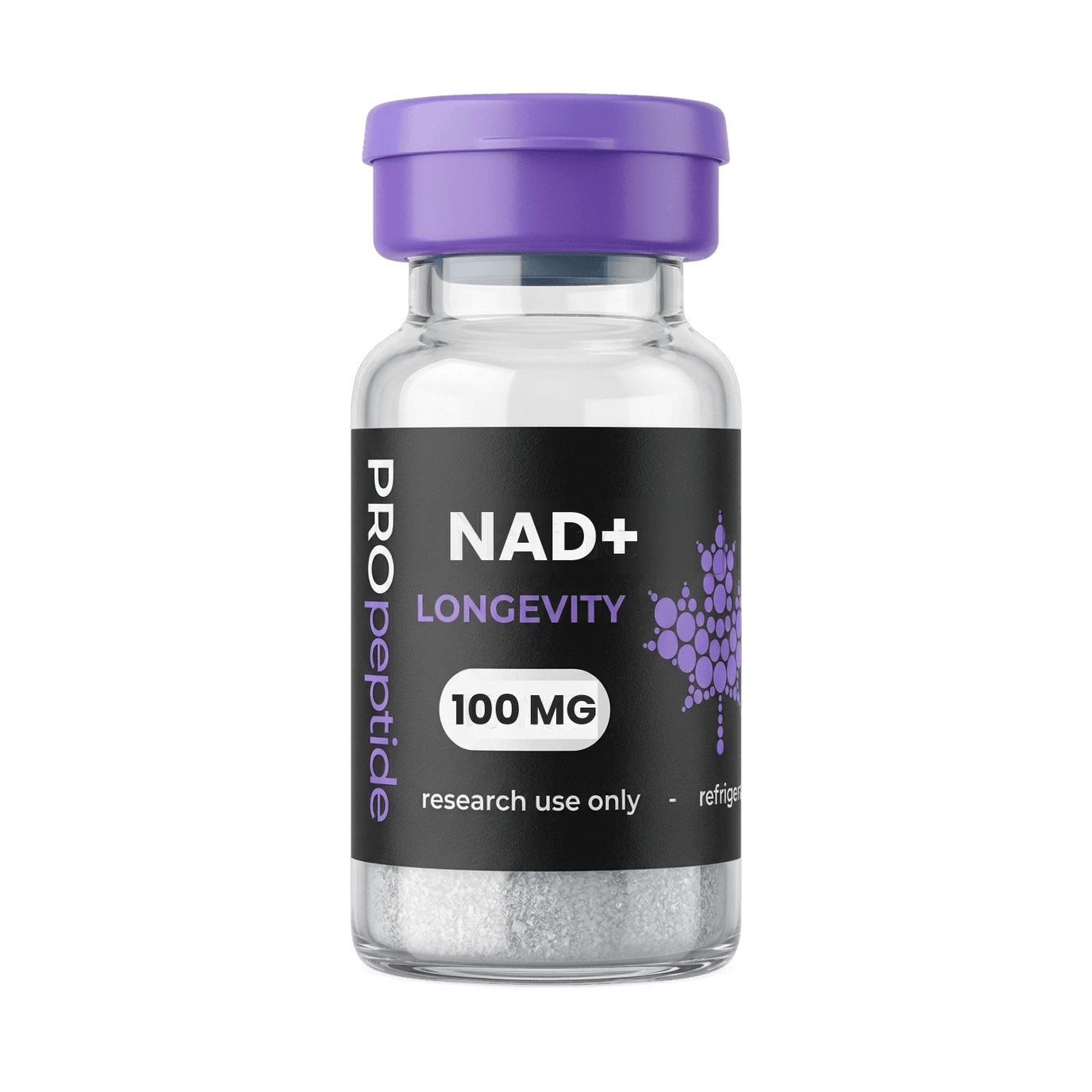
NAD+ Peptide
Not a peptide at all. Its human pharmacokinetics were first described in 2019, in eleven men.
Choose your pack
For research use only. Not for human or veterinary use.
What NAD+ is
The plain-language version, first.
The third non-peptide in the peptide aisle, and the most famous molecule of the three.
NAD+ is nicotinamide adenine dinucleotide, a coenzyme rather than a peptide, made of a nicotinamide nucleotide joined to an adenine nucleotide and used by cells as an electron carrier in redox reactions and as a substrate for sirtuin and PARP enzymes. Its human pharmacokinetics after intravenous administration were first described in 2019, in a study of eleven men.
Housekeeping first, in what is now a tradition on this shelf: this one is not a peptide. No amino acid chain, no peptide bonds. It is a dinucleotide, a different chemical family altogether.
It is also one of the most important molecules in your body, which is precisely why it sells.
NAD+ is the cell's electron currency. Every major metabolic pathway you have uses it, constantly, and levels are documented to decline with age.
Both of those facts are textbook-solid, and both get recruited into a sales pitch they do not actually complete.
Important molecule, real age-related decline, and a logical gap between those facts and a vial that the marketing vaults over nightly.
What is NAD+?
Mechanism studied, not outcome promised.
The electron currency of every cell you have. That part is settled science.
The biochemistry is glorious and settled: it shuttles electrons through metabolism, and doubles as the fuel for repair enzymes like sirtuins and PARPs.
None of that is in dispute. What is in dispute is whether administering it from outside does anything the textbook implies.
The problem is logistics. The finished molecule does not simply stroll into cells; it is largely broken down and rebuilt from precursors, which is why the oral supplement world sells precursors instead.
The injectable and drip versions skip to the finished molecule and skip the question of whether that route achieves anything different.
Here's the honest part.
A molecule being centrally important is the beginning of a hypothesis about supplementing it, not the end of one. The decline is real. The fix is unproven.
The research so far for NAD+
Where the evidence is thin, we say so.
The biology is textbook. The drip-bar version has no controlled file.
Split the mountain of literature by what it is actually about.
About NAD+ biology: enormous, rigorous, foundational. Decline with age documented.
About administering the finished molecule to healthy adults: no controlled trial of the injectable form for ageing, energy, cognition or restoration. The drip-bar industry runs ahead of a file that does not exist.
Precursor molecules have some human trials with modest, mixed results, and those are different substances.
Nothing approved for any wellness indication.
The textbook chapter is real. The IV-lounge chapter has not been written, and we are not going to pretend the first one covers the second.
Have a look at the vial sizes we keep in stock.
NAD+ specs
The chemistry, exactly as released.
Who studies NAD+
Who tends to order this one, and why.
- 1
Ageing biology
Sirtuins, PARPs and CD38, and the measured decline in tissue NAD+ across a lifespan. This is a legitimate and active research area.
- 2
Metabolic biochemistry
The NAD+ and NADH couple in glycolysis, the citric acid cycle and oxidative phosphorylation. Textbook and uncontested.
- 3
Precursor researchers
Nicotinamide riboside and nicotinamide mononucleotide, which cells can transport and convert, and which carry the human trial evidence in this space.
- 4
Nobody, on infusion for wellness
We could not identify a controlled trial of intravenous NAD+ for any of the indications it is marketed for in healthy adults.
Sold for laboratory research only. This is not guidance for personal use, and nothing here is a recommendation.
NAD+ backstory
How it got here.
NAD was identified in the early twentieth century as a factor in fermentation and became one of the foundational molecules of biochemistry. For decades it was understood purely as a redox coenzyme.
The ageing connection arrived with the sirtuins, when it became clear that a family of enzymes implicated in lifespan regulation used NAD+ as a consumable substrate rather than recycling it. That reframed NAD+ decline from a curiosity into a candidate mechanism.
The research field that grew from it has concentrated on precursors, nicotinamide riboside and nicotinamide mononucleotide, because cells can transport and convert those. Those compounds have been through human trials.
The intravenous NAD+ market developed alongside that research rather than out of it, in clinics rather than trials, and the pharmacokinetic study that would normally come first was published in 2019 in eleven men.
- 1
A foundational coenzyme
Identified in the early twentieth century as a factor in fermentation, understood for decades purely as a redox carrier in cellular respiration.
- 2
The sirtuin connection
Discovering that enzymes implicated in lifespan regulation consume NAD+ as a substrate turned its age-related decline into a candidate mechanism.
- 3
Clinics before trials
The research field pursued precursors that cells can transport. The intravenous market grew separately, and the first human pharmacokinetic study appeared in 2019.
Buying NAD+ in Canada
What ships, how fast, and the paperwork.
This is not a peptide. It is a dinucleotide with no amino acids in it. It sits in a peptide catalogue for commercial reasons rather than chemical ones, and we would rather tell you that than let the category imply something about the molecule.
Same day out of British Columbia. Our building, our cold packs, our people, and nothing sitting in a customs queue while you refresh a tracking page.
The delivery method is prohibited in sport. NAD+ is not named on the WADA list, but M2.2 prohibits intravenous infusions or injections exceeding 100 millilitres per 12 hours outside hospital, surgical or diagnostic settings. A standard drip in a 250 to 500 millilitre bag is a prohibited method regardless of contents.
Common questions
5 answers, none of them dodges.
Is NAD+ a peptide?
No. It is a dinucleotide, nicotinamide mononucleotide joined to adenosine monophosphate through a pyrophosphate bridge. It contains no amino acids and no peptide bonds. It sits in a peptide catalogue for commercial reasons rather than chemical ones.
Are there controlled trials of injectable NAD+ for ageing or energy?
No. The clinical trial registry returns 21 NAD+ studies in total, and the injectable ones are a 36-participant long COVID pilot and two industry-sponsored absorption and tolerability comparisons against intravenous nicotinamide riboside. There is no controlled trial for ageing, energy, cognition or physical restoration in healthy adults, which are the uses it is sold for.
What did the pharmacokinetic study find?
That plasma NAD+ and its metabolites did not change for the first two hours of a six hour infusion in eleven healthy men. The infused NAD+ was cleared from plasma entirely, and urinary NAD+ and methylnicotinamide rose by six hours. It was a metabolite tracking study with no clinical outcome, published in 2019, and it is the first description of intravenous NAD+ pharmacokinetics in humans.
What about the trial that met its primary endpoint?
A 2026 randomised placebo-controlled trial in 180 patients with ischaemic cardiomyopathy used 10 milligrams a day intravenously for seven days and met its primary endpoint on ejection fraction at one month, p equals 0.024. Its secondary endpoints were not significant. Worth noting: 10 milligrams a day is roughly one fiftieth to one hundredth of a typical commercial drip dose, so that trial does not validate the dose most people receive.
Why do researchers use precursors instead?
Because cells can transport and convert them. NAD+ is a large, highly charged molecule and whether intact NAD+ crosses cell membranes in useful quantities is unresolved. Nicotinamide riboside and nicotinamide mononucleotide are smaller, transportable, and carry most of the human trial evidence in this area.
NAD+ Peptide vs NAD+ precursors (NR, NMN)
Stacked together constantly, compared almost never.
The honest comparison for injectable NAD+ is not another injectable. It is the precursor molecules the actual research uses.
Direct NAD+ administration delivers the finished molecule, which cells largely dismantle and rebuild anyway. No controlled trial of this route exists in healthy adults.
The precursors, nicotinamide riboside and NMN, are what the human trials actually tested, orally, with modest and mixed published results.
If somebody quotes an NAD+ study at you, check which molecule was given and by which route. Almost every human result belongs to the precursors, not to the finished molecule in a bag.
Good pairing options with NAD+
What researchers stack alongside it.
Pairing is where research gets ahead of itself. These are the compounds researchers put in the same order as NAD+ Peptide, which is a statement about ordering habits, not about evidence. Two things in one cart have not been studied together unless somebody studied them together.
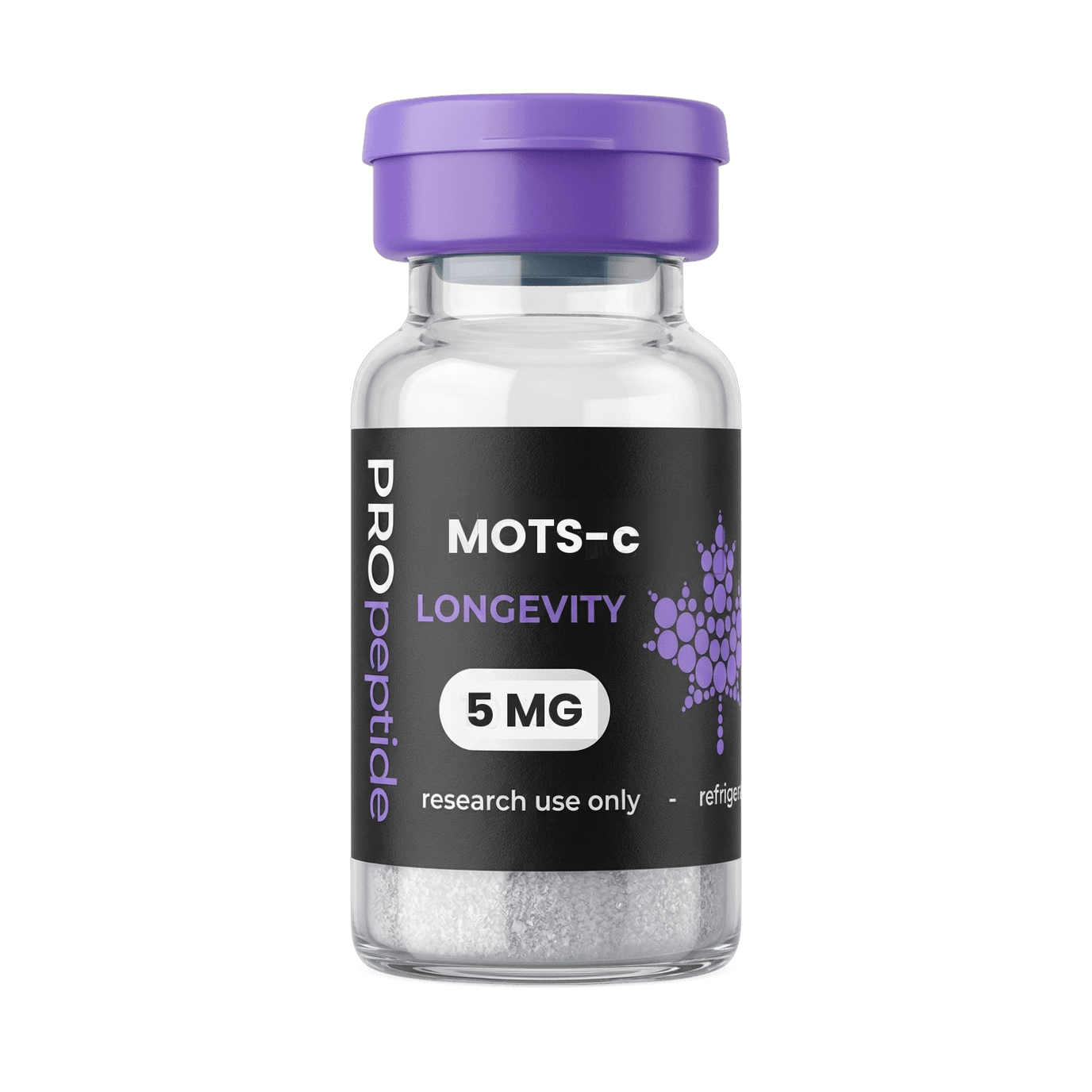
Your mitochondria carry their own tiny genome, and it turns out that genome writes peptides. This is the famous one. The FDA searched six databases in 2026 and found no human trial data at all.
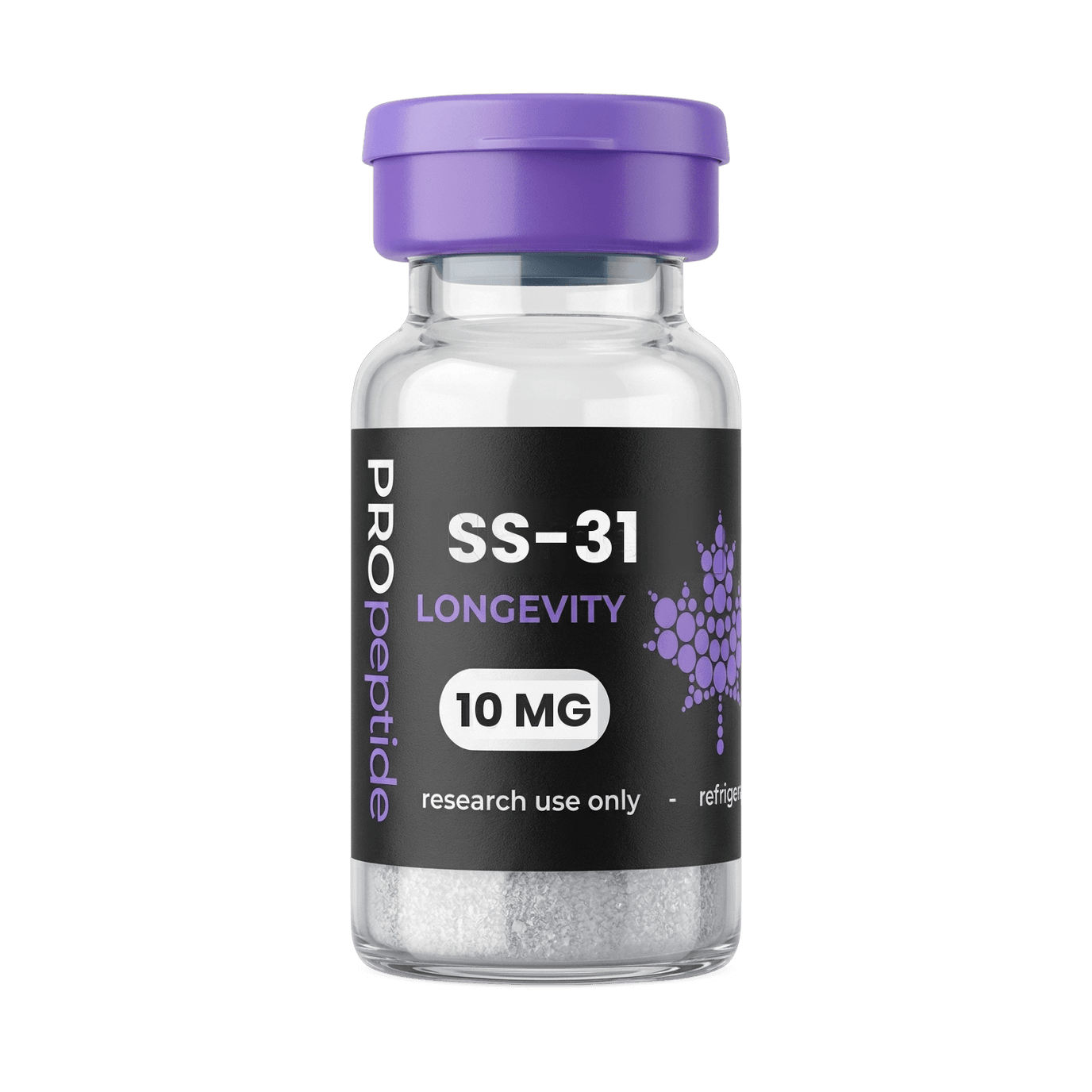
A tetrapeptide that parks itself on cardiolipin, the lipid mitochondria keep for themselves. FDA approved it in September 2025 for Barth syndrome, on data from 12 patients, which is a story about rare-disease medicine.
It is water. We know. But it is the one bottle on this shelf where the boring ingredient is the entire product, and getting it wrong ruins everything else you bought.
Order NAD+ right now
One last look before you decide.
Freeze-dried, ships cold from Canada
You've got the whole file now, the thin parts included. Nothing above pretended otherwise. If that's the kind of source you were after, NAD+ is right here.
Not for human consumption. Not approved by Health Canada or any other regulatory body.
Page last updated October 4, 2026
People also search for NAD+
Related searches.