
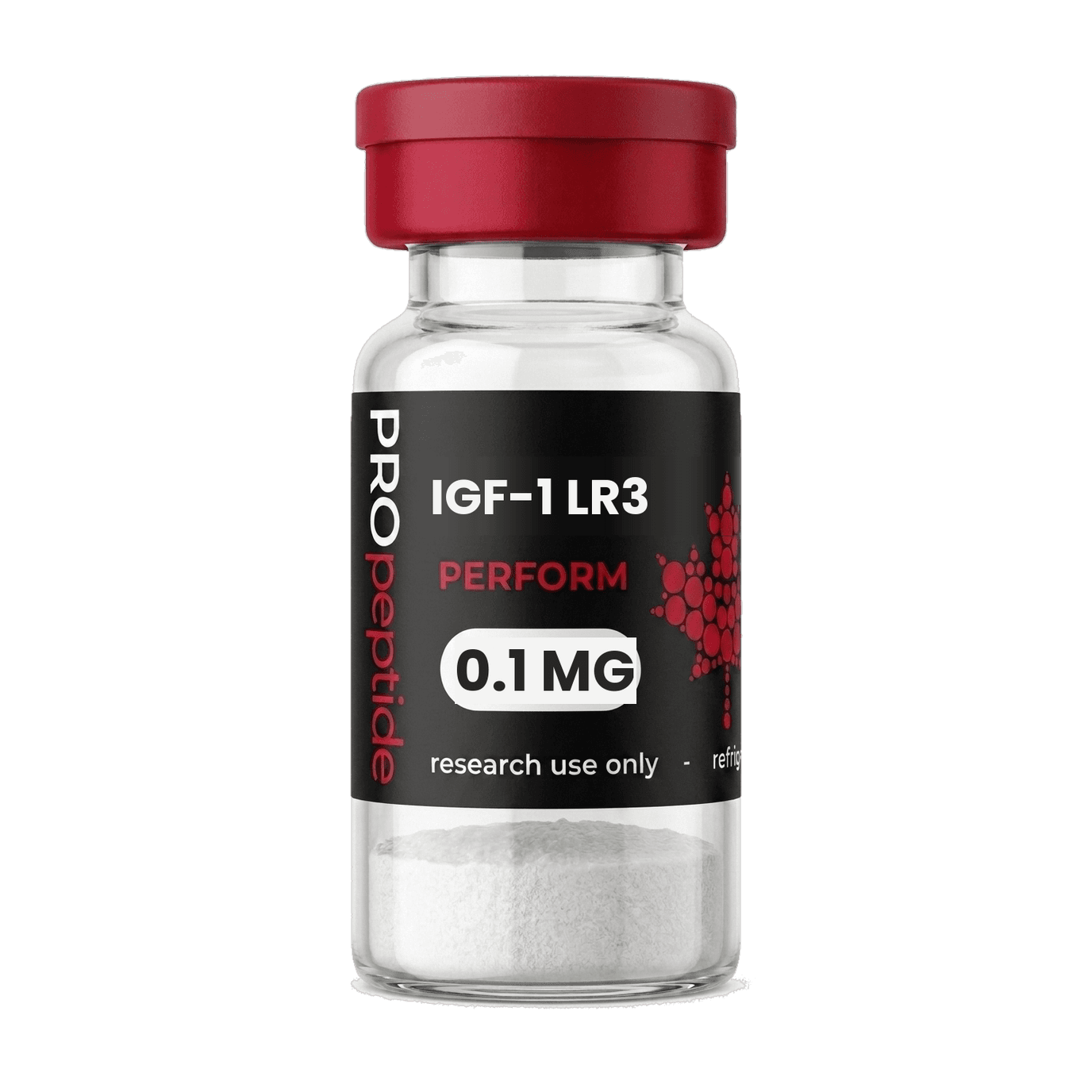
IGF-1 LR3 Peptide
Its potency advantage is escaping capture, not binding better. In cells with no binding proteins it is weaker than the original.
Choose your pack
For research use only. Not for human or veterinary use.
What IGF-1 LR3 is
The plain-language version, first.
Eighty-three residues, engineered twice over, for use in a flask.
IGF-1 LR3 is Long R3 insulin-like growth factor 1, an 83-amino-acid analogue of the native 70-residue hormone, carrying a 13-residue extension on the N terminus and an arginine substituted for glutamate at position 3. Both modifications reduce capture by the IGF binding proteins rather than improve receptor binding, and IGF-1 and its analogues are listed under section S2.3 of the WADA Prohibited List, banned in and out of competition.
Most things on this shelf were built hoping to become a medicine and didn't get there.
This one was built to do a job it's extremely good at, and that job's in a laboratory flask.
Long R3 IGF-1. Eighty-three residues. Its main commercial market worldwide is cell culture media, the broth that keeps cells alive in biotech factories.
The engineering's two changes stacked. An arginine swapped in at position 3, and a thirteen-residue extension bolted onto the front end.
Both changes aim at the same problem, which is that IGF binding proteins grab ordinary IGF-1 and hold it. Six of them, and they're good at their job.
We stock it in single vials or a box of ten, and the box takes a quarter off.
A molecule tuned for a flask. Which is a real industry, a big one, and not a euphemism for anything.
What is IGF-1 LR3?
Mechanism studied, not outcome promised.
Two modifications, both aimed at the same carrier-protein problem.
Picture a bag of chips at a bonfire. Every time you pass it, three hands go in before it gets to you.
You could bring more chips. Or you could make the bag harder to reach into.
Both modifications here are the second strategy, applied twice.
The arginine at position 3 breaks the binding-protein handshake directly. The N-terminal extension makes the molecule a worse fit for the same proteins from a different angle. Same bag, two different reasons nobody's hand fits.
Stack them and you get something that stays free far longer than native IGF-1, which in a culture flask is exactly what you want, because it means predictable exposure.
Here's the honest part. Predictable in a flask and predictable in a person aren't the same claim.
A flask doesn't have a liver, a feedback loop, or thirty years of downstream consequences. Turning off a control system is useful in the first setting and a genuinely open question in the second.
The research so far for IGF-1 LR3
Where the evidence is thin, we say so.
Enormous industrial use. Almost no human use.
There's a lot of literature here, and you have to read the setting carefully.
Industrial and laboratory use is extensive. Biopharmaceutical manufacturing uses this molecule at scale, for good reasons, with well-understood behaviour. That's a real body of work.
Human clinical work is a different and much smaller story. No registered trials. No published human pharmacokinetics.
There's no controlled trial in healthy adults for the reasons people search for it. Nothing approved for those uses anywhere. The approved IGF-1 medicine is a different molecule, and its file doesn't transfer.
Also prohibited in sport, which given the pattern of interest isn't a shock to anyone.
Read the methods section before you read the abstract. A paper about this molecule is usually a paper about cells, and that distinction gets lost the second it reaches a forum.
IGF-1 LR3 vial sizes and current stock are just below.
IGF-1 LR3 specs
The chemistry, exactly as released.
Who studies IGF-1 LR3
Who tends to order this one, and why.
- 1
Bioprocessing and cell culture
The dominant global use. Serum-free media for CHO and other mammalian lines, where the analogue stability rather than its potency is the point.
- 2
Endocrinology
The IGF binding protein system, the ternary complex with the acid-labile subunit, and how a growth signal is buffered and delivered.
- 3
Growth factor pharmacology
Mecasermin, the native recombinant hormone, is approved for severe primary IGF-1 deficiency and is where the human clinical literature sits.
- 4
Anti-doping laboratories
Section S2.1 of the WADA 2026 list covers insulin-like growth factor 1 and its analogues, prohibited at all times and non-specified.
Sold for laboratory research only. This is not guidance for personal use, and nothing here is a recommendation.
IGF-1 LR3 backstory
How it got here.
IGF-1 was characterised as the mediator through which growth hormone produces many of its effects, which is why the growth hormone axis and the IGF axis are usually discussed together.
The binding protein system was recognised early as central rather than incidental. Six proteins, tissue-specific expression, and a ternary complex with the acid-labile subunit that keeps a large circulating reservoir stable. Understanding it was a substantial piece of endocrinology.
Long R3 was engineered against that system, in the early 1990s, primarily as a research and biotechnology tool. The goal was a form of IGF-1 that stayed active in culture conditions where native IGF-1 was rapidly bound or degraded.
It succeeded at that, which is why it became a standard bioprocessing reagent. Its use outside that context came later and without a development programme behind it.
- 1
The messenger for growth hormone
IGF-1 was characterised as the mediator through which growth hormone produces many of its effects, which is why the two axes are always discussed together.
- 2
A control system, recognised early
Six binding proteins with tissue-specific expression and a ternary complex that keeps a stable circulating reservoir. Understanding it was substantial endocrinology.
- 3
Engineered for the bioreactor
Long R3 was built in the early 1990s as a research and biotechnology tool, to stay active in culture conditions where native IGF-1 is rapidly bound or degraded.
Buying IGF-1 LR3 in Canada
What ships, how fast, and the paperwork.
Most of the world supply feeds bioreactors. Long R3 IGF-1 principal commercial application globally is as a cell culture supplement in biologics manufacturing. That is a legitimate industrial market and it is worth knowing it is the main one.
Same day out of British Columbia. Our building, our cold packs, our people, and nothing sitting in a customs queue while you refresh a tracking page.
Covered by the WADA list. Section S2.1 covers insulin-like growth factor 1 and its analogues, which includes this one. Prohibited at all times, in and out of competition, and non-specified.
Common questions
5 answers, none of them dodges.
Is IGF-1 LR3 more potent than regular IGF-1?
In a whole organism it produces more receptor activation, but not because it binds the receptor better. In cell systems that contain no binding proteins, the original characterisation work found Long R3 IGF-1 to be less potent than native IGF-1. Its entire advantage comes from evading the IGF binding proteins that normally sequester more than 95 percent of circulating IGF-1.
What do the two modifications do?
The arginine substituted for glutamate at position 3 disrupts binding to the IGF binding proteins, so the analogue is not captured. The 13 residue N-terminal extension further alters the molecule behaviour and contributes to its stability. Neither modification is aimed at improving receptor affinity.
Are there human trials of IGF-1 LR3?
No. There are no registered clinical trials, no published human pharmacokinetics, and no efficacy or safety data in people for this analogue. The human clinical literature in this area concerns mecasermin, recombinant native IGF-1, which is an approved drug for severe primary IGF-1 deficiency and a different molecule.
Why is it sold as a cell culture reagent?
Because that is what it was engineered for and it works well at it. Serum-free culture media contain no IGF binding proteins, so there is nothing for the analogue to escape, but it is more stable than native IGF-1 under culture conditions and supports growth and productivity in mammalian cell lines. It is a standard supplement in biologics manufacturing, particularly for Chinese hamster ovary cells.
What are the IGF binding proteins actually for?
They are the control layer on a growth signal. Six proteins with tissue-specific expression sequester the vast majority of circulating IGF-1, extending its half-life from minutes to many hours in the ternary complex with IGFBP-3 and the acid-labile subunit, and regulating how much free hormone reaches tissue. Describing them as obstacles inverts what they do.
Good pairing options with IGF-1 LR3
What researchers stack alongside it.
Pairing is where research gets ahead of itself. These are the compounds researchers put in the same order as IGF-1 LR3 Peptide, which is a statement about ordering habits, not about evidence. Two things in one cart have not been studied together unless somebody studied them together.
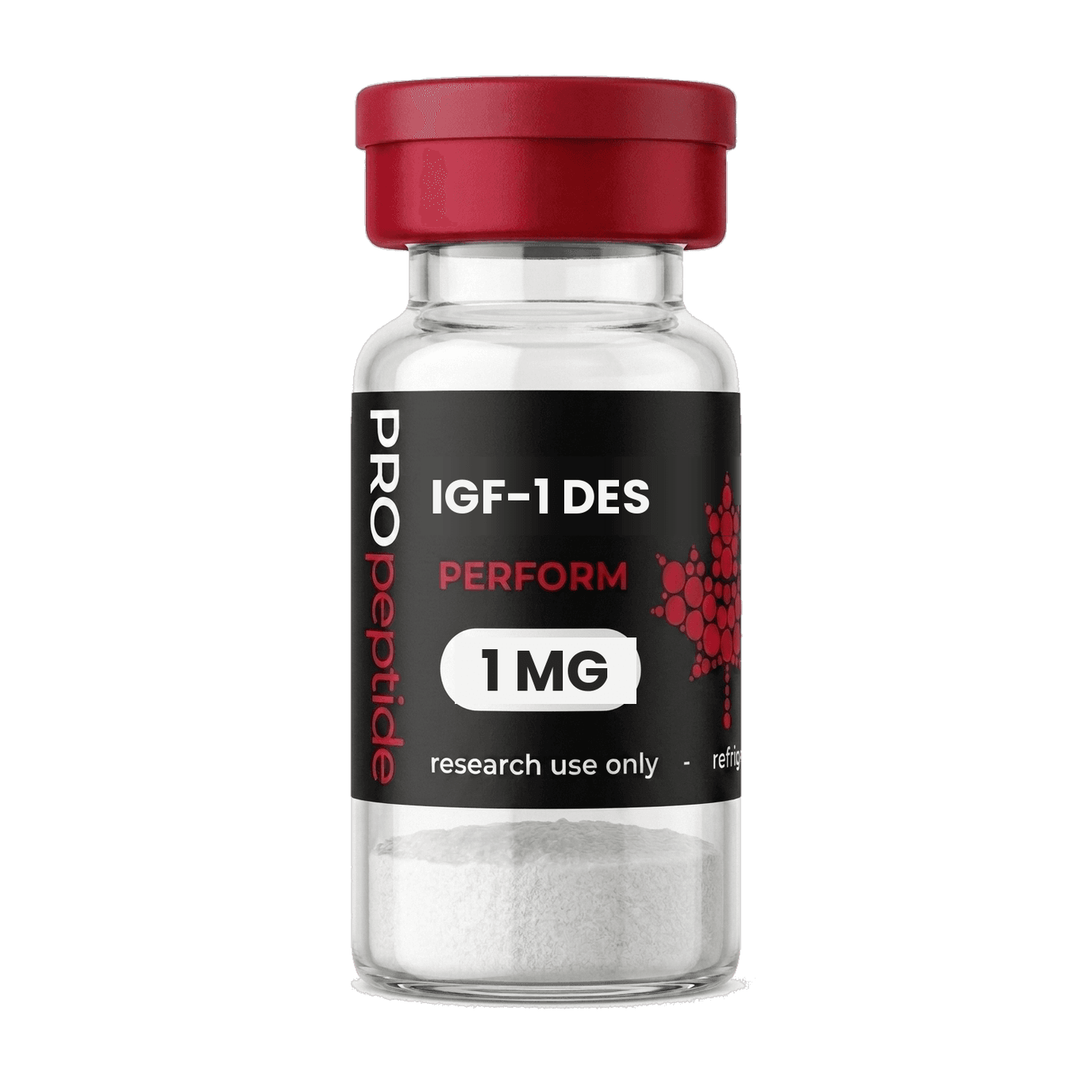
Three amino acids missing off the front, and the whole point is what that does to where it goes rather than how hard it binds.
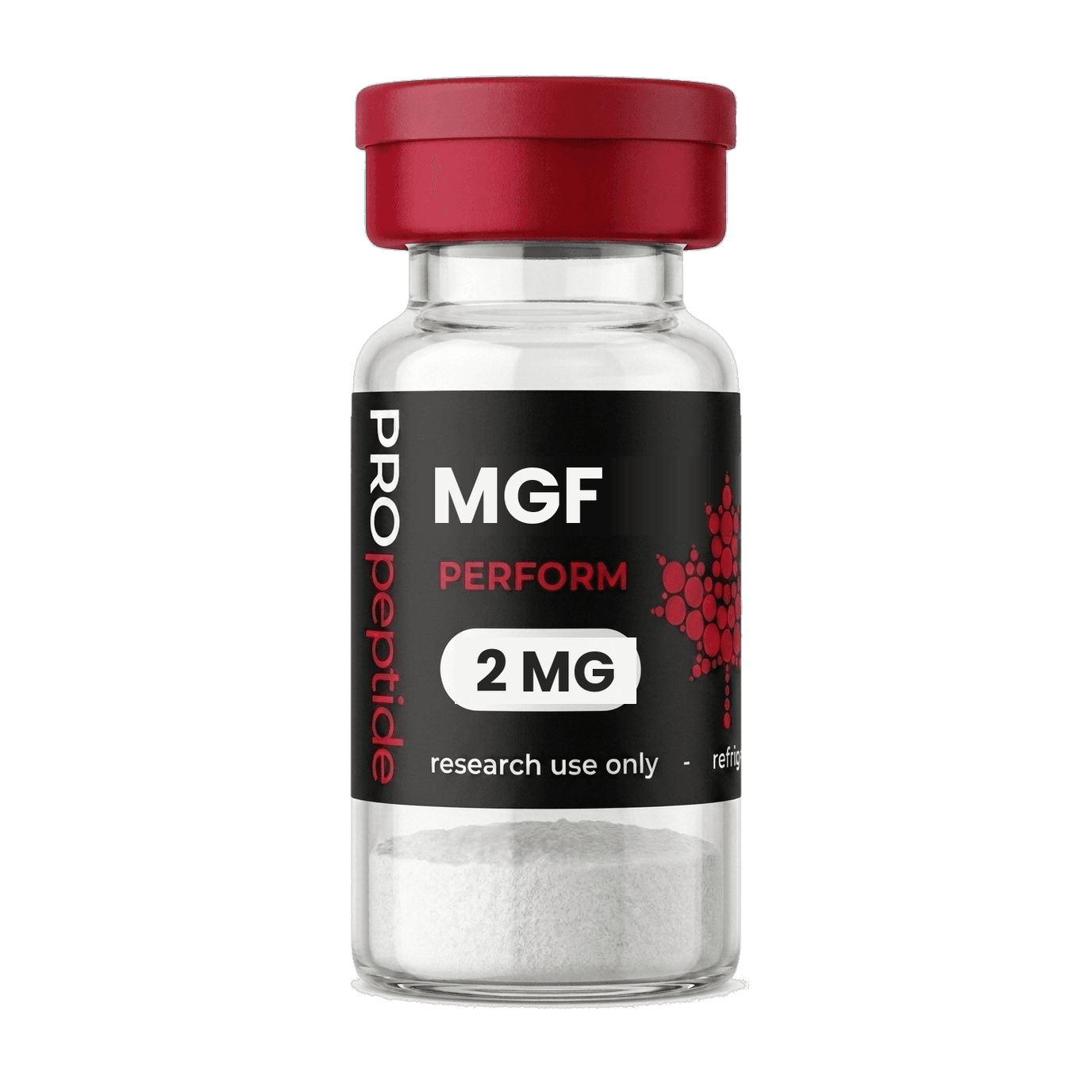
Two pharmaceutical companies tried to reproduce the finding this molecule is famous for. Neither could. It has still never been isolated from actual tissue.
It is water. We know. But it is the one bottle on this shelf where the boring ingredient is the entire product, and getting it wrong ruins everything else you bought.
Order IGF-1 LR3 right now
One last look before you decide.
Freeze-dried, ships cold from Canada
You've got the whole file now, the thin parts included. Nothing above pretended otherwise. If that's the kind of source you were after, IGF-1 LR3 is right here.
Not for human consumption. Not approved by Health Canada or any other regulatory body.
Page last updated October 4, 2026
People also search for IGF-1 LR3
Related searches.