
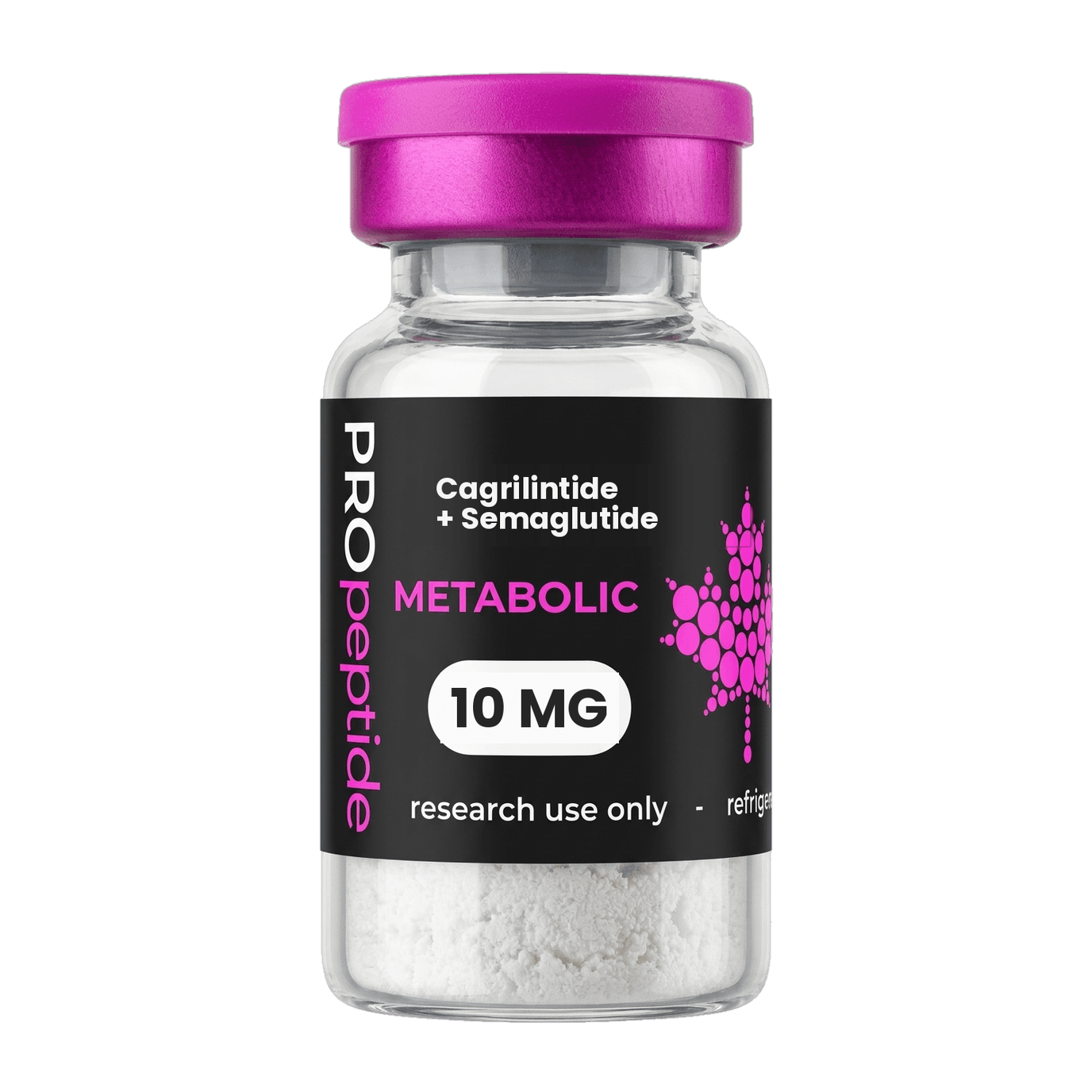
Cagrilintide Semaglutide Peptide Blend
A long-acting amylin analogue supplied alongside a GLP-1 analogue, and approved by no regulator anywhere
Choose your pack
For research use only. Not for human or veterinary use.
What Cagrilintide Semaglutide Peptide Blend is
The plain-language version, first.
Two molecules, one preparation, and a reading problem baked in from the start.
Cagrilintide is a long-acting amylin analogue of 37 amino acids with six substitutions from human amylin, a C20 diacid attached to the N-terminal lysine through a gamma-glutamyl linker, and the native amylin disulfide bond retained; its molecular formula is C194H312N54O59S2 with a molecular weight of approximately 4409, CAS 1415456-99-3. Combined with semaglutide, a GLP-1 receptor agonist, the preparation engages amylin and calcitonin receptors alongside the GLP-1 receptor, and the combination is not approved by any regulatory authority.
Your pancreas does not send one signal after a meal. It sends at least two, out of the same cells, at the same time.
Insulin is the famous one. Amylin is the other, and almost nobody outside the field has heard of it.
This preparation puts a long-acting amylin analogue alongside a GLP-1 analogue. Two systems, one vial.
The logic is that these are separate signalling routes rather than two ways of pulling the same lever, so combining them is not simply doubling a dose.
And the chemistry underneath is the standard pair of tricks: stabilise each peptide against the enzymes that clear it, hang a lipid off each so it grips albumin and lasts.
Two molecules, two half-lives that had to be engineered to roughly agree with each other. That part is harder than it sounds.
What cagrilintide semaglutide is
Mechanism studied, not outcome promised.
Two separate receptor systems that your body already runs in parallel.
Alright, here's the thing that makes a blend genuinely different from a single molecule, and it isn't the pharmacology.
It's attribution.
When you run a combination and something happens, the combination is what happened. Splitting the credit between the halves needs separate arms and a lot more money.
The published programme does have those arms, which is good and expensive and rare.
But most of what gets written about this online quietly drops that distinction, and you end up with people describing the pair's results while naming only one of the parts.
Here's the honest part. Both components have individual receptor pharmacology that is measurable and published, and we can point at that.
What the pair does together is a clinical question with a real published answer, and that answer belongs in the paper it came from, with its arm definitions attached.
The research so far for Cagrilintide Semaglutide Peptide Blend
Where the evidence is thin, we say so.
Studied as a pair, which makes attributing anything to either half genuinely hard.
Approved nowhere. Not in Canada, not anywhere. Start there because a lot of writing about this one skips it.
There is a substantial registered programme, which is more than nearly anything else on this shelf can say.
But this is the compound where the reading discipline matters most, so here is the rule.
Check the arm before you attribute anything. A result from the combination arm is not a result about the amylin analogue, and it is not a result about the GLP-1 analogue either. It is a result about the combination.
That single check sorts out most of the confusion circulating about this preparation, and almost nobody performs it.
Real programme, real arms, real publications, and endpoint figures we are not going to lift onto a page selling research powder.
Canadian stock, cold-shipped from BC. Research use only.
Cagrilintide Semaglutide Peptide Blend specs
The chemistry, exactly as released.
Who studies Cagrilintide Semaglutide Peptide Blend
Who tends to order this one, and why.
- 1
Amylin pharmacology researchers
Cagrilintide is the long-acting amylin analogue with the deepest published clinical dataset behind it. If you work on the amylin receptor family, this is the tool compound.
- 2
Combination therapy researchers
Two receptor systems in one preparation is a specific hypothesis, not a formulation convenience. The REDEFINE design is a usable template for testing it.
- 3
Peptide aggregation and formulation labs
Human amylin's aggregation behaviour is a classic problem. The six substitutions in cagrilintide are a case study in engineering around it while keeping the disulfide intact.
- 4
Trial methodology readers
The 20.4% versus 22.7% gap is one of the clearest public examples of an estimand choice changing a headline. Worth reading the paper for that alone.
Sold for laboratory research only. This is not guidance for personal use, and nothing here is a recommendation.
Cagrilintide Semaglutide Peptide Blend backstory
How it got here.
Amylin was the forgotten twin. Beta cells package it in the same granules as insulin and release it at the same time, and for most of the twentieth century it was mostly known as the stuff that forms amyloid deposits in the pancreas in type 2 diabetes. Sticky, aggregation-prone, awful to work with.
That aggregation problem is exactly why you can't just acylate human amylin and call it a day. Cagrilintide needed six substitutions before the fatty acid chemistry was even worth attempting, and the native disulfide had to survive all of it.
Then somebody asked the obvious question. If insulin and amylin travel together, and the industry has spent twenty years on GLP-1 alone, what happens if you send both satiety signals at once?
REDEFINE 1 answered it in 2025 with 3,417 people. REDEFINE 2 answered a related question in 1,206 people with type 2 diabetes. Novo filed with the FDA on 18 December 2025.
And then the internet did what the internet does, and the most flattering estimand became the number everybody repeats, with the arm definitions quietly dropped along the way. Both are sitting in the same paper. Only one of them is the headline estimand.
- 1
Two signals, not one
Beta cells co-secrete amylin alongside insulin, out of the same granules. The second signal was identified in the 1980s and then got far less attention because it was much harder to work with.
- 2
The aggregation problem
Human amylin falls out of solution and forms fibrils, which made basic experiments awkward and formulation genuinely difficult for years.
- 3
Two molecules, one schedule
Combining them required each half to be stabilised and lipidated so their half-lives roughly agree. Matching two clearance curves is harder than extending one.
- 4
Where it stands
A registered programme with real arms, published results, and no approval in any jurisdiction.
Buying Cagrilintide Semaglutide Peptide Blend in Canada
What ships, how fast, and the paperwork.
Not approved anywhere. There is no approval for this combination in any country. An FDA filing was submitted on 18 December 2025 and Novo Nordisk states CagriSema is not approved in the US or EU. What we ship is a research material for laboratory use.
Prohibited in sport. Cagrilintide has no regulatory approval, so it falls under WADA category S0. That makes the combination a doping violation in tested sport even though the semaglutide component on its own is not prohibited.
Know which number you are reading. Published weight-change figures for this combination differ depending on the statistical estimand. The trial's own figures live in the paper, with their arm definitions attached, which is where figures belong. If a source quotes 22.7% without labelling it, it's quoting the adherence-conditional analysis.
Common questions
5 answers, none of them dodges.
What is in this preparation?
Two separate molecules. A long-acting amylin analogue, and a GLP-1 analogue. They act on different receptor systems that your body already runs in parallel after a meal.
Why combine them rather than increase one?
Because they are separate signalling routes rather than two ways of pulling the same lever. That is the rationale. Whether the combination behaves the way the rationale predicts is exactly what the registered programme exists to establish.
Is it approved anywhere?
No. Not in Canada, not in the United States, not in Europe, not anywhere. A large registered programme is not an approval and the two get conflated constantly.
How do I read the published results properly?
Check which arm a number came from before attributing it to anything. A result from the combination arm is not a result about the amylin analogue and it is not a result about the GLP-1 analogue. That single check resolves most of the confusion circulating about this preparation.
Why is amylin so much less famous than insulin?
Partly because it was identified later, and substantially because it is difficult to work with. Human amylin aggregates in solution, which made basic experiments annoying for a long time.
Cagrilintide Semaglutide Peptide Blend vs Cagrilintide alone
Stacked together constantly, compared almost never.
The most useful comparison for a blend is against its own component, because that is the comparison the marketing hopes you will not make.
The blend supplies the amylin analogue and the GLP-1 analogue together, and every result it produces belongs to the pair. Attribution to either half requires the trial arms, not the product page.
Cagrilintide alone is the half almost nobody has read about on its own terms, an amylin analogue with its own arms in the registered programme.
If a claim about this blend matters to you, find which arm it came from. The programme was built with separate arms precisely so that question has an answer. Cagrilintide alone has its own page here
Good pairing options with Cagrilintide Semaglutide Peptide Blend
What researchers stack alongside it.
Pairing is where research gets ahead of itself. These are the compounds researchers put in the same order as Cagrilintide Semaglutide Peptide Blend, which is a statement about ordering habits, not about evidence. Two things in one cart have not been studied together unless somebody studied them together.
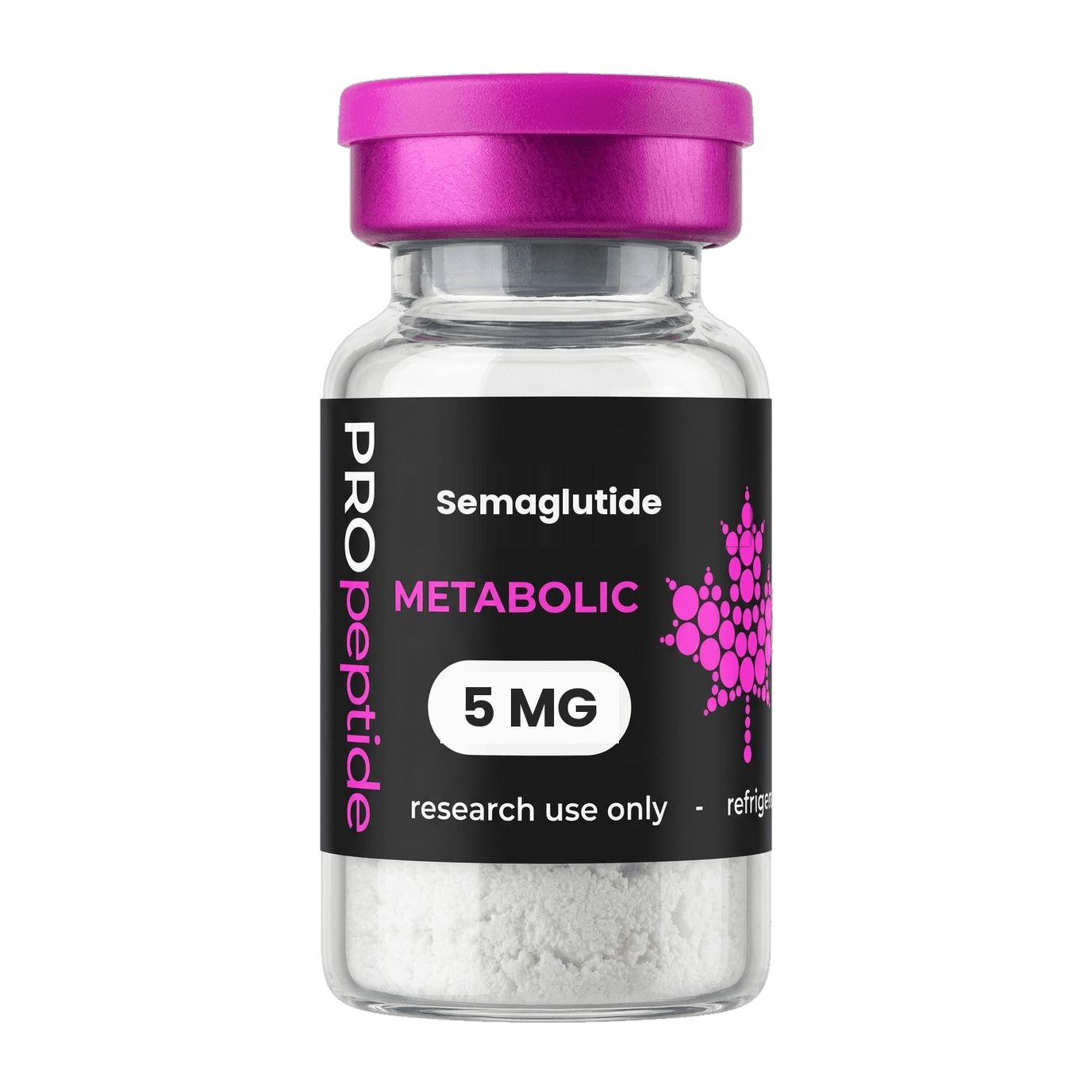
Cut six amino acids off the front of a peptide and it got roughly ten thousand times more active. That result, from 1987, is the reason this entire shelf exists.
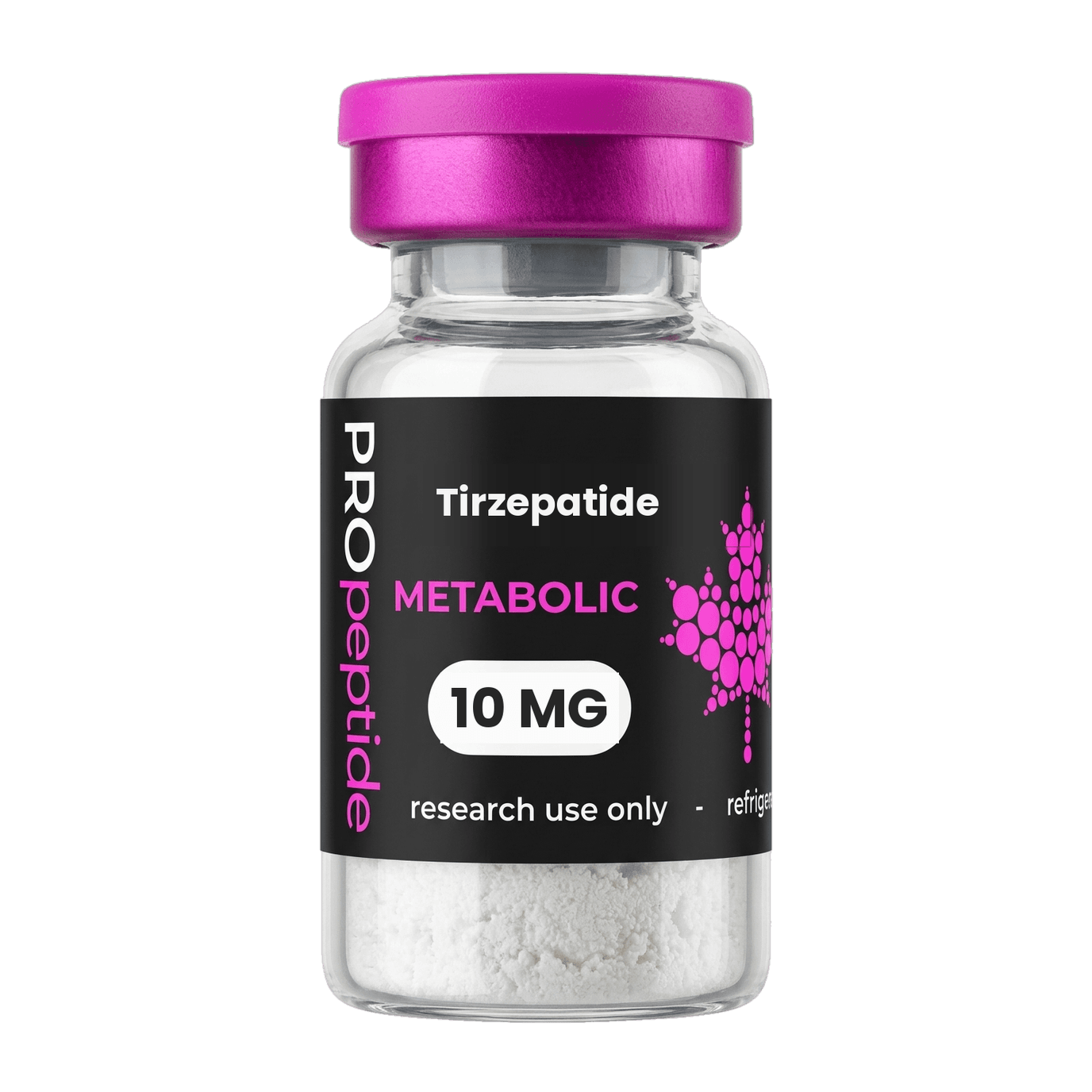
For twenty years GIP was the incretin receptor nobody wanted, written off as the one that was not earning its place in the system. Tirzepatide was built to pull it on purpose, and the field had to go back and re-read its own literature.
It is water. We know. But it is the one bottle on this shelf where the boring ingredient is the entire product, and getting it wrong ruins everything else you bought.
Order Cagrilintide Semaglutide Peptide Blend right now
One last look before you decide.
Freeze-dried, ships cold from Canada
You've got the whole file now, the thin parts included. Nothing above pretended otherwise. If that's the kind of source you were after, Cagrilintide Semaglutide Peptide Blend is right here.
Not for human consumption. Not approved by Health Canada or any other regulatory body.
Page last updated October 4, 2026
People also search for Cagrilintide Semaglutide Peptide Blend
Related searches.