
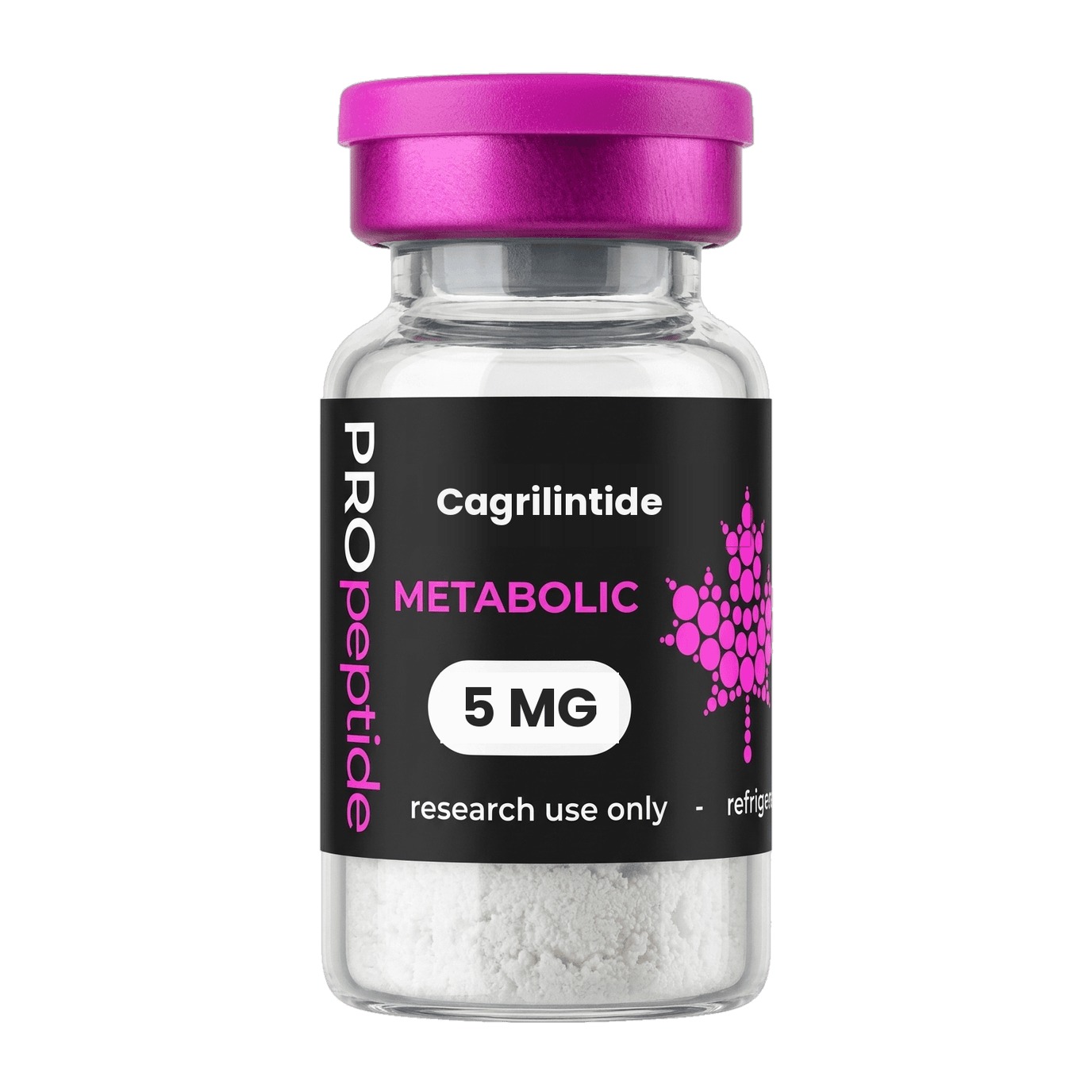
Cagrilintide Peptide
The weakest arm in its own phase 3. On its own it lost to semaglutide by three points.
Choose your pack
For research use only. Not for human or veterinary use.
What Cagrilintide is
The plain-language version, first.
Everyone knows the pancreas makes insulin. It also makes this, in the same granules, at the same time.
Cagrilintide is a long-acting amylin analogue of 37 amino acids built on a pramlintide-derived backbone, with a disulphide bridge between cysteines 2 and 7, a C-terminal amide, and N-terminal acylation at lysine 1 through a gamma-glutamate linker to a C20 fatty diacid. It is investigational and approved nowhere, and Novo Nordisk filed the CagriSema combination of cagrilintide with semaglutide with the FDA on 18 December 2025.
Ask anybody what the pancreas makes and you'll get insulin. Correct, and incomplete.
The beta cells that release insulin release something else at the same time, out of the same granules, in roughly a one-to-hundred ratio.
It's called amylin. It has been in there the whole time and it does not get invited on the tour.
Cagrilintide is a long-acting analogue of it.
And here's the thing that makes it a chemistry problem rather than a copying exercise. Human amylin aggregates. Left alone in solution it clumps into fibrils, which makes it miserable to formulate and worse to study.
So the analogue exists partly to do the signalling and partly just to stay dissolved long enough to be usable.
A molecule that had to be redesigned before anybody could properly ask what it does.
What is cagrilintide?
Mechanism studied, not outcome promised.
A hormone that is famously difficult to work with, made cooperative.
Look, most of this shelf is molecules built to hit a receptor harder or longer. This one had a different first problem.
Human amylin is sticky. Not sticky in a useful way, sticky in a falls-out-of-solution-and-forms-fibrils way, which is the same behaviour that makes several unrelated proteins a nuisance in biology.
Before you can study what a molecule signals, it has to agree to stay a molecule.
So the analogue carries substitutions that stop the aggregation, plus the same trick running through this whole catalogue: a lipid modification that grips albumin and stretches the half-life into weekly territory.
Amylin signals through a receptor complex rather than a single clean receptor, which is a genuinely awkward thing to characterise. Calcitonin receptor plus accessory proteins, and the combination determines what binds.
Here's the honest part. Receptor pharmacology here is messier than the GLP-1 story, and anybody presenting it as tidy is smoothing it out for you.
We would rather hand you a complicated answer than a clean wrong one.
The research so far for Cagrilintide
Where the evidence is thin, we say so.
Studied mostly as one half of a pair, which makes reading it on its own harder than it looks.
This one comes with a reading problem attached, and it is worth naming before you go looking.
Most of the published work studies cagrilintide alongside a GLP-1 analogue rather than on its own.
Which means a lot of what is written about it is really about a pair, and the pair is not the same subject as the part.
There is standalone work. There is considerably more combination work, because that is where the programme went.
So if you are reading the file, check what the arm actually contained before you attribute anything to this molecule specifically. It is the single easiest mistake to make here and the forums make it constantly.
And the ceiling, plainly: approved nowhere. Not in Canada, not anywhere.
Endpoint numbers exist and they belong in the journals that ran them, not on a page selling powder.
Cagrilintide vial sizes and current stock are listed below.
Cagrilintide specs
The chemistry, exactly as released.
Who studies Cagrilintide
Who tends to order this one, and why.
- 1
Obesity medicine
REDEFINE 1, 3,417 adults over 68 weeks, is the largest trial this compound appears in and the source of every figure worth quoting.
- 2
Diabetes research
REDEFINE 2 enrolled 1,206 adults with type 2 diabetes and reported 13.7 percent weight reduction against 3.4 percent on placebo.
- 3
Peptide engineering
The anti-aggregation substitutions are a clean case study in designing out a peptide native failure mode rather than working around it.
- 4
Amylin pharmacology
Calcitonin and amylin receptor signalling through the area postrema, and how it combines with incretin mechanisms rather than duplicating them.
Sold for laboratory research only. This is not guidance for personal use, and nothing here is a recommendation.
Cagrilintide backstory
How it got here.
Amylin was identified in the 1980s, out of the same pancreatic islets everybody was already studying for insulin.
It was not a subtle finding. It was co-stored and co-secreted with insulin, sitting right there in the same granules.
And then it was substantially harder to work with than insulin, so it got less attention for a long time.
The reason is aggregation. Human amylin does not stay politely in solution, which makes basic experiments annoying and formulation genuinely difficult.
A first-generation analogue solved enough of that to be usable, and it worked but needed dosing several times a day.
Cagrilintide is the long-acting attempt. Substitutions for stability, a lipid tail for albumin binding, and a half-life measured in days rather than hours.
Forty years from a hormone nobody could keep in a test tube to one that lasts a week.
- 1
Amylin, the other beta cell hormone
Released with insulin, slowing gastric emptying and signalling satiety through a pathway entirely separate from the incretins.
- 2
The aggregation problem
Native human amylin forms amyloid fibrils. Pramlintide proved the pathway worked but needed dosing with every meal.
- 3
Engineered for weekly dosing
Substitutions suppressing fibril formation plus a C20 fatty diacid for albumin binding. Filed with the FDA as part of CagriSema on 18 December 2025.
Buying Cagrilintide in Canada
What ships, how fast, and the paperwork.
Same day out of British Columbia. Our building, our cold packs, our people, and nothing sitting in a customs queue while you refresh a tracking page.
Then into the fridge. Keep it cold and keep it dark. Sealed and freeze-dried it handles a rough trip without ice. Once it lands, fridge.
It was developed as half of something. Novo Nordisk developed cagrilintide primarily as the amylin component of CagriSema, not as a standalone product. Its own trial shows it underperforming semaglutide alone. That is worth knowing before you buy it on its own.
Common questions
5 answers, none of them dodges.
How does cagrilintide compare to semaglutide?
There is a large registered trial that tested cagrilintide, a GLP-1 analogue and the combination of the two against placebo in several thousand adults. The endpoint figures are published and we are not going to reproduce them here, because they were collected on a supervised prescription product and they do not travel onto a page selling research powder. The combination produced 20.4 percent. On its own, cagrilintide was the weakest active arm in the trial.
Is cagrilintide approved?
No. It is investigational and approved nowhere in the world. Novo Nordisk filed CagriSema, the combination with semaglutide, with the FDA on 18 December 2025 and review is expected during 2026. There is no Health Canada record for cagrilintide.
What is amylin and why does it matter?
Amylin is a hormone your pancreatic beta cells release alongside insulin. It slows gastric emptying and signals satiety through the brainstem, using a pathway entirely separate from the incretin system that GLP-1 drugs act on. That separation is the reason combining an amylin analogue with an incretin drug adds up rather than just pushing harder on one mechanism.
What were the side effects in the trials?
Gastrointestinal adverse events occurred in 79.6 percent of the CagriSema group against 39.9 percent on placebo in REDEFINE 1, and 72.5 percent against 34.4 percent in REDEFINE 2. Tolerability was a real constraint: only 57.3 percent of CagriSema patients reached the highest dose by week 68, which the company disclosed itself.
Why is cagrilintide engineered against aggregation?
Because native human amylin readily forms amyloid fibrils, which makes it difficult to formulate and has been implicated in beta cell damage in type 2 diabetes. Cagrilintide carries substitutions at positions 14 and 17 that form an intramolecular salt bridge stabilising the helix and suppressing fibril formation, plus a proline at position 37.
Cagrilintide Peptide vs Semaglutide
Stacked together constantly, compared almost never.
These two get discussed together constantly because they are studied together constantly. They are not the same kind of molecule.
Cagrilintide is an amylin analogue. Amylin is the second signal your beta cells release, alongside insulin, out of the same granules.
Semaglutide is a GLP-1 analogue. Different receptor system, different signalling route, far larger published file.
Separate systems that your body already runs in parallel, which is exactly why they get combined. Just do not read a combination result as a result about either one on its own. Semaglutide has its own page here
Good pairing options with Cagrilintide
What researchers stack alongside it.
Pairing is where research gets ahead of itself. These are the compounds researchers put in the same order as Cagrilintide Peptide, which is a statement about ordering habits, not about evidence. Two things in one cart have not been studied together unless somebody studied them together.
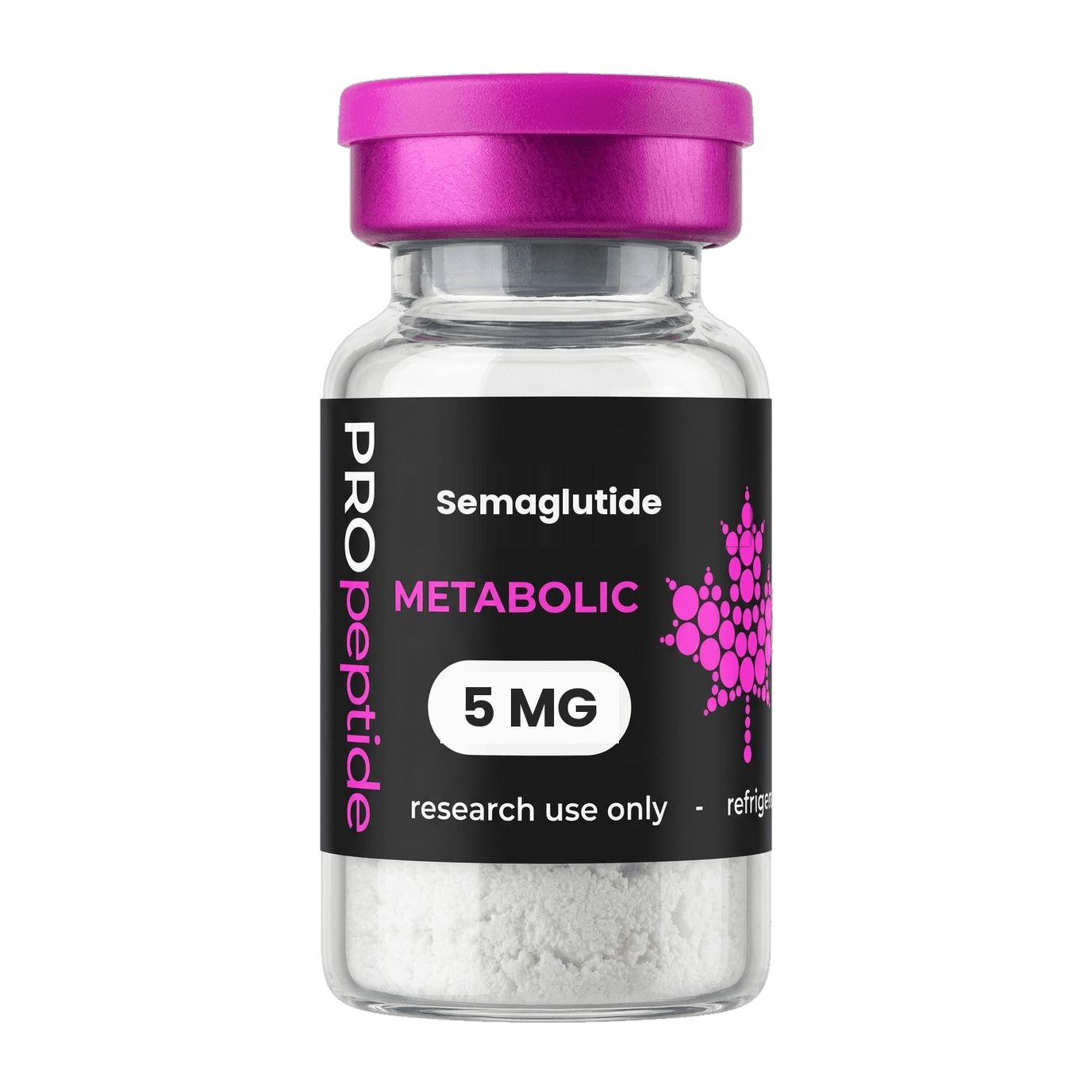
Cut six amino acids off the front of a peptide and it got roughly ten thousand times more active. That result, from 1987, is the reason this entire shelf exists.
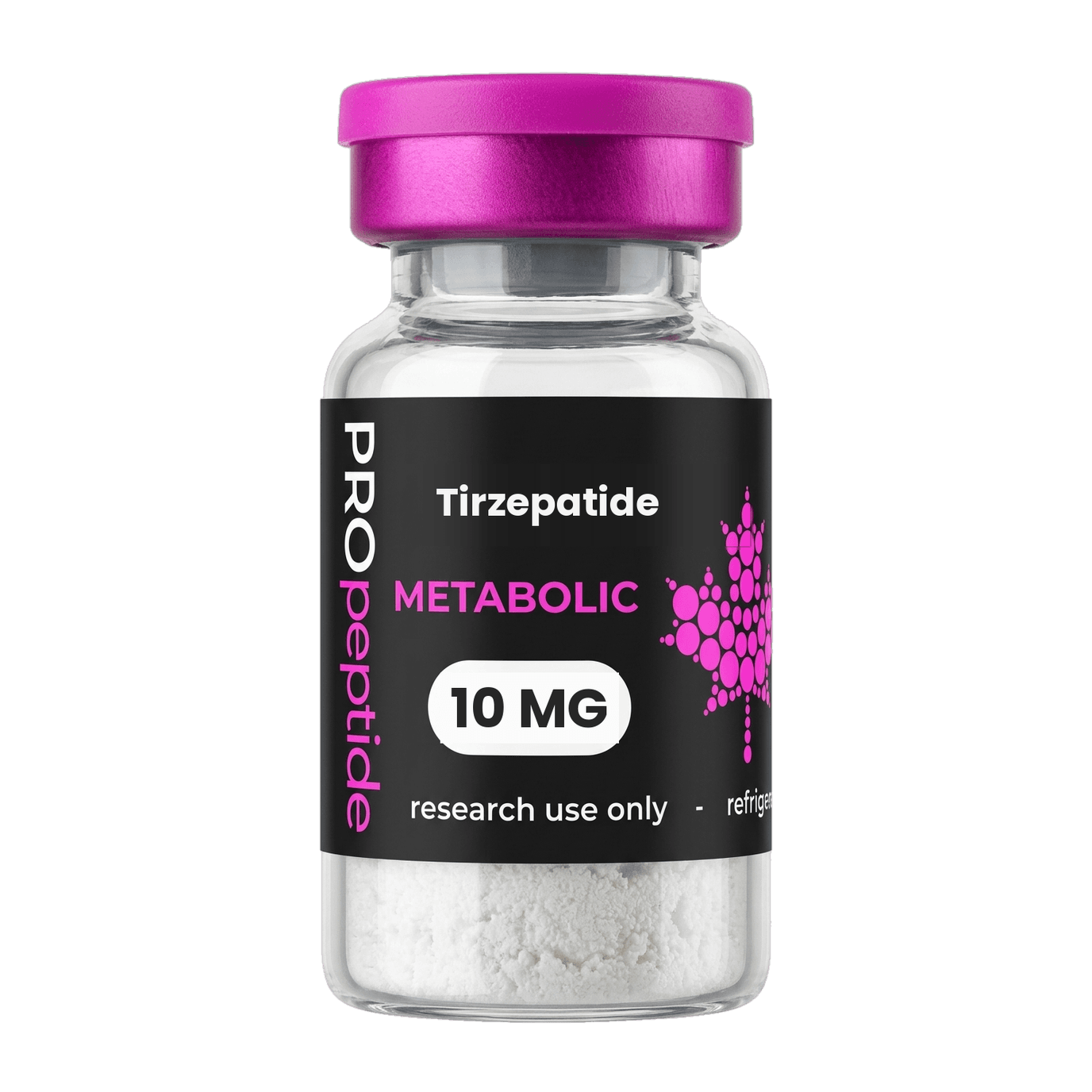
For twenty years GIP was the incretin receptor nobody wanted, written off as the one that was not earning its place in the system. Tirzepatide was built to pull it on purpose, and the field had to go back and re-read its own literature.
It is water. We know. But it is the one bottle on this shelf where the boring ingredient is the entire product, and getting it wrong ruins everything else you bought.
Order Cagrilintide right now
One last look before you decide.
Freeze-dried, ships cold from Canada
You've got the whole file now, the thin parts included. Nothing above pretended otherwise. If that's the kind of source you were after, Cagrilintide is right here.
Not for human consumption. Not approved by Health Canada or any other regulatory body.
Page last updated October 4, 2026
People also search for Cagrilintide
Related searches.