
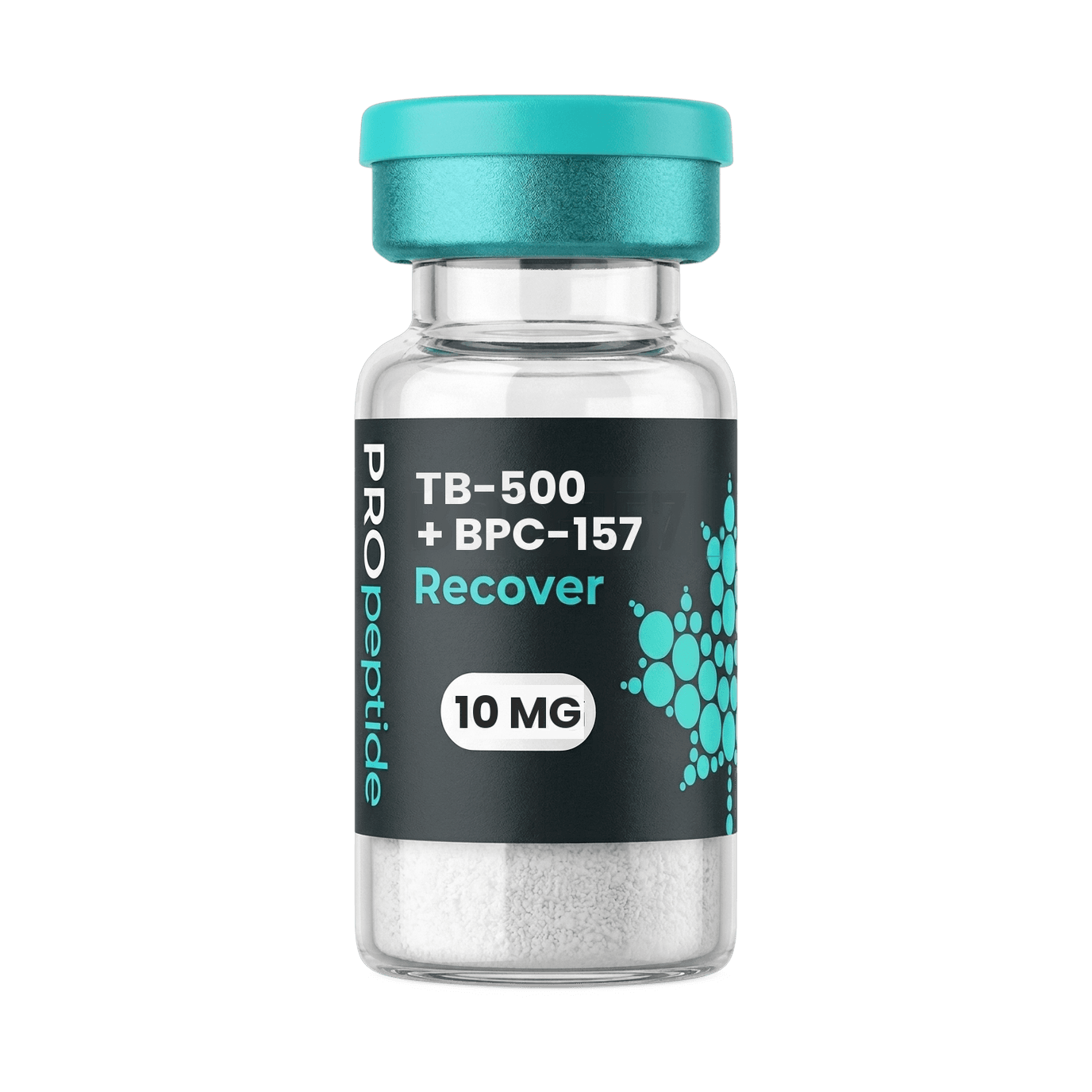
TB-500 + BPC-157 Combo
Two repair peptides in one vial, and the one controlled study that checked whether that helps.
Choose your pack
For research use only. Not for human or veterinary use.
What TB-500 + BPC-157 Combo is
The plain-language version, first.
Two famous repair-model compounds in one box, on the strength of a theory.
TB-500 + BPC-157 Combo is a research-use preparation supplying two synthetic peptides together: BPC-157, a 15-residue peptide sequence (GEPPPGKPADDAGLV, approximately 1419.5 Da) derived from a protein in human gastric juice, and TB-500, the acetylated 7-residue thymosin beta-4 fragment Ac-LKKTETQ (approximately 889.0 Da). In the only published controlled comparison, an Achilles tendon transection model in 32 rats, combined administration conferred no additional benefit relative to either agent administered alone.
Some product pages exist because of science. This one exists because of ordering habits.
These two compounds are the most-paired items in the entire research-peptide world. The forums decided they belong together years ago, the way peanut butter and jam ended up in the same aisle.
So we supply them together. That's a logistics decision, and we're not going to dress it up as a discovery.
The theory behind the pairing's genuinely tidy. BPC-157's studied for blood supply reaching damaged tissue, TB-500 for cells migrating toward it. Supply and movement. Two halves of one repair story.
Tidy theories are where this shelf gets into trouble, so the research section below does something you won't see on most combo pages.
It quotes the one controlled experiment that actually checked.
What the TB-500 BPC-157 combo research actually shows
Mechanism studied, not outcome promised.
Movement plus supply. The theory is tidy. Tidy is not tested.
The individual mechanisms live on their own pages, and in one sentence each: BPC-157 is studied for angiogenesis, the building of supply roads, and TB-500 for actin dynamics, the machinery of cell movement.
Different mechanisms is the argument for combining them. It's also exactly the kind of argument that sounds airtight and tests badly.
Biology isn't modular the way the theory needs it to be. Two pathways that look complementary on a whiteboard can turn out redundant, or interfering, or irrelevant to each other once they're in actual tissue. Peanut butter and jam only works because somebody tried it.
Which is why the only thing that settles a combination question is a combination experiment.
Here's the honest part. One exists.
And its result is the reason this page reads the way it does.
The research so far for TB-500 + BPC-157 Combo
Where the evidence is thin, we say so.
One controlled study looked at the combination. Read what it found.
One controlled animal study has directly tested this combination against its parts. Verbatim from it: "Combined BPC-157 and TB-500 did not confer additional benefits compared to either alone."
Did not confer additional benefits. That's the entire controlled literature on the internet's favourite stack, quoted in full.
One rodent study isn't a final answer, and it's worth saying the components were given at particular amounts in one particular model. Limits noted. We'd say the same about a study that went our way.
But the current score is this: theory says two is better, and the one experiment that checked says it wasn't.
We sell the combo because researchers order it together. What we won't do is tell you the pairing has evidence behind it when the one direct test points the other way.
Order it for the convenience. Don't order it for the study, because the study said no.
Both peptides, one vial. Canadian stock, ships from BC.
TB-500 + BPC-157 Combo specs
The chemistry, exactly as released.
Who studies TB-500 + BPC-157 Combo
Who tends to order this one, and why.
- 1
Tendon and soft tissue researchers
The Achilles transection model is where the combination literature lives, all one paper of it. If that is the model you run, Bicer 2026 is the direct precedent and it is worth reading before designing around it.
- 2
Anyone who wants to replicate a null
A single exploratory study with eight animals per group is exactly the kind of result that needs a second look from an independent group. Nobody has published that second look yet.
- 3
Formulation and stability people
Two peptides in one solution, no published compatibility data, and an Asp-Asp motif in BPC-157 that is a known hotspot for aspartimide formation and deamidation. There is real analytical work sitting here for anybody who wants it.
- 4
People comparing a blend against singles
This is the rare category where a head to head actually exists. If you are deciding between one blend and two separate vials, the evidence base is one paper long and it is summarised on this page.
Sold for laboratory research only. This is not guidance for personal use, and nothing here is a recommendation.
TB-500 + BPC-157 Combo backstory
How it got here.
These two had nothing to do with each other until a catalogue put them in the same vial.
BPC-157 came out of research on proteins in human gastric juice. The question behind that work was why the stomach lining survives sitting in its own acid all day. A fifteen residue stretch got identified inside a larger protein and synthesised on its own.
TB-500 arrived from a completely different direction. Thymosin beta-4 was isolated from thymus tissue, and later work narrowed its actin binding down to one short internal stretch. Somebody made just that stretch, acetylated the front end, and Ac-LKKTETQ has carried the TB-500 nickname ever since. The nickname stuck harder than the chemistry name ever did.
The pairing is not a hypothesis anybody published. It is a product category. It turned up in vendor listings years before anyone ran a controlled test, and when the test finally ran in 2026, the pair did not beat either compound alone.
- 1
A protein that survives its own acid
BPC-157 came out of research into why the stomach lining is not destroyed by gastric acid. The fifteen residue sequence was identified inside a larger protein in gastric juice, then made on its own. It does not exist as a free peptide in nature.
- 2
Seven residues out of forty-three
Thymosin beta-4 was isolated from thymus tissue as a 43 residue protein. Later work narrowed its actin binding to one short stretch. Somebody synthesised just that stretch, capped it with an acetyl group, and Ac-LKKTETQ picked up the name TB-500.
- 3
The vial came before the study
Nobody published a hypothesis that these two belong together. The pairing showed up in catalogues first and got tested years later. When the controlled test finally ran, it found no added benefit from the pair.
Buying TB-500 + BPC-157 Combo in Canada
What ships, how fast, and the paperwork.
What is actually in the vial. Two synthetic peptides supplied together. BPC-157 at fifteen residues and 1419.5 daltons, TB-500 at seven residues and 889.0 daltons. Neither one is thymosin beta-4 itself, and neither occurs as a free peptide in nature.
A blend makes the analytics harder. Purity methods get validated one analyte at a time. A vial holding two peptides needs a method that resolves both parent peaks plus the degradants of each, so a single combined percentage would not be analytically meaningful even in principle.
Status, said once. Research use only, not for human or veterinary use. WADA lists BPC-157 by name under S0 for 2026, and covers thymosin beta-4 and its derivatives including TB-500 under S2.3. Health Canada named both compounds in its April 2026 advisory on peptides bought online and states that peptides are generally regulated as prescription drugs in Canada. Both sit in the FDA table of bulk drug substances nominated then withdrawn, so neither is on the 503A bulks list.
Common questions
5 answers, none of them dodges.
Does the TB-500 BPC-157 combo work better than either peptide alone?
On the only controlled test that exists, no. Bicer and colleagues compared BPC-157, TB-500, and both together in 32 rats with transected and repaired Achilles tendons in 2026, and reported that combined treatment did not confer additional benefits compared to either agent alone. TB-500 alone was the only group reaching significance on maximum load to failure. One small exploratory study, and also the entire head to head record.
What is actually in a TB-500 BPC-157 combo vial?
Two synthetic peptides. BPC-157 is fifteen residues, GEPPPGKPADDAGLV, around 1419.5 daltons, a sequence identified inside a protein in human gastric juice. TB-500 is seven residues, Ac-LKKTETQ, around 889.0 daltons, the actin binding stretch of thymosin beta-4 and roughly eighteen percent of that protein by mass. Neither exists as a free peptide in nature.
Is TB-500 the same thing as thymosin beta-4?
No, and the two labels get swapped constantly online. Thymosin beta-4 is a 43 residue protein that cells make. TB-500 is residues 17 to 23 of it, synthesised separately and acetylated at the N terminus. Same motif, very different molecule. WADA closes that gap deliberately by covering thymosin beta-4 and its derivatives in a single clause.
Why would combining two repair peptides not add up?
The authors of the 2026 study suggest the two may converge on shared downstream pathways. BPC-157 animal work points at angiogenesis and VEGF signalling, TB-500 acts on actin driven cell migration, and both of those feed into the same tissue rebuilding process. Two different entrances into one building. Adding the second entrance does not make the building bigger.
Does that study tell you anything about mixing the two in one vial?
It does not. Both peptides were given intraperitoneally as separate injections over four weeks, so the design tested pharmacological combination rather than co-formulation. There is no published data on how BPC-157 and TB-500 behave sharing one solution. Nothing on compatibility, nothing on stability, and nothing on which pH each of them prefers.
TB-500 + BPC-157 Combo vs BPC + GHK-Cu + TB-500 Triple Blend
Stacked together constantly, compared almost never.
If two compounds in one vial is the question, three compounds is the escalation, and the evidence trail runs the same direction for both.
This pairing has exactly one controlled study, and it reported no additional benefit over either compound alone. That study is quoted in full on this page.
The triple blend adds GHK-Cu on top, moving from a combination with one negative study to a combination with no studies whatsoever.
More compounds per vial means more theory per fact. Between these two products, the ratio only moves one way. BPC + GHK-Cu + TB-500 Triple Blend has its own page here
Good pairing options with TB-500 + BPC-157 Combo
What researchers stack alongside it.
Pairing is where research gets ahead of itself. These are the compounds researchers put in the same order as TB-500 + BPC-157 Combo, which is a statement about ordering habits, not about evidence. Two things in one cart have not been studied together unless somebody studied them together.
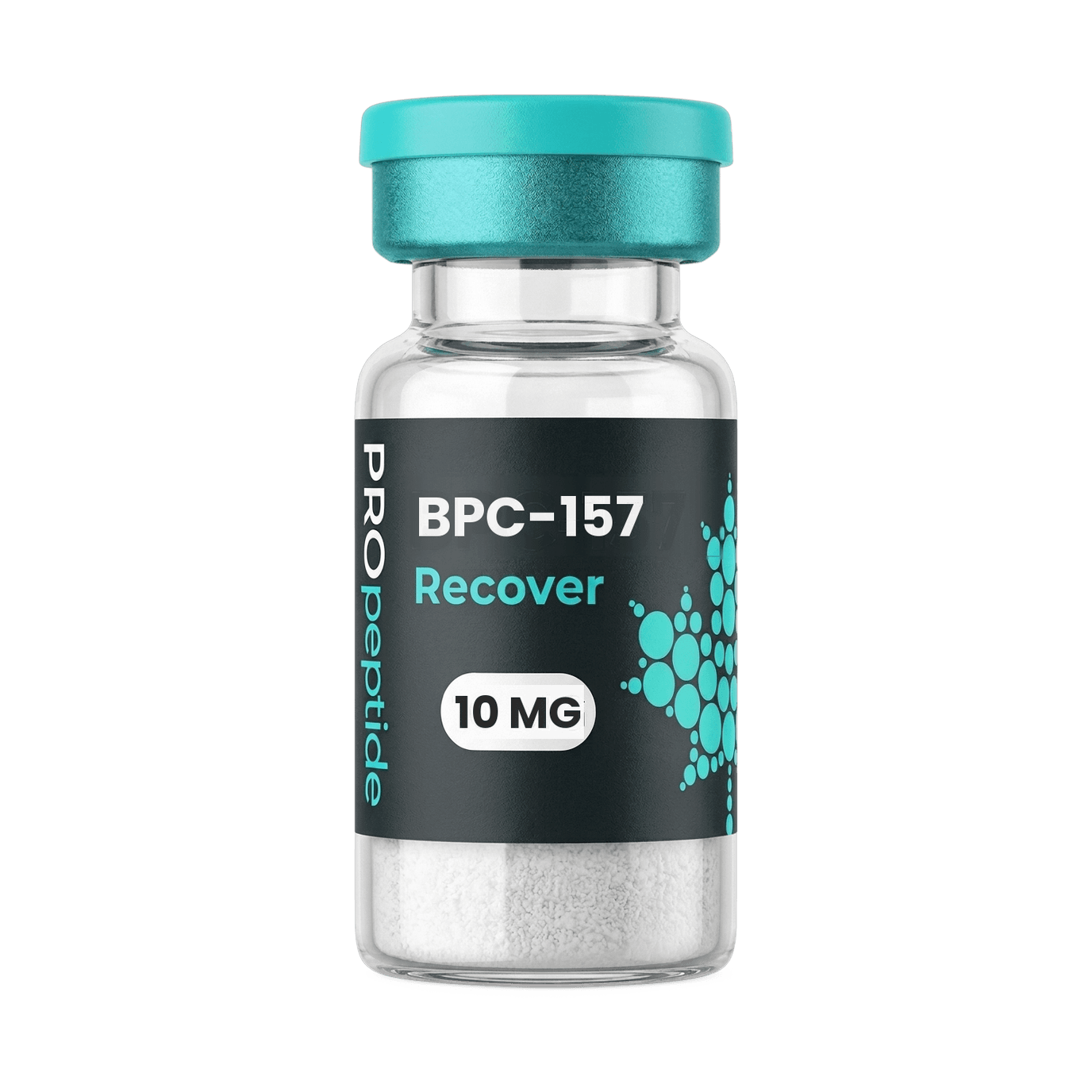
A fifteen-amino-acid fragment of a protective gastric protein, studied in animal models of tendon, gut and blood vessel repair.
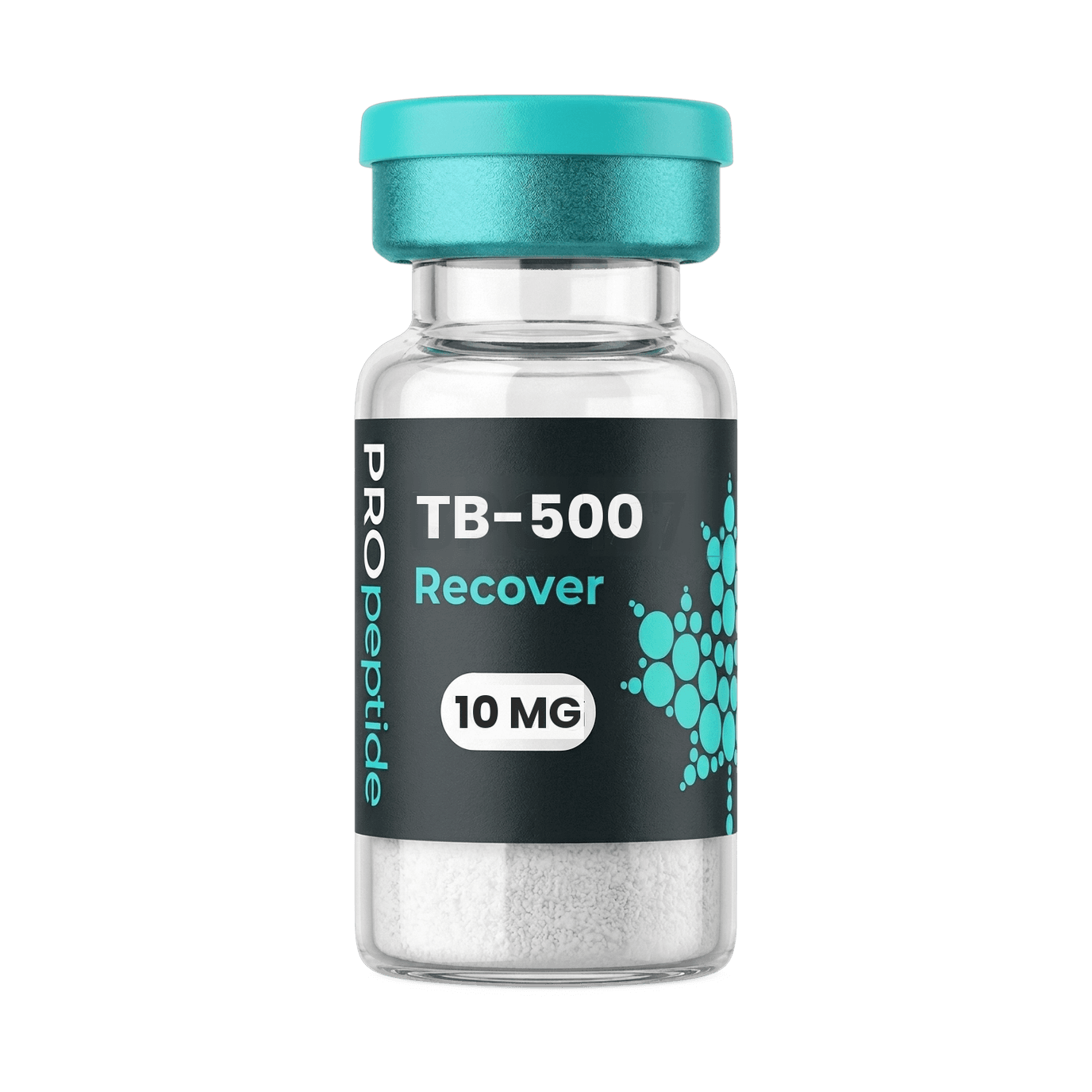
Seven residues clipped out of a 43-residue protein, and they happen to be the exact seven that grip actin. The rest of the protein turned out to be commentary.
It is water. We know. But it is the one bottle on this shelf where the boring ingredient is the entire product, and getting it wrong ruins everything else you bought.
Order TB-500 + BPC-157 Combo right now
One last look before you decide.
Freeze-dried, ships cold from Canada
You've got the whole file now, the thin parts included. Nothing above pretended otherwise. If that's the kind of source you were after, TB-500 + BPC-157 Combo is right here.
Not for human consumption. Not approved by Health Canada or any other regulatory body.
Page last updated October 4, 2026
People also search for TB-500 + BPC-157 Combo
Related searches.