
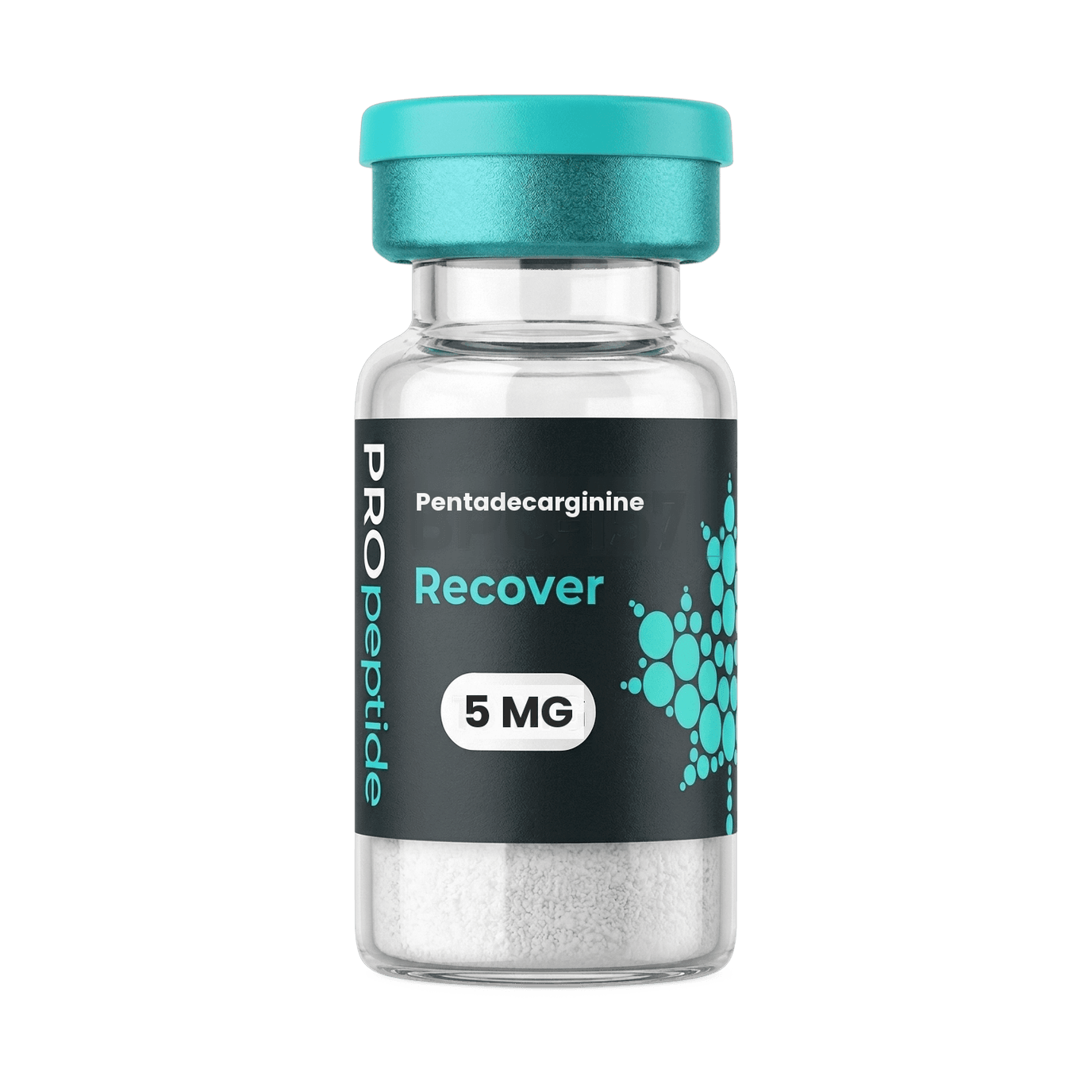
Pentadeca Arginate Peptide (PDA)
Sold as an improved BPC-157. Searching the entire biomedical literature for it returns zero results.
Choose your pack
For research use only. Not for human or veterinary use.
What Pentadeca Arginate Peptide (PDA) is
The plain-language version, first.
The same fifteen residues as BPC-157, in a different salt.
Pentadeca arginate, sold as PDA, is marketed as an arginate salt form of the fifteen amino acid peptide BPC-157, with the claim that it is more stable and more bioavailable than the parent compound. Searches of PubMed, Europe PMC, ClinicalTrials.gov, PubChem and Google Patents return no records for it, so it has no published characterisation, no assigned CAS number and no reported animal or human data.
Chemistry has a concept that matters enormously here and gets skipped everywhere: the salt form.
The same active molecule can be packaged with different counter-ions, which can change stability and handling without changing the peptide itself.
PDA is BPC-157 as an arginate salt. Same fifteen residues. Different packaging.
Why does it exist as a separate product? Largely because of stability claims around the salt form, and, frankly, because the market regards it as a distinct compound.
Chemically, the distinctness is thin.
Same actor, different costume. Keep that in mind for everything below.
What is pentadeca arginate (PDA)?
Mechanism studied, not outcome promised.
Whatever BPC-157's mechanism is, this borrows all of it.
There is no separate mechanism to describe, and pretending otherwise would be theatre.
Whatever BPC-157 does in a model, its arginate salt should do, because once dissolved they are substantially the same molecule in solution.
That works in both directions. The parent's interesting animal file transfers. So does the parent's missing human file.
The honest questions specific to PDA are formulation questions: stability, solubility, handling. Real chemistry, unglamorous, and not what anybody is searching for.
Here's the honest part.
Any page telling you PDA does something BPC-157 does not is describing a marketing distinction, not a molecular one.
The research so far for Pentadeca Arginate Peptide (PDA)
Where the evidence is thin, we say so.
Its own file is empty. Everything it claims is inherited.
The published literature on PDA as its own entity: effectively none. Zero dedicated studies.
Everything cited for it is BPC-157 work, inherited by chemical association, which is at least a legitimate inheritance given they share a peptide.
So the file is the parent's file: hundreds of animal papers, heavily single-group, roughly 26 humans ever studied, no large trial.
Our standing rule applies double here: check which compound name is in the methods section, because for PDA the answer is always the other one.
A real product with a borrowed bibliography. Buy it knowing that, and read its parent's page for the actual story.
Have a look at current stock and vial sizes.
Pentadeca Arginate Peptide (PDA) specs
The chemistry, exactly as released.
Who studies Pentadeca Arginate Peptide (PDA)
Who tends to order this one, and why.
- 1
Nobody, in the published record
We could not identify a single research group that has studied pentadeca arginate as a distinct compound. That is the honest answer to this question.
- 2
Orthopaedic groups
Working on the parent compound. Transected and detached rat Achilles models, which is where the 2003 Staresinic paper set the template.
- 3
Gastroenterology labs
Also the parent. Mucosal integrity work, which is where BPC-157 started, since it came out of gastric juice.
- 4
Evidence reviewers
The 2026 Pharmaceutics review searched patents and regulators specifically for BPC-157 formulation strategies and did not encounter the arginate salt at all.
Sold for laboratory research only. This is not guidance for personal use, and nothing here is a recommendation.
Pentadeca Arginate Peptide (PDA) backstory
How it got here.
BPC-157 came out of human gastric juice in the nineties, isolated by a group at the School of Medicine in Zagreb who wanted to know why the stomach lining survives sitting in acid. Fifteen residues, hundreds of animal papers, and roughly 26 humans.
Pentadeca arginate appeared later, in commerce rather than in literature. There is no founding paper, no patent, no characterisation study and no first-in-human. It arrived on price lists.
That is not an accusation of bad faith. Salt forms of peptides are ordinary chemistry and there may be a real one behind this. It is a statement about where the compound came from: the supply chain, not the literature.
- 1
The parent, in the nineties
BPC-157 isolated from human gastric juice by a group at the School of Medicine in Zagreb, working out why the stomach lining survives its own acid.
- 2
Thirty years of rodents
Transected rat Achilles tendon, gut lining, angiogenesis. Extensive animal work, and roughly 26 humans across three small pilots.
- 3
The arginate appears
Not in a founding paper, a patent or a first-in-human study. It arrived on price lists. There is no publication record marking when or why.
Buying Pentadeca Arginate Peptide (PDA) in Canada
What ships, how fast, and the paperwork.
There is not much here anyone can verify. With no published characterisation, no CAS number and no stated stoichiometry, there is very little about this compound that anyone outside a lab can check. That is a real gap and we would rather you knew it going in.
Same day out of British Columbia. Our building, our cold packs, our people, and nothing sitting in a customs queue while you refresh a tracking page.
Then into the fridge. Keep it cold and keep it dark. Sealed and freeze-dried it handles a rough trip without ice. Once it lands, fridge.
We would rather lose the sale. If the absence of a literature is a dealbreaker for you, it should be, and we would rather tell you now than have you find out later.
Common questions
5 answers, none of them dodges.
Are there any studies on pentadeca arginate?
No. A PubMed search for the exact phrase returns zero records, as does Europe PMC. ClinicalTrials.gov has no registered study in any phase. PubChem has no compound entry, so there is no CAS number or molecular formula on record. Google Patents returns nothing for pentadecapeptide arginate. For comparison, BPC-157 on its own returns 225 PubMed records.
Is pentadeca arginate the same as BPC-157?
It is sold as an arginate salt of it, which would make it the same peptide with a different counterion. Nobody has published the stoichiometry, so how many arginine ions per peptide is not on the public record. Whether the salt form behaves differently in practice has not been measured in any published study.
Is it really more stable and more bioavailable than BPC-157?
That is the marketing claim and there is no published evidence for it. The one peer-reviewed sentence describing PDA calls it a stabilized form designed to enhance bioavailability and shelf-life, and cites a 2004 conference abstract about plain BPC-157 in melanoma cells. Design intent is not the same as demonstrated performance.
How much human evidence is there for the parent compound?
A 2026 review in Pharmaceutics puts it at three published human studies with fewer than 30 subjects total, none designed as randomised controlled trials: an intravenous pharmacokinetic pilot in 2 healthy volunteers, an uncontrolled retrospective series of 16 knee pain patients, and an uncontrolled intravesical pilot in 12 interstitial cystitis patients.
Why does the missing PubChem entry matter?
Because it means there is no publicly registered chemical identity. No CAS number, no molecular formula, no deposited structure. For a defined pharmaceutical salt those normally exist. Their absence means any purity number would be written against a specification that no public database can confirm.
Good pairing options with Pentadeca Arginate Peptide (PDA)
What researchers stack alongside it.
Pairing is where research gets ahead of itself. These are the compounds researchers put in the same order as Pentadeca Arginate Peptide (PDA), which is a statement about ordering habits, not about evidence. Two things in one cart have not been studied together unless somebody studied them together.
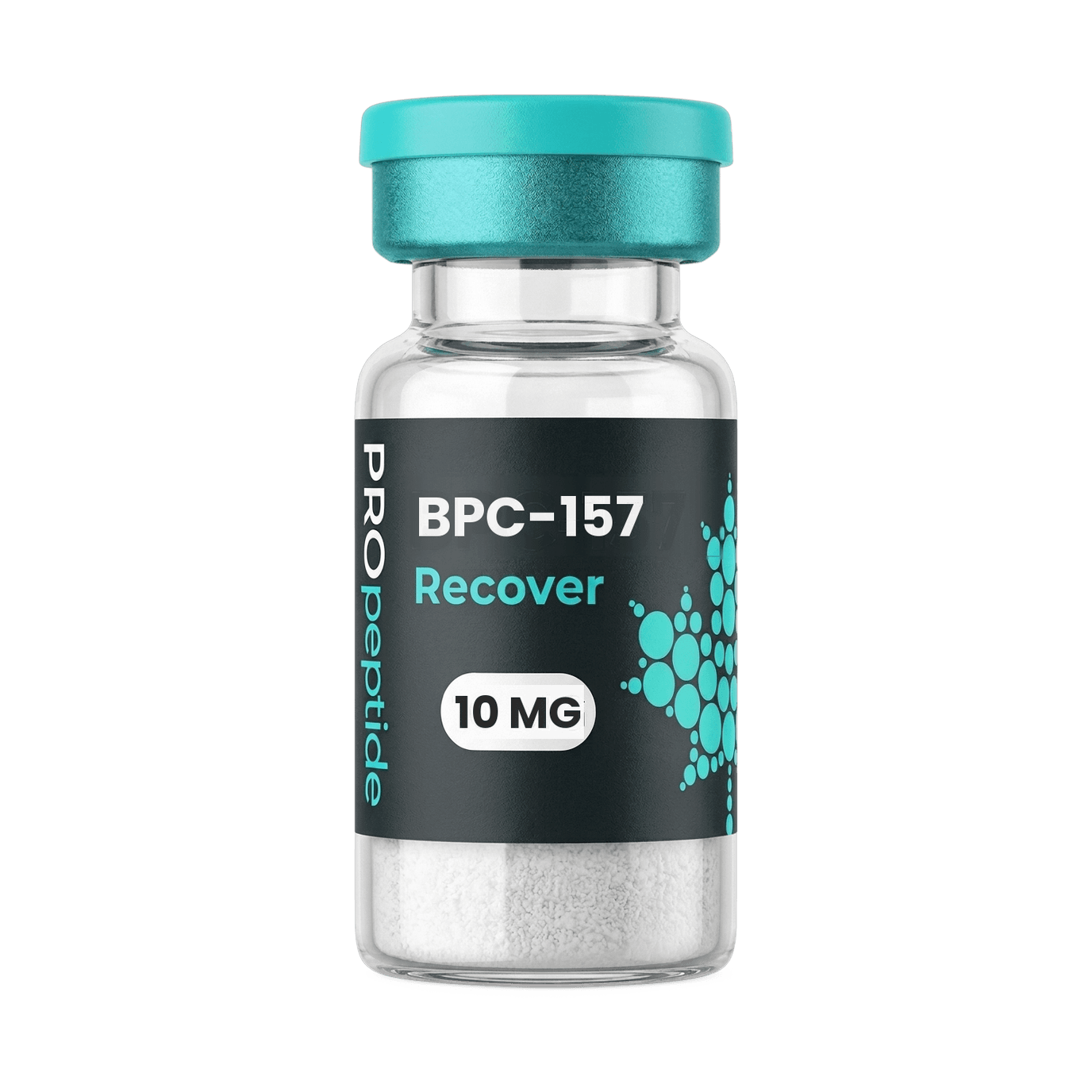
A fifteen-amino-acid fragment of a protective gastric protein, studied in animal models of tendon, gut and blood vessel repair.
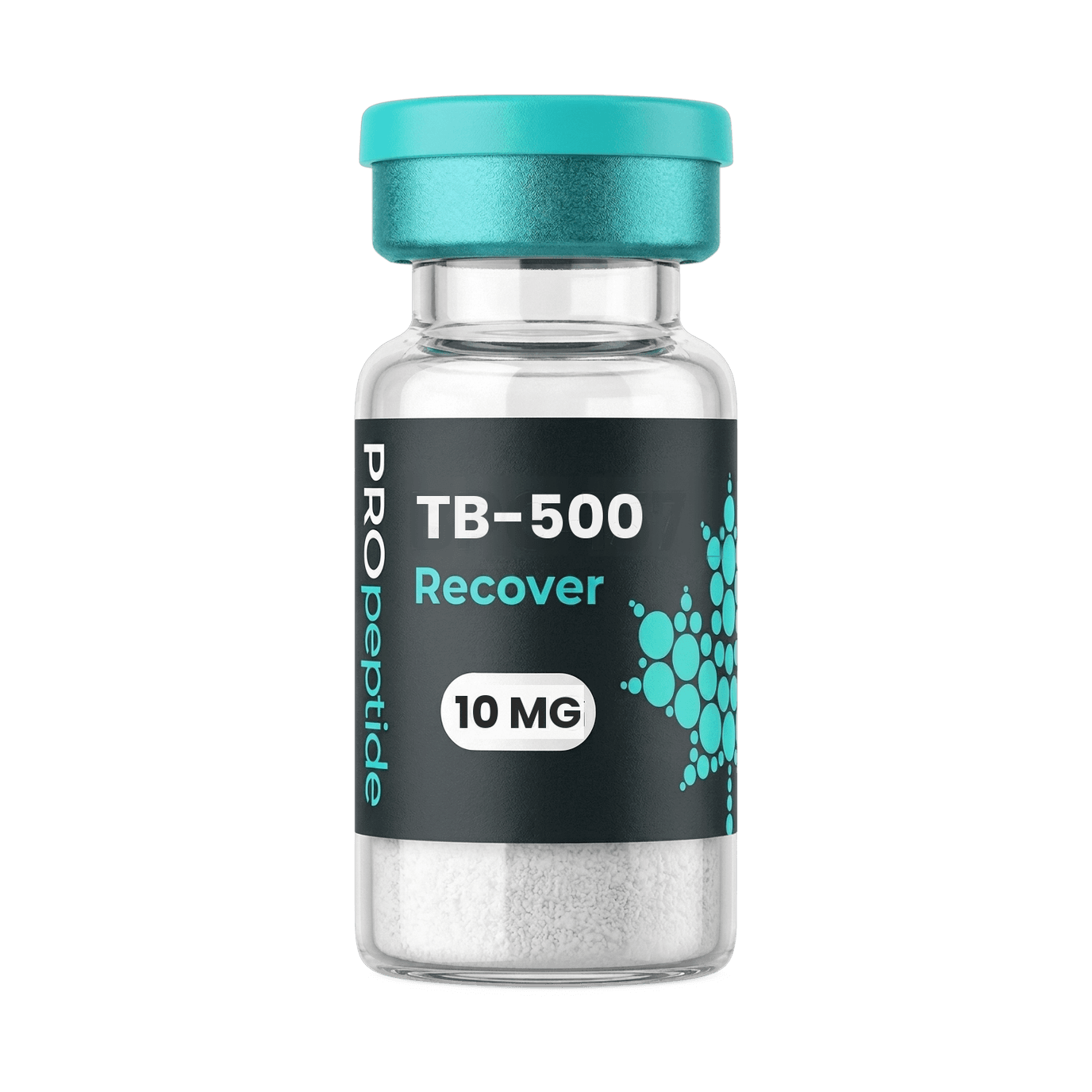
Seven residues clipped out of a 43-residue protein, and they happen to be the exact seven that grip actin. The rest of the protein turned out to be commentary.
It is water. We know. But it is the one bottle on this shelf where the boring ingredient is the entire product, and getting it wrong ruins everything else you bought.
Order Pentadeca Arginate Peptide (PDA) right now
One last look before you decide.
Freeze-dried, ships cold from Canada
You've got the whole file now, the thin parts included. Nothing above pretended otherwise. If that's the kind of source you were after, Pentadeca Arginate Peptide (PDA) is right here.
Not for human consumption. Not approved by Health Canada or any other regulatory body.
Page last updated October 4, 2026
People also search for Pentadeca Arginate Peptide (PDA)
Related searches.