
Glutathione Peptide in Canada
Glutathione is a chain of three amino acids (protein building blocks): glutamate, cysteine and glycine. The body's own cells make it. Its glutamate links on through a side arm, not the usual bond. Scientists study it as the cell's main antioxidant, which guards against damage from oxygen. Controlled trials in skin lightening and in Parkinson's disease found no clear difference.
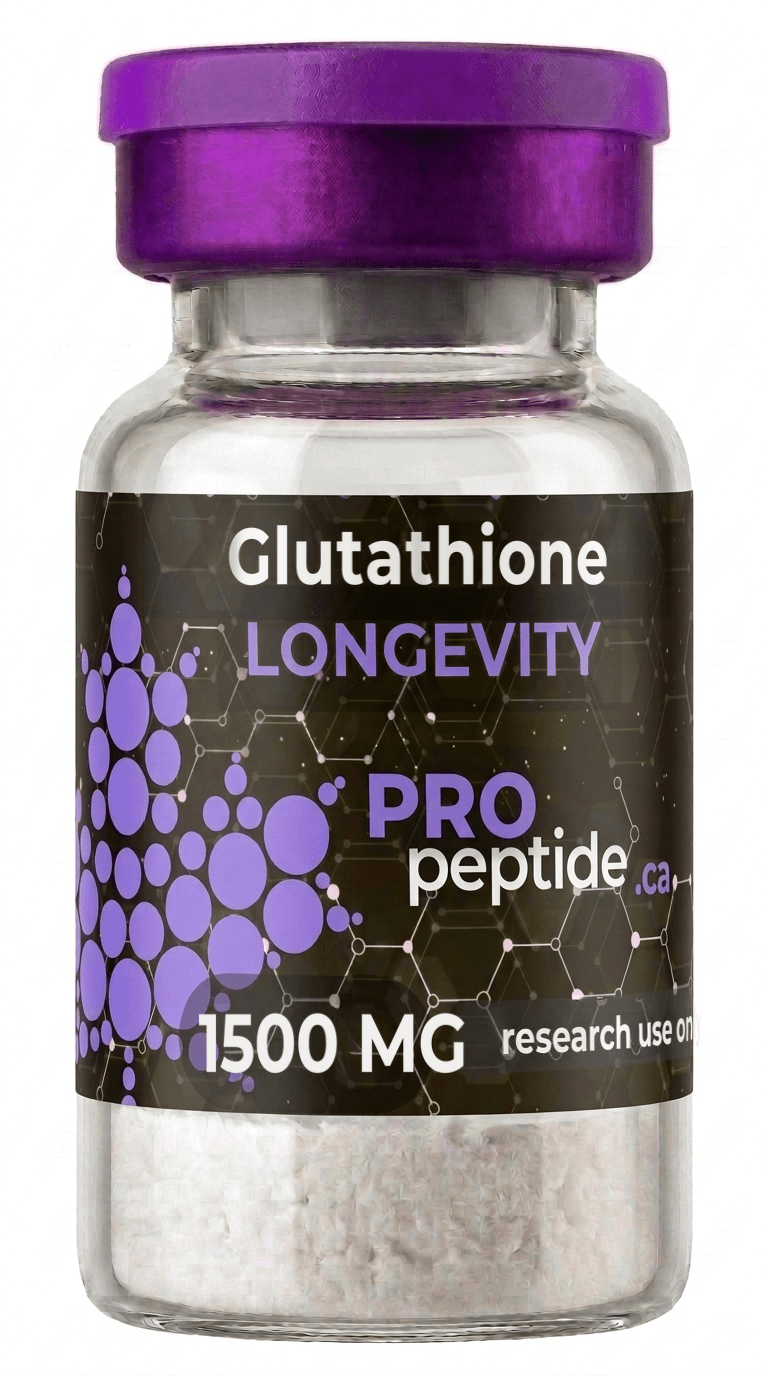
Pack prices and discount codes don't combine. You always get the bigger saving.
In stock · ships same-day with ice pack
Sold for laboratory research use only. Not for human or veterinary use. 19+.
- Amino acids, glutamate, cysteine and glycine
- 3
- Molar mass
- 307.32g/mol
- CAS number
- 70-18-8
- Made by the body's own cells
- Endogenous
- Philippine FDA warning on skin-lightening use
- 2019
- Free over $250 Shipping $20 to $25 under that
- Interac e-Transfer Confirms in ~30 min
- 14-day returns Free return shipping
- Third-party tested Janoshik Analytical results below
- Ships cold Paid by noon, ships same day
- Mixing calculator Get your volumes
What is Glutathione?
The plain-language version, first.
Glutathione is three amino acids, and your liver is making some right now.
This is the least exotic molecule in the catalogue and one of the most important ones in your body.
Three amino acids. Glutamate, cysteine, glycine. Your cells build it themselves, continuously, mostly in the liver.
It is the cell's main workhorse antioxidant, and there is no argument about that part at all.
Which makes it a strange thing to sell, because unlike everything else here, you are not short of it under ordinary circumstances. Your body's production is the baseline.
The commercial interest is not really about the molecule's biology. It is about whether giving more of it from outside changes anything.
A genuinely essential compound, and a genuinely unsettled question about supplementing it.
What is glutathione?
What researchers watch it do.
The most abundant antioxidant in the cell, and the delivery problem nobody solved.
Alright, antioxidants. There is a lot of nonsense in this area so let's be careful.
Oxidative chemistry inside a cell is not simply damage to be mopped up. It is also signalling. Cells use it deliberately.
So the picture of an antioxidant as a sponge soaking up bad stuff is the wrong picture, and it is the one most marketing uses.
Glutathione's real role is as part of a regulated redox system, with enzymes that recycle it and a ratio the cell actively maintains.
The interesting technical problem is delivery. A tripeptide taken orally faces the same digestion every peptide on this shelf faces, which is why the injectable form exists at all.
Here's the honest part. A molecule being essential does not mean more of it is better.
The cell maintains a ratio on purpose. Pushing on a regulated system from outside is a real question, not an obvious win.
What does the research say about Glutathione?
What the studies found, and where they stand.
One small trial, one very narrow miss, and a large industry built on top.
The evidence people cite and the evidence that exists are not the same size, and one number tells the whole story.
The cosmetic injectable literature comes down substantially to one trial, 32 patients, reporting a result at p equals 0.054.
That is not a positive result. It is also not nothing. It is a small study that landed just outside the line everybody agreed to use.
Which is genuinely worth sitting with, because it is the exact situation where a bigger trial would settle it and a bigger trial has not been run.
Meanwhile the basic biochemistry is beyond dispute, extensively documented, and about the molecule's role inside cells rather than about giving it to people.
One narrow miss in 32 people, an enormous industry, and no follow-up large enough to answer the question. We would rather show you the number than round it in either direction.
Glutathione vial sizes and current stock are just below.
What did the lab find in our Glutathione?
The lab's numbers for the lot on the shelf.
What's in a vial of Glutathione?
The chemistry, exactly as released.
Who studies Glutathione?
Who tends to order this one, and why.
- 1
Redox biology
The GSH to GSSG ratio is a standard measure of cellular redox state, and glutathione reductase and NADPH regeneration are core biochemistry.
- 2
Toxicology
Glutathione S-transferase conjugation is a major hepatic route for preparing xenobiotics for excretion, and glutathione depletion is central to paracetamol toxicity.
- 3
Dermatology
The pigmentation literature, and the systematic reviews that assessed it. The 2025 International Journal of Dermatology review is the current reference point.
- 4
Regulators
The Philippine FDA advisory 2019-182 is the clearest formal regulatory statement on cosmetic injectable use anywhere.
Sold for laboratory research only. This is not guidance for personal use, and nothing here is a recommendation.
Where did Glutathione come from?
How it got here.
Glutathione was characterised as a biological molecule long before anyone thought of injecting it. It is one of the foundational molecules of redox biology and its role in cellular defence has been studied for a century.
The therapeutic interest split. One branch pursued precursors, notably N-acetylcysteine, on the logic that supplying the rate-limiting amino acid lets cells make their own. That approach produced an approved drug for paracetamol overdose and is well established.
The other branch injected the tripeptide directly. In several countries injectable glutathione was approved for specific narrow indications, in the Philippines as a chemotherapy adjunct and reportedly in India for alcoholic liver disease.
The cosmetic market grew from an incidental observation about pigmentation, not from a development programme, and it grew far faster than the evidence supporting it.
- 1
A century of redox biology
Glutathione role in cellular defence has been studied since the early twentieth century. Nothing about that foundational science is contested.
- 2
Two therapeutic branches
One pursued precursors like N-acetylcysteine, which produced an approved drug. The other injected the tripeptide directly, approved in a few countries for narrow indications.
- 3
A cosmetic market outran the evidence
Skin lightening use grew from an incidental pigmentation observation rather than a development programme, and grew far faster than any trial supporting it.
How do I buy Glutathione in Canada?
What ships, how fast, and the paperwork.
The reviews are not favourable and you should read them. A 2025 systematic review concludes intravenous glutathione is contraindicated due to lack of efficacy and side effects. A 2018 review calls the intravenous evidence a single study with a dubious study design. Those are the two documents worth reading before you decide anything.
Same day out of British Columbia. Our building, our cold packs, our people, and nothing sitting in a customs queue while you refresh a tracking page.
The delivery method is prohibited in sport. Glutathione is not named on the WADA list, but M2.2 prohibits intravenous infusions or injections exceeding 100 millilitres per 12 hours outside hospital, surgical or diagnostic settings. Any standard drip is a prohibited method regardless of what is in the bag.
What else do people ask?
5 answers, none of them dodges.
Does injectable glutathione work for skin lightening?
The only placebo-controlled intravenous trial says not significantly. Zubair and colleagues in 2017 studied 32 completers at 1200 milligrams twice weekly for six weeks. Improvement occurred in 37.5 percent against 18.7 percent on placebo, p equals 0.054, which does not reach statistical significance. A 2025 systematic review in the International Journal of Dermatology concludes that intravenous glutathione is contraindicated due to lack of efficacy and side effects.
What adverse events were reported in that trial?
Deranged liver function tests in 8 patients and anaphylaxis in 1, described as severe and warranting discontinuation. Eight of sixteen treated patients is half the group. Those adverse events are frequently omitted when the trial is cited.
Has any regulator warned about it?
Yes. Philippine FDA Advisory 2019-182 states that injectable glutathione is approved in the Philippines only as an adjunct in cisplatin chemotherapy, that there are no published clinical trials evaluating injectable glutathione for skin lightening, and that there are no published guidelines for appropriate dosing regimens or duration for that use. Risks cited include effects on liver, kidney and nervous system, Stevens-Johnson syndrome, and transmission of bloodborne infection from non-sterile administration.
Why might injecting glutathione not raise cellular glutathione?
Because they are different compartments. The chemistry that matters happens inside cells at millimolar concentrations, using glutathione the cell synthesised itself from glutamate, cysteine and glycine. Plasma glutathione is a separate and much smaller pool, and the cell membrane is not freely permeable to the intact tripeptide. Precursor approaches such as N-acetylcysteine target the rate-limiting step instead, which is why they have historically been the more credible route.
What happened in the Parkinson disease trials?
The best designed one was null. Hauser and colleagues, Movement Disorders 2009, randomised 21 patients to intravenous glutathione 1400 milligrams three times weekly for four weeks or placebo, and found no significant difference in UPDRS. An earlier enthusiastic result reporting a 42 percent decline in disability was 9 patients, open label and uncontrolled.
Glutathione Peptide vs NAC (the precursor route): what's the difference?
Stacked together constantly, compared almost never.
The interesting comparison here is not against another peptide. It is against the precursor strategy medicine already uses.
Direct glutathione delivers the finished tripeptide, and the delivery question is the entire debate: digestion dismantles it orally, and the parenteral cosmetic evidence rests on one 32-patient trial at p equals 0.054.
N-acetylcysteine supplies the rate-limiting ingredient and lets cells build their own, which is the route with an actual approved medical use behind it.
Cells guard their own redox balance. Handing them raw material has a longer track record than handing them the finished product, and that asymmetry is the whole comparison.
What pairs well with Glutathione?
What researchers stack alongside it.
Pairing is where research gets ahead of itself. These are the compounds researchers put in the same order as Glutathione Peptide, which is a statement about ordering habits, not about evidence. Two things in one cart have not been studied together unless somebody studied them together.
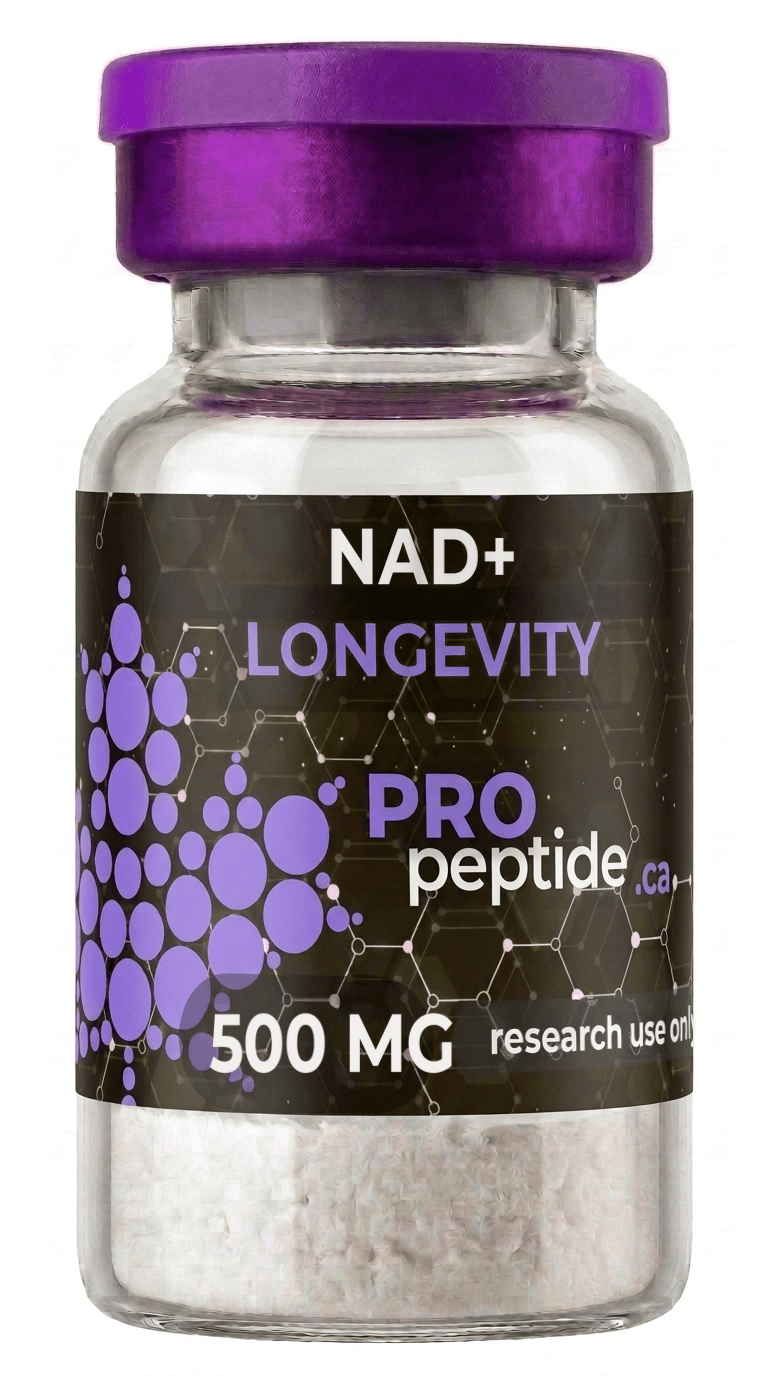
The longevity molecule every podcast gets to by minute ten. Not a peptide, and your cells burn through it all day anyway.
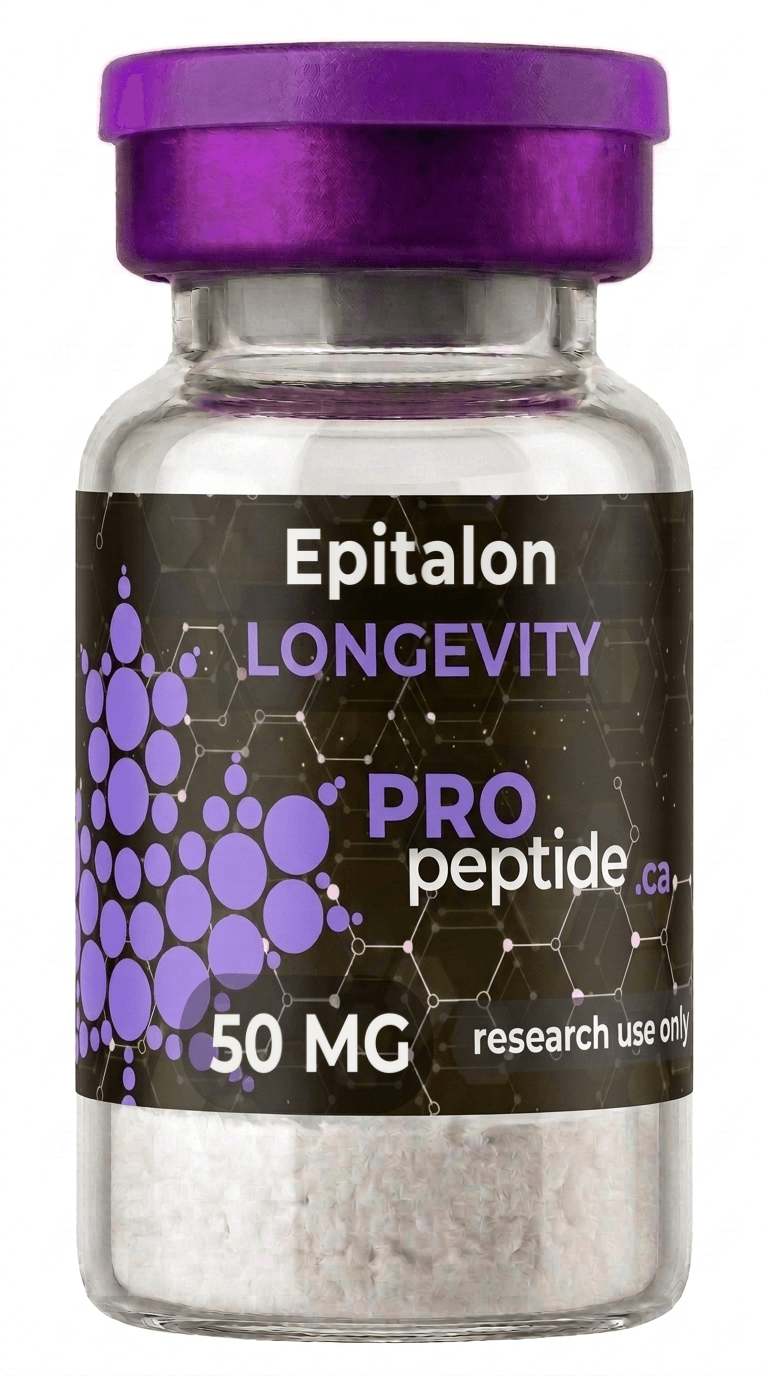
A four-building-block lab-made peptide, designed from an extract of a cow's pineal gland, a tiny gland in the brain. Scientists study whether it switches on the enzyme that rebuilds telomeres, the shoelace-tip caps on chromosomes that wear down as cells age.
Supplies for the lab
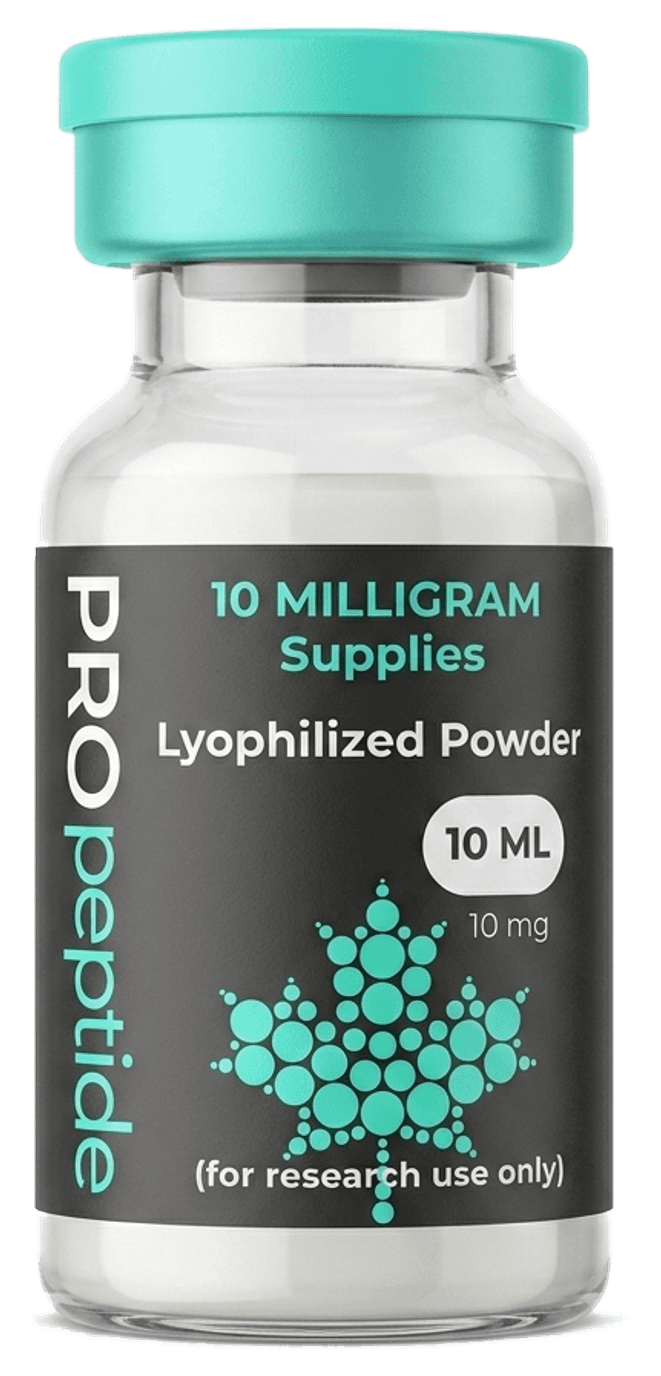
The water every freeze-dried vial needs, and the one item everybody forgets. Sterile water with a preservative, so one vial lasts more than one draw.
What else is in Longevity?
Other compounds in the same research category.
Ready to order Glutathione?
One last look before you decide.
Freeze-dried, lab results on the page, ships cold
You've got the file and the lab's numbers that back it, lot by lot. If that's the kind of source you were after, Glutathione is right here.
Sold for laboratory research use only. Not for human or veterinary use, and not for human consumption. 19+. Not approved by Health Canada or any other regulatory body.
Page last updated October 25, 2026. Reviewed by the Pro Peptide team.
What do people search for with Glutathione?
Related searches.